Kitchen cabinet resale value drives buyer perception and home appraisal value more than almost any other interior upgrade. Specifically, professional cabinet painting and modern hardware yield between 70 and 85 percent return on investment. In contrast, full custom replacements rarely recoup their entire cost before a sale. In fact, most home buyers form an immediate emotional reaction to the kitchen within sixty seconds of entering.
Because kitchens remain the focal point of residential real estate evaluations, dated cabinetry actively suppresses purchase offers. Therefore, understanding which cabinet upgrades generate real returns protects your renovation budget and helps your home sell faster.
How Kitchen Cabinets Impact Home Resale Value
First Impressions and Buyer Psychology
First, buyers inspect kitchens before evaluating other living areas during home showings. Outdated, chipped, or peeling cabinet finishes create the immediate impression that the home requires extensive deferred maintenance. Consequently, prospective buyers begin calculating steep mental discounts or submit lower offers to offset anticipated repair work.
In contrast, clean and cohesive cabinetry signals responsible homeownership. When doors hang straight and glides operate smoothly, buyers assume the rest of the mechanical systems receive equal care. Thus, visual cabinet quality establishes a psychological anchor that lifts the perceived market value of the entire property.
In addition, modern listing photography magnifies cabinet imperfections. Today, over ninety percent of buyers screen properties online before booking a walk-through. If listing photos showcase worn oak fronts or faded thermofoil surfaces, online interest drops quickly. Meanwhile, crisp cabinet lines attract high view counts and generate higher attendance at weekend open houses.
Minor vs Major Kitchen Remodel ROI
According to national remodeling data, minor kitchen remodels featuring refreshed cabinets recover 75 to 85 percent of costs at resale. In comparison, major gut renovations with luxury custom cabinets recoup only 50 to 60 percent. This dynamic occurs because full replacements require massive upfront expenditures on structural modifications, electrical changes, and plumbing adjustments.
For example, spending $6,000 on surface level cabinet enhancements often yields a $5,000 increase in final sale price. On the other hand, spending $50,000 on a complete custom demolition rarely adds $30,000 to the appraised valuation. Smart sellers focus on cosmetic updates that preserve structurally sound kitchen cabinet boxes instead of rebuilding from scratch.
Furthermore, keeping your existing cabinet framework eliminates lengthy construction delays. When preparing a home for market, speed matters just as much as capital outlay. A two-week cosmetic upgrade allows you to list during peak spring selling seasons. Meanwhile, a full remodel drags on for months.
The Neighborhood Comps Ceiling
Every residential real estate market possesses an appraisal ceiling dictated by recent comparable home sales. For instance, investing $45,000 in custom cabinetry in a $350,000 neighborhood creates an over-improvement. Consequently, appraisers cannot justify the expense in valuation comps. Real estate appraisers evaluate square footage, bedroom count, and median neighborhood sale prices before crediting custom craftsmanship.
Therefore, you must match your cabinet investment directly to your target buyer demographic. In entry level sub-divisions, clean stock cabinets or freshly painted surfaces satisfy buyer expectations completely. Meanwhile, high-end executive neighborhoods expect soft-close dovetail drawers and tailored kitchen base cabinet configurations.
Before ordering materials, research the last five homes sold on your street. If neighboring properties sold with refreshed original cabinets and quartz countertops, following that exact formula delivers maximum equity return. After all, overbuilding beyond neighborhood standards simply donates your cash to the eventual buyer.
Painting vs Refacing vs Replacing Cabinets for Resale
Cabinet Painting ROI
Painting existing hardwood cabinets costs $1,500 to $4,500. Furthermore, it delivers the highest return in the cabinet category, often exceeding 80 percent at resale. Because the underlying wood remains intact, you spend money strictly on surface preparation, primer, and high durability enamel topcoats.
Professional spray applications produce a factory smooth finish that hides decades of grain wear. However, proper preparation requires removing all doors, degreasing surfaces with trisodium phosphate, and applying shellac based stain blocking primers. If you choose this path, learn how to paint kitchen cabinets with sprayers instead of brushes to prevent unsightly texture.
In addition, painted cabinets provide immediate color versatility. A clean coat of neutral white enamel brightens dim kitchens and makes tight spaces appear significantly larger. As a result, home appraisers award higher condition ratings during final mortgage evaluations.
Cabinet Refacing ROI
Cabinet refacing replaces doors and drawer fronts while veneering existing boxes. At $5,000 to $12,000, refacing delivers a clean brand-new look with 65 to 75 percent return on investment. This option works exceptionally well when your cabinet layouts function properly but the exterior wood displays outdated cathedral arch designs.
During refacing, technicians install new quarter inch wood veneers or thermofoil skins over exterior face frames. Next, they hang brand-new custom sized doors equipped with concealed hinges. Homeowners can also tackle kitchen cabinet refacing diy kits to save substantially on specialized trade labor.
Consequently, buyers walk into the home and observe what appears to be a brand-new cabinet installation. You bypass the mess of total demolition while preserving expensive countertop slabs. Specifically, for mid-range homes, refacing bridges the gap between basic painting and complete structural replacement.
Full Cabinet Replacement ROI
Installing new semi-custom or stock cabinets costs $10,000 to $25,000. This project makes financial sense only when existing boxes suffer water damage, sagging shelves, or a dysfunctional layout. On average, complete tear-outs recoup 60 to 70 percent of costs at resale.
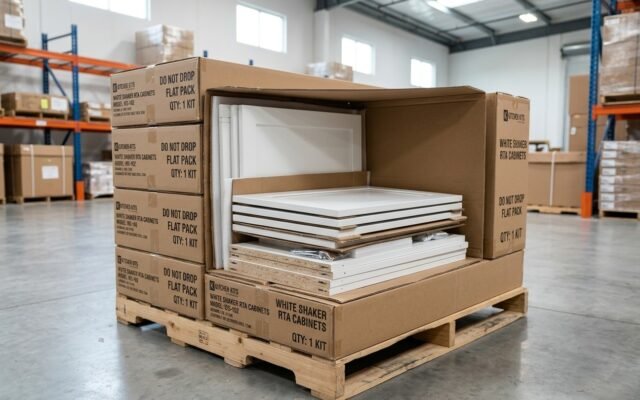
If your current cabinets sit on water damaged subflooring or lack adequate clearance around major appliances, replacement becomes unavoidable. In this situation, buying pre-assembled stock or ready-to-assemble units keeps material costs manageable. For example, you can browse options at Home Depot to compare budget-friendly stock lines against semi-custom factory builds.
Alternatively, homeowners seeking broader design varieties often explore cabinet collections on Wayfair for competitive online deals. However, you should avoid premium custom millwork unless your home sits in the top tier of local property values. In short, excessive customization rarely returns dollar for dollar value during resale negotiations.
Best Cabinet Door Styles and Colors for Home Resale
Shaker Door Style Dominance
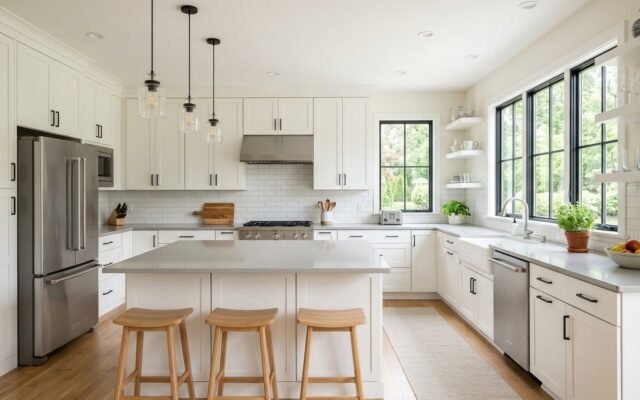
White and off-white shaker cabinet doors remain the number one choice for home buyers. The clean lines fit traditional, transitional, and contemporary interior aesthetics without polarizing potential buyers. Because the recessed center panel provides subtle depth without ornate dust collecting grooves, maintenance remains remarkably simple.
Real estate staging professionals consistently recommend shaker kitchen cabinets because they function as a neutral canvas. Prospective buyers can easily picture their own cookware, barstools, and decorative accents inside the space. Ornate raised panel doors, on the other hand, instantly date a property to earlier decades.
Furthermore, replacement shaker doors remain widely available across all price tiers. If an inspection report identifies damaged door fronts, finding identical matches takes days rather than weeks. Thus, this availability gives buyers confidence that future repairs will not require custom carpentry.
Neutral Paint Colors That Sell
Warm whites like Sherwin-Williams Alabaster, soft greiges, and light taupes consistently attract the broadest pool of buyers. Bold neon or highly specific colors narrow buyer appeal and cause shoppers to mentally budget for immediate repainting costs. Therefore, neutral shades offer the safest path to protecting resale equity.
Selecting popular kitchen cabinet paint colors requires evaluating your home lighting. For example, north facing kitchens benefit from creamy whites that contain warm undertones. Conversely, sun drenched south facing spaces can support cooler off-whites and pale gray tones without appearing sterile.
Specifically, Benjamin Moore White Dove and Sherwin-Williams Repose Gray rank among the most frequently cited shades by interior stagers. These muted tones reflect ambient light across the countertops, which makes the entire cooking zone feel open and clean.
Two-Tone Cabinet Combinations
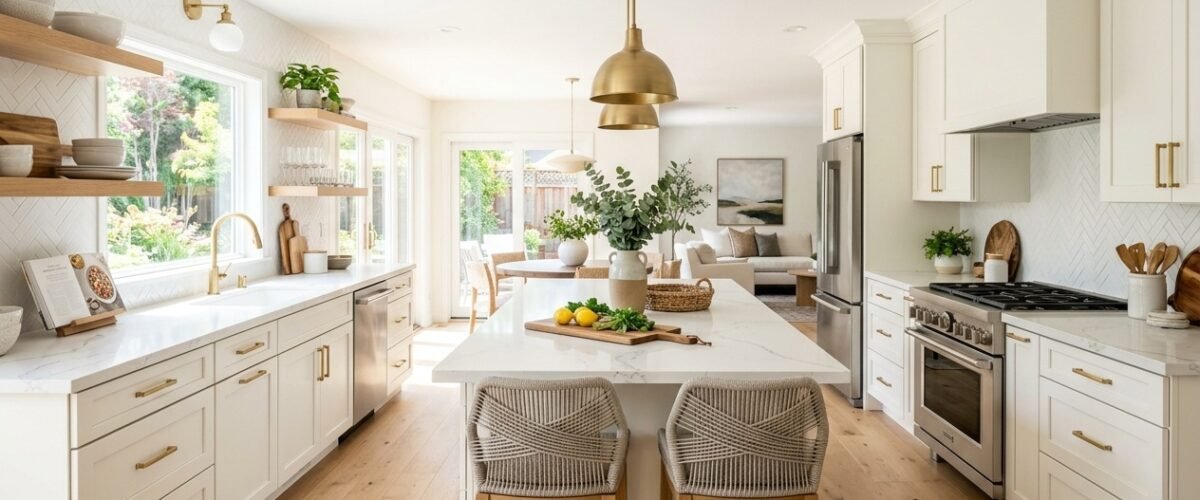
Pairing crisp white upper cabinets with a navy blue or natural wood island creates a designer look. Moreover, this combination photographs exceptionally well in real estate listings. This two-tone strategy introduces visual contrast while keeping the primary perimeter bright and welcoming.
In addition, dark base cabinets hide everyday scuffs and kick marks from children and pets. This practical advantage appeals directly to family buyers during open house tours. Meanwhile, light wall cabinets preserve an airy ceiling height throughout the cooking area.
However, keep the perimeter cabinets neutral when using accent colors on islands or lower runs. If you paint every cabinet box a dark forest green, you risk darkening the room and turning away conservative buyers. In other words, balance remains the key to maintaining broad market appeal.
High-ROI Budget Upgrades Before Listing
Upgrading Cabinet Hardware
Replacing dated hardware with modern matte black or brushed brass pulls costs under $200. Consequently, this simple swap instantly modernizes the entire room. Because cabinet hardware acts as the jewelry of the kitchen, this minor swap delivers an outsized visual impact.
Before ordering replacements, measure the exact center-to-center hole spacing on your existing drawer fronts. Standard drill hole spacings measure three inches, 3.75 inches, or five inches. You can check current prices on Amazon for contractor packs to save money over retail packages.
In addition, review our guide on kitchen cabinet hardware to ensure your finish coordinates with the faucet and lighting. When selecting profiles, examine cabinet knobs vs pulls to choose comfortable, functional shapes that appeal to everyday home cooks.
Adding Soft-Close Hinges and Drawer Glides
Installing soft-close adapters or replacement hinges creates a tactile luxury feel during open house walk-throughs for under $150 in hardware. When prospective buyers open cabinet doors, they instinctively test the closing action. Naturally, a smooth, silent gliding mechanism immediately conveys premium construction quality.
Fortunately, you do not need to replace entire drawer boxes to achieve this effect. In fact, aftermarket soft-close damper pistons mount onto existing face frames with a single screw. These dampers catch the swinging door and bring it to a quiet close automatically.
Similarly, drop-in soft-close motion clips attach directly to standard European concealed hinges in minutes. This tiny detail creates an unforgettable tactile impression during buyer inspections. Thus, for a small weekend investment, you eliminate slamming cabinet noises and elevate the entire kitchen atmosphere.
Deep Cleaning and Touch-Up Pens
Degreasing cabinet fronts and using manufacturer color-matched touch-up markers on chipped corners restores visual freshness in an afternoon. Over years of cooking, microscopic grease particles combine with dust to create a sticky yellow film on cabinet surfaces.
To fix this problem, scrub all face frames using a mixture of warm water and heavy duty citrus degreaser. Next, wipe down each surface with a microfiber cloth to reveal the true paint luster underneath. Indeed, this simple cleaning step often eliminates the need for expensive repainting altogether.
Finally, run a matching wax touch-up stick along worn door edges, bottom rails, and around pull handles. Filling minor abrasions prevents buyers from spotting flaws during close-up physical walk-throughs. As a result, the clean surfaces assure buyers that the kitchen requires zero immediate maintenance work.
Cabinet Renovation Options for Resale Comparison Table
Return on Investment Breakdown by Project Type
Evaluating potential returns requires comparing initial costs against expected resale payoffs. The table below outlines average costs, projected return on investment percentages, completion timelines, and buyer impressions for common projects.
| Renovation Strategy | Average Cost Range | Estimated ROI | Project Timeline | Buyer Impact |
|---|---|---|---|---|
| Cabinet Hardware & Touch-Up | $150 to $400 | 90% to 100% | 1 to 2 days | Moderate immediate refresh |
| Professional Cabinet Painting | $1,800 to $4,500 | 75% to 85% | 3 to 5 days | High visual transformation |
| Cabinet Door Refacing | $5,000 to $11,000 | 65% to 75% | 3 to 7 days | Brand-new exterior appearance |
| RTA / Stock Cabinet Replacement | $8,000 to $16,000 | 60% to 70% | 2 to 3 weeks | Complete layout overhaul |
| High-End Custom Cabinets | $25,000 to $50,000+ | 50% to 60% | 6 to 10 weeks | Luxury niche appeal |
As demonstrated in the comparison data, low cost cosmetic adjustments yield the highest percentage returns on invested capital. While complete custom overhauls provide personal satisfaction, they rarely deliver matching financial returns at the closing table. Therefore, prudent sellers prioritize high impact cosmetic improvements over structural reconstructions.
FAQ
Does replacing kitchen cabinets increase home value?
Yes, new cabinets increase home value and marketability. However, a full replacement typically returns only 60 to 70 percent of installation costs. Replacing cabinets makes financial sense if your existing framework suffers water damage, severe structural decay, or a dysfunctional floor plan. Otherwise, minor cosmetic refreshes deliver superior financial returns.
Is it worth painting cabinets before selling a house?
Yes, painting solid wood cabinets in a neutral white or light greige tone is an exceptional pre-listing improvement. Specifically, professional painting costs between $1,500 and $4,500 while returning over 80 percent of your investment. In addition, fresh paint eliminates dated wood tones and brightens the entire kitchen for listing photos.
What cabinet color has the best resale value?
White and soft warm off-whites consistently rank highest in buyer surveys. This happens because they maximize ambient light and complement any decor. Furthermore, neutral shades allow buyers to envision their own furniture and style within the home. If you want visual contrast, pair neutral white perimeter cabinets with an accent island.
Will buyers notice cheap stock cabinets?
Buyers notice thin particleboard construction, flimsy drawer bottoms, and loose hinges during home showings. However, quality ready-to-assemble or semi-custom cabinets featuring plywood boxes and soft-close hardware avoid appraisal red flags. Thus, you can achieve an upscale aesthetic without overspending on custom cabinet fabrication.