Kitchen cabinet drawer slides determine the weight capacity, smoothness, and usable width of every drawer in your kitchen. Specifically, choosing the right hardware prevents sagging boxes and misaligned drawer fronts. Premium concealed undermount slides like the Blum Tandem Plus 563H support up to 100 pounds with soft close damping. Meanwhile, budget side mount ball bearing slides offer dependable utility at a lower cost.
For most kitchen renovations, concealed undermount slides deliver the cleanest look and best long term value. However, side mount runners work best for quick retrofits on existing drawer boxes. In addition, understanding these hardware distinctions ensures your cabinets operate smoothly under daily demands.
Understanding Drawer Slide Types and Mounting Styles
Undermount Drawer Slides
Undermount drawer slides install directly beneath the drawer box. Because steel tracks stay completely hidden when opened, they deliver a clean, modern aesthetic. Cabinetmakers frequently pair these runners with hardwood kitchen cabinet boxes to highlight dovetail craftsmanship. As a result, you never see unsightly metal hardware along the finished wood sides.
However, undermount glides demand precise box construction. First, the drawer bottom must sit recessed upward by exactly one half inch from the bottom edges. In addition, builders must notch the rear panel and drill small hook holes. Standard undermount hardware typically supports between 100 and 125 pounds of dynamic weight.
Furthermore, these runners secure to the cabinet carcass using specialized rear brackets. Homeowners can check current prices on Amazon for complete soft close slide sets. Front locking devices also provide tool free adjustment dials for easy drawer front alignment.
Side Mount Ball Bearing Slides
Side mount drawer slides attach to the exterior sides of the drawer box and interior cabinet walls. Each slide uses steel ball bearings housed in metal tracks to provide smooth motion. In fact, standard models carry dependable ratings between 75 and 100 pounds for common storage needs.
Nevertheless, side mount hardware requires exactly one half inch of clearance on each side. Therefore, the two tracks consume one full inch of opening width. Consequently, this space requirement reduces the usable interior width in your kitchen base cabinet dimensions. For narrow cabinets, this lost width becomes noticeable.
On the other hand, side mount ball bearing runners remain popular because installation is straightforward. Specifically, they tolerate small carpentry errors far better than undermount glides. As a result, DIY homeowners often prefer side mount slides when building simple utility drawers on a budget.
Center Mount Drawer Slides
Center mount drawer slides use a single track mounted directly under the center of the drawer box. Furniture makers traditionally used center glides on antique dressers and dining room sideboards. Today, kitchen cabinetmakers rarely specify center runners for busy base cabinets.
First, center mount tracks support very light loads between 30 and 50 pounds. Because one track supports the box, heavy pots cause the drawer to wobble during travel. Second, center mount glides lack integrated soft close dampeners or micro adjustment dials.
Still, center mount slides serve a valuable role when restoring historic kitchen furniture. When lateral side clearances are tight, a center track keeps vintage drawers operational. In short, reserve center slides for lightweight antique repairs rather than modern cookware storage.
Extension Types and Motion Features
Full Extension vs Three Quarter Extension
Full extension drawer slides allow the drawer box to pull out completely past the cabinet face frame. As a result, the entire interior of the box becomes visible from above. Consequently, homeowners can easily reach baking pans and spices stored in the back corners.
In contrast, three quarter extension slides leave three to four inches of the drawer hidden inside the carcass. This partial extension keeps rear items concealed under the countertop overhang. As a result, finding small utensils requires awkward reaching into dark corners.
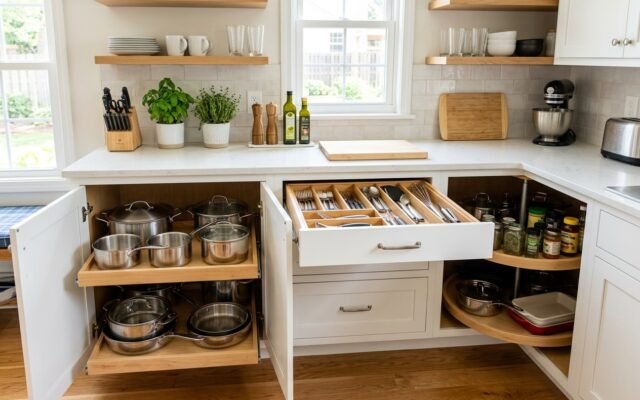
Although three quarter slides cost slightly less, full extension slides provide superior daily convenience. In addition, full extension hardware pairs perfectly with modern kitchen cabinet hardware like internal spice racks and utensil organizers. Therefore, total drawer access lets you maximize every cubic inch of base cabinet storage.
Over Travel Drawer Slides
Over travel drawer slides extend one to two inches past the cabinet face frame. This extended travel pushes the rear of the drawer box beyond the countertop edge. Thus, the extra travel creates complete clearance beneath thick countertop profiles.
For example, countertops with deep bullnose edges or thick two inch overhangs can block drawer openings. Over travel slides solve this problem by pulling the box farther into the room. As a result, cooks can lift tall blenders or food processors straight up without hitting the cabinet frame.
In addition, cabinetmakers select over travel runners for heavy appliance pull outs and hidden microwave trays. While over travel models cost slightly more than standard slides, they eliminate clearance headaches. Specifically, they ensure total accessibility in tight countertop layouts.
Soft Close and Push to Open Mechanisms
Soft close slides use hydraulic cylinders paired with spring catches to control drawer motion. When you push a drawer inward, the internal catch engages the fluid damper. Then, the mechanism pulls the drawer shut quietly during the final two inches of travel.
This gentle closure prevents loud slamming and protects fragile glassware from shifting. Furthermore, soft close damping reduces mechanical stress on the kitchen cabinet face frame joints. Consequently, protecting these wood joints extends the lifespan of your cabinetry.
Meanwhile, push to open slides provide an ideal mechanical solution for minimalist slab cabinets. By pressing lightly against the drawer front, an internal spring releases the drawer. Therefore, this mechanism eliminates the need for exterior cabinet pulls, creating sleek, modern lines.
Weight Capacity and ANSI Performance Ratings
Standard 75 to 100 Pound Ratings
Standard residential drawer slides carry certified load ratings between 75 and 100 pounds. These ratings meet rigorous standards established by ANSI and KCMA A161.1 guidelines. Specifically, certified slides undergo 25,000 open and close cycles while carrying 15 pounds per square foot.
In practice, a 100 pound load rating handles typical kitchen items with complete confidence. Flatware, cooking utensils, and pantry boxes fit easily within this standard capacity. Of course, remember that the rated load includes the weight of the wooden drawer box itself.
Because a solid maple drawer box weighs 10 to 15 pounds empty, usable capacity is slightly lower. Nevertheless, 85 pounds of net storage capacity is more than enough for daily cookware. Therefore, standard ratings satisfy most residential kitchen requirements.
Heavy Duty 150 to 220 Pound Ratings
Deep base drawers, wide pantry rollouts, and cast iron storage demand heavy duty drawer slides. Heavy duty commercial glides offer certified capacities from 150 to 220 pounds. Specifically, premium brands use thicker cold rolled steel rails and hardened ball bearings to support heavy items.
When you stack multiple Dutch ovens inside a wide 36 inch drawer, the contents weigh substantial amounts. Standard slides might sag, bind, or drop bearings under that concentrated weight. In contrast, heavy duty slides glide effortlessly without mechanical strain.
Besides cookware drawers, heavy duty slides are essential for vertical pantry pull out towers. These tall units hold dozens of canned goods and glass containers. Thus, heavy duty ratings ensure safety and smooth travel under maximum load.
Lateral Stability and Shelf Deflection
Lateral stability measures a slide system’s ability to resist twisting and side to side racking. When a cook pulls a wide 36 inch drawer from an off center corner handle, uneven forces occur. In particular, budget side mount tracks twist under unequal pressure, causing the drawer to bind.
In contrast, premium undermount slides use synchronized rack and pinion gearing within the runners. This synchronization ensures both sides move forward at the identical speed, regardless of pull location. As a result, wide drawers glide smoothly without binding or wobbling.
In addition, choosing dense kitchen cabinet wood types like hard maple or birch plywood ensures superior screw retention. Consequently, solid drawer sides prevent mounting screws from pulling loose under repetitive lateral stresses.
Sizing and Measurement Rules for Drawer Slides
Measuring Drawer Box Depth vs Cabinet Box Depth
A common mistake during cabinet remodeling is sizing slides based on exterior cabinet depth. In reality, slide length must match the exterior length of the drawer box itself. For instance, a standard kitchen base cabinet measures 24 inches deep, but it cannot fit a 24 inch slide.
Instead, the interior carcass requires clearance for rear hanging rails, back panels, and face frame setbacks. Consequently, a standard 24 inch base cabinet requires a 21 inch drawer slide and a matching 21 inch drawer box. Similarly, an 18 inch vanity cabinet uses 15 inch slides.
Therefore, always measure the exterior length of your wooden drawer box from front to back. Do not include the decorative drawer front panel in your measurement. For example, you can consult professional instructions on how to measure kitchen cabinets to verify your cabinet box clearances.
Clearance Requirements for Side Mount Slides
Side mount drawer slides require precise horizontal clearances along the sides of the cabinet opening. Specifically, side mount runners require exactly 0.5 inches of clearance between each drawer box side and cabinet wall. If your cabinet opening measures 15 inches wide, the drawer box must measure exactly 14 inches wide.
If the drawer box is even one sixteenth of an inch too wide, the bearings bind tightly against the steel tracks. Conversely, if the box is too narrow, the tracks pull apart and drop ball bearings. In addition, homeowners can browse options at Home Depot to inspect standard pre assembled drawer box clearances.
Furthermore, vertical clearance requires at least one eighth of an inch above and below the box. As a result, this clearance ensures the moving box clears adjacent face frame cross rails smoothly.
Clearance Requirements for Undermount Slides
Undermount slides follow completely different clearance rules than side mount hardware. First, undermount runners require a 0.5 inch recess beneath the drawer box bottom panel. Specifically, the bottom panel must sit one half inch above the lower edges of the wooden sides to clear the hardware.
Second, drawer side thickness must not exceed 0.625 inches (5/8 inch) for standard undermount slides. If your drawer box features 0.75 inch (3/4 inch) sides, you must purchase specialized wide side models. Otherwise, the wood sides will strike the steel runner chassis.
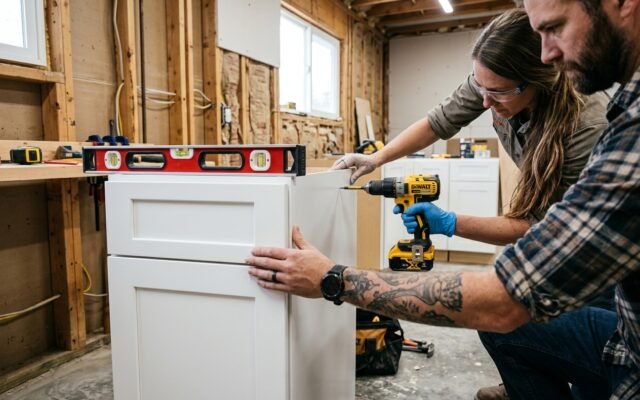
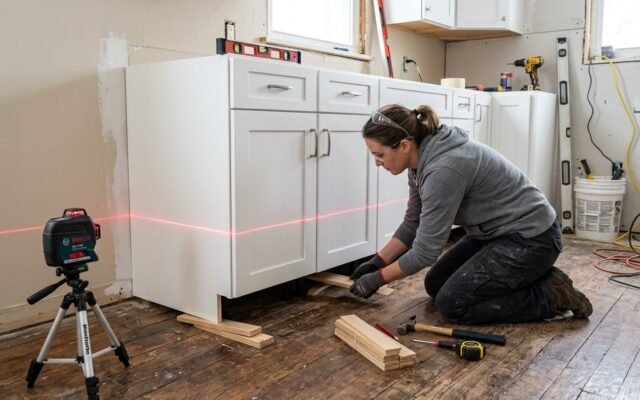
Finally, the drawer box width must match the manufacturer’s exact sizing formula. Before fastening your slides, review professional tips on kitchen cabinet installation to verify your cabinet carcass is level and plumb.
Drawer Slide Types Comparison Table
Key Specifications and Cost Comparison
Choosing the best drawer slide requires balancing weight ratings, mounting style, hardware cost, and drawer construction. In particular, the comparison table below highlights the critical specifications for every major drawer slide type used in modern kitchen cabinetry.
| Slide Type | Mounting Location | Weight Rating | Extension Type | Cost per Pair | Best Application |
|---|---|---|---|---|---|
| Concealed Undermount | Under drawer box | 100 to 125 lbs | Full extension with soft close | $25 to $55 | Everyday kitchen drawers and pots |
| Side Mount Ball Bearing | Drawer box sides | 75 to 100 lbs | Full extension | $12 to $25 | Utility drawers and budget remodels |
| Heavy Duty Undermount | Under drawer box | 150 to 220 lbs | Full or over travel | $60 to $110 | Cast iron pans and pantry pull outs |
| Center Mount Track | Center bottom | 35 to 50 lbs | Three quarter extension | $8 to $18 | Vintage antique drawer repair |
As the comparison shows, concealed undermount slides offer the best combination of strength, extension, and soft close comfort for everyday kitchen use. If you are shopping for finished cabinetry, you can explore cabinet selections on Wayfair to examine how factory manufacturers configure drawer hardware across various styles.
Ultimately, selecting the right hardware type ensures your kitchen drawers function smoothly for decades. Therefore, matching your slide choice to storage weight prevents premature wear and keeps your cabinetry aligned.
Frequently Asked Questions
What is the best brand of kitchen cabinet drawer slides?
Blum is widely considered the gold standard in residential cabinetry due to their smooth Tandem and Movento roller systems. Professional cabinetmakers value Blum hardware for its durability, quiet soft close damping, and four dimensional adjustment clips. In addition, Grass Dynapro, Hettich Actro, and Salice Futura manufacture exceptional drawer slides that deliver outstanding performance in luxury kitchens.
Can you replace side mount drawer slides with undermount?
Yes, you can replace side mount slides with undermount hardware, but you usually must build or order a new drawer box. Specifically, undermount slides require a precise half inch recess beneath the drawer bottom panel. Furthermore, undermount boxes must be narrower than side mount boxes, and drawer side walls cannot exceed five eighths of an inch in thickness.
How much weight can standard kitchen drawer slides hold?
Most standard residential kitchen drawer slides carry a certified load rating between 75 and 100 pounds. This certified capacity includes both the weight of the wooden drawer box and the stored contents. However, for heavy cast iron cookware or deep pantry rollouts, contractors recommend upgrading to heavy duty slides rated for 150 to 220 pounds.
What size drawer slides do I need for a 24 inch base cabinet?
A standard 24 inch deep base cabinet requires 21 inch drawer slides to allow proper clearance for the rear cabinet hanging rail. In addition, the exterior length of the drawer box must measure exactly 21 inches to match the slide length. Otherwise, installing a 22 or 24 inch slide inside a standard 24 inch base cabinet will collide with the back wall.