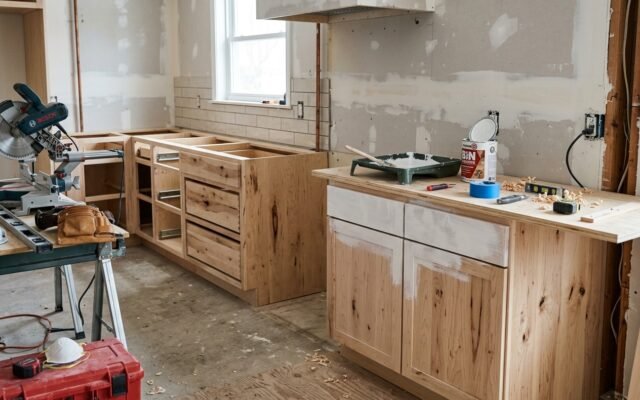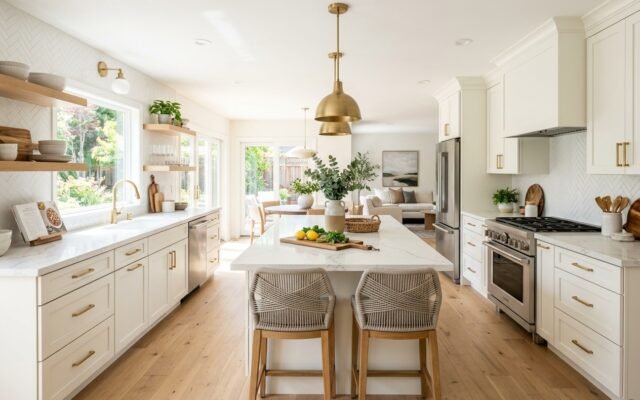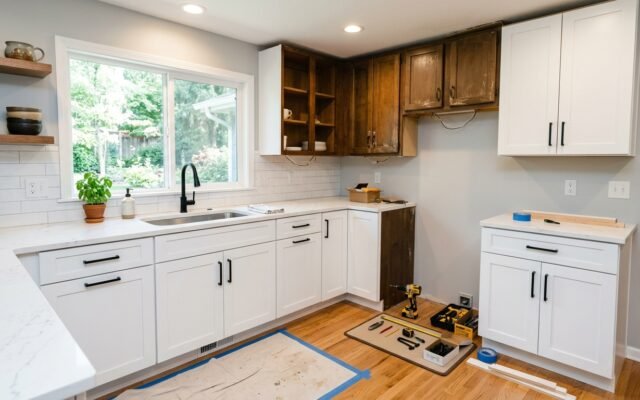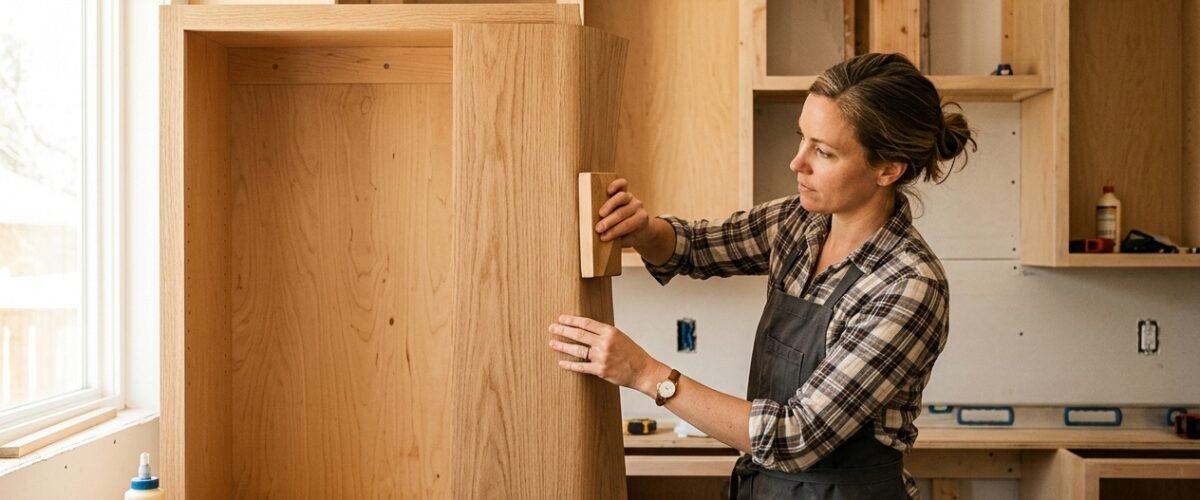
The average kitchen cabinet refacing cost typically ranges from $4,000 to $10,000 for a standard kitchen. In fact, choosing this approach saves homeowners 40 to 60 percent compared to total cabinet tear out and replacement. Refacing keeps your existing sturdy kitchen cabinet boxes intact while installing brand new doors, drawer fronts, and matching exterior veneers. Therefore, you create a factory fresh look on an efficient budget. Best of all, you avoid turning your home into a construction zone.
Most homeowners wonder whether refacing delivers genuine lasting durability or merely provides a quick cosmetic refresh. Because the core wooden framework of quality cabinetry easily outlasts decorative door styles, refacing represents an intelligent long term investment. In addition, you avoid costly countertop demolition, plumbing disconnections, and electrical rewiring. Ultimately, this renovation path modernizes outdated wood finishes while preserving the established structural footprint of your kitchen layout.
Average Kitchen Cabinet Refacing Cost Breakdown
National Average Pricing Overview
Nationwide data reveals that most homeowners spend an average of $7,200 to reface a mid sized kitchen. This standard scope covers 20 to 25 cabinet doors and drawer fronts. Total pricing scales directly with your kitchen linear footage and selected material tier. For example, a compact condo kitchen requires as little as $3,200 for basic laminate refacing. Meanwhile, an expansive kitchen with multiple islands can reach $14,000 or more for custom hardwood finishes.
Specifically, professional cabinet refacing companies charge between $120 and $280 per linear foot of installed cabinetry. A modest 20 linear foot kitchen averages around $4,000 for entry level materials. Conversely, a large 40 linear foot layout using solid hardwood veneers frequently exceeds $10,000. In addition, refacing dramatically enhances your kitchen cabinet resale value. You gain this equity boost without spending massive capital on total demolition.
Furthermore, geographic location plays a considerable role in local contractor bids. Remodeling companies in metropolitan coastal markets regularly charge higher labor fees than contractors in rural areas. Therefore, obtaining three written estimates from local specialists guarantees that you secure fair market rates for your specific neighborhood.
Cost Per Cabinet Opening
Professional cabinet refacing companies quote between $150 and $350 per cabinet opening for rigid thermofoil or laminate. In contrast, real wood veneer and solid hardwood doors range from $300 to $550 per opening. An opening refers to each individual cabinet door opening or drawer front opening across your layout. Therefore, counting individual openings allows homeowners to compare estimates accurately across different contractor bids.
For instance, a kitchen featuring 18 doors and 6 drawer fronts contains exactly 24 openings. If you select mid tier maple veneer at $350 per opening, your total base estimate equals $8,400. Likewise, choosing budget friendly thermofoil at $200 per opening drops that total investment to $4,800. Remember that decorative false drawer fronts positioned below kitchen sinks also count as separate openings during estimation.
Refacing vs Replacing vs Painting Cost Comparison
Evaluating all available cabinet update options helps homeowners make the most sensible financial decision. Professional cabinet painting costs $1,800 to $4,500. Cabinet refacing averages $4,000 to $10,000. Full cabinet replacement with stock or semi custom boxes runs $12,000 to $28,000 installed. While painting updates colors quickly, it fails to fix structural door damage or worn edge profiles.
On the other hand, refacing replaces all exterior moving components with factory finished materials. These new surfaces resist daily moisture, grease, and cleaning chemicals effortlessly. Furthermore, full cabinet replacement demands substantial extra expenses like new stone countertops and floor repairs. You can also view cabinet selections on Wayfair to compare alternatives. This research helps you understand current retail pricing for replacement units.
Material Options and Price Impact
Rigid Thermofoil and Laminate Refacing
Rigid thermofoil involves heat shrinking a vinyl foil over shaped MDF doors. A typical kitchen refacing costs $3,500 to $6,500. This material provides seamless moisture resistance and easy cleaning across all cabinet surfaces. Because the vinyl wrap covers the front and edges in one continuous layer, thermofoil eliminates unsightly edge seams entirely.
However, thermofoil cannot withstand high heat near ovens without heat shields. High cooking temperatures can soften adhesives, leading to unsightly delamination along door borders. In contrast, modern high pressure laminate withstands heavy daily impacts. It also resists scratching far better than painted finishes, making it ideal for busy homes.
Wood Veneer and Solid Wood Doors
Natural wood refacing applies matching quarter inch hardwood veneer skins to cabinet face frames. Installers pair these skins with solid maple or cherry shaker doors. Typical cost ranges from $7,000 to $12,500 for a standard kitchen. Homeowners frequently pair these veneer skins with timeless shaker kitchen cabinets doors. This combination produces a rich, custom furniture appearance that elevates your entire home aesthetic.
Selecting appropriate kitchen cabinet wood types significantly impacts your total material expenses. For example, red oak and clear maple offer durable grain structures at affordable price points. Conversely, premium hardwoods like black walnut or quartersawn white oak carry a substantial price premium. Moreover, real wood refacing allows for future sanding and restaining decades down the road.
Acrylic and High Gloss Modern Finishes
Acrylic slab doors create a sleek modern European appearance with deep reflective depth. Expect to pay $8,000 to $14,000 for full kitchen refacing in high gloss acrylic. Installers bond thick acrylic sheets to moisture resistant fiberboard cores, finishing every exposed edge with laser fused banding. Consequently, the finished cabinet faces exhibit a mirror like luster that expands visual space in smaller kitchens.
Besides remarkable visual appeal, high gloss acrylic doors resist ultraviolet color fading and surface staining. Spilled cooking oils and red sauces wipe away effortlessly with a damp microfiber cloth. Nevertheless, high gloss surfaces display fingerprints more readily than matte wood grains. Therefore, homeowners selecting acrylic often choose integrated edge pulls to minimize direct contact with door surfaces.
Labor and Professional Installation Expenses
Contractor Labor Rates
Labor comprises approximately 50 to 60 percent of a professional refacing estimate. Skilled refacing crews charge between $75 and $120 per hour to ensure seamless veneer edge trimming and square door alignment. Applying flexible wood veneer over face frames requires extreme precision and specialized woodworking tools. A novice mistake during veneer trimming can ruin an entire frame, creating costly material delays.
First, technicians clean and sand all existing cabinet frames to eliminate decades of cooking grease. Next, they cut and roll adhesive backed veneer strips across vertical stiles and horizontal rails. Then, they trim excess veneer flush before hand sanding every exterior corner. Because this labor intensive craftsmanship dictates overall longevity, hiring experienced tradespeople remains vital.
In addition, licensed refacing contractors carry comprehensive liability insurance and provide multi year workmanship warranties. When unexpected challenges arise, professional installers possess the expertise to correct them smoothly. Thus, contractor labor fees deliver valuable peace of mind and structural durability.
Project Duration and Disruption
Professional refacing takes three to five business days from start to finish. Because existing cabinet interiors and plumbing remain undisturbed, homeowners retain full kitchen use during the project. You do not need to pack away your dishes into storage boxes. Homeowners keep their everyday pantry items accessible throughout the renovation.
During the first two days, installers remove existing doors and prep all face frames. By the third day, the crew applies new exterior veneers and side panels. Finally, on days four and five, technicians mount new hinges, hang factory finished doors, and calibrate drawer slides. Meanwhile, a complete cabinet tear out regularly deprives families of a functioning kitchen for over a month.
Hidden Costs and Scope Additions
Upgrading to soft close hinges or adding pull out wire baskets typically adds $400 to $1,500 to the project. Replacing damaged toe kicks also increases overall costs. Discussing these custom modifications prior to signing a contract prevents unexpected billing surprises. In addition, allocating a 10 percent contingency buffer guarantees that you can easily absorb functional upgrades.
For example, installing decorative kitchen cabinet end panels transforms plain cabinet sides into elegant architectural features. Matching end panels cost between $80 and $220 per exposed side. Furthermore, installers frequently need to scribe new kitchen cabinet filler strips. These strips accommodate uneven drywall transitions, ensuring that newly mounted doors open without obstruction.
DIY Cabinet Refacing Costs and Feasibility
DIY Material Expenses
Homeowners ordering pre finished doors and veneer online spend $1,200 to $2,800 for 20 openings. This DIY path cuts overall project expenses in half. Direct to consumer cabinet door manufacturers allow you to order custom sized doors to the nearest sixteenth of an inch. By providing your own labor, you eliminate the single largest cost component of professional refacing.
Flexible peel and stick wood veneer sheets cost $60 to $110 per four by eight foot roll. Pre finished shaker cabinet doors cost between $45 and $95 each, depending on wood species and finish choice. Furthermore, you can check current prices on Amazon for peel and stick veneer. Comparing tool packs online helps you plan your project budget.
In addition, ordering hinges and drawer pulls in bulk online delivers substantial financial savings. High quality concealed soft close hinges cost roughly $3 to $6 per pair when purchased in contractor multi packs. Therefore, sourcing your own hardware keeps total material investments exceptionally manageable.
Necessary Tools and Supplies
DIY refacing requires a veneer edge trimmer, laminate slitter, J roller, contact cement, cordless drill, and sharp blades. These tools total roughly $150 to $250. Using improper cutting tools will cause brittle wood veneers to split along grain lines. Therefore, purchasing the right specialized tools represents an essential prerequisite for success.
First, a dual edge trimmer allows you to shear protruding veneer flush against cabinet stiles with a single smooth pass. Second, a heavy J roller applies hundreds of pounds of focused pressure, activating adhesive bonds and removing trapped air bubbles. Homeowners undertaking this project should consult detailed kitchen cabinet refacing diy tutorials before making their first cut.
When DIY Refacing Makes Financial Sense
DIY refacing works best for standard rectangular face frame cabinets with sound boxes. If your boxes have water rot or require extensive scribing, professional refacing is safer. Applying flexible veneer to straight, flat stiles and rails is straightforward for handy homeowners with intermediate woodworking skills. However, frameless European style cabinetry presents steep alignment challenges that test even seasoned DIY enthusiasts.
Time commitment represents another crucial consideration for ambitious homeowners. Refacing an entire kitchen independently requires 30 to 50 hours of meticulous, focused labor. On the other hand, consider learning how to paint kitchen cabinets if your budget is under $1,000. Painting remains an attractive fallback for tight remodeling budgets. Yet, for true structural renewal and modern door styles, refacing remains the undisputed value champion.
Cabinet Refacing Cost Comparison Table
Comprehensive Refacing Pricing Matrix
The following detailed cost matrix outlines average expenses across popular refacing techniques, materials, and complete replacement alternatives. Reviewing these figures helps you match your renovation expectations with your actual remodeling budget.
| Refacing Method | Material Used | Average Total Cost | Cost per Opening | Expected Lifespan |
|---|---|---|---|---|
| Rigid Thermofoil | Vinyl over MDF | $3,500 to $6,500 | $150 to $250 | 10 to 15 years |
| Standard Wood Veneer | Real wood veneer and solid doors | $6,500 to $11,000 | $280 to $450 | 20+ years |
| Premium Hardwood | Cherry or walnut veneer and custom doors | $9,000 to $15,000 | $400 to $600 | 25+ years |
| DIY Refacing Kit | Peel and stick veneer and ordered doors | $1,200 to $3,000 | $60 to $120 | 10 to 15 years |
| Full Box Replacement | Complete new semi custom cabinets | $14,000 to $28,000 | $600 to $1,200 | 25+ years |
Natural wood veneer delivers long term durability with a lifespan exceeding twenty years. In fact, it provides reliable service at a fraction of replacement costs. While DIY kits provide the lowest initial cash outlay, professional installation guarantees manufacturer backed warranties and flawless veneer adhesion.
Furthermore, calculating the annualized cost of each option demonstrates the economic advantage of refacing. For instance, an $8,000 wood veneer refacing project lasting 20 years costs roughly $400 per year of reliable kitchen service. In contrast, cheap cosmetic fixes that fail after three years often end up costing far more in repeated repairs.
Frequently Asked Questions
Is it cheaper to reface cabinets or replace them?
Refacing cabinets is roughly 40 to 60 percent cheaper than replacing them with equivalent new units. This savings occurs because existing boxes, counters, and electrical remain untouched. While full custom cabinet replacement easily exceeds $20,000, high quality professional refacing typically ranges between $6,000 and $10,000. In addition, refacing eliminates collateral costs such as replacing countertops, repainting drywall, and fixing damaged flooring.
How long does kitchen cabinet refacing last?
High quality wood veneer refacing lasts 20 years or more with routine cleaning. In fact, it performs identically to brand new factory built cabinets. Installers use commercial grade contact cement to bond hardwood veneers over solid face frames. Therefore, the finished exterior resists peeling and delamination. Thermofoil refacing offers a dependable lifespan of 10 to 15 years when protected from excessive oven heat.
Does Home Depot or Lowe’s do cabinet refacing?
Yes, major home centers offer turnkey cabinet refacing services through vetted local subcontractors. Most homeowners pay $6,000 to $12,000 for a standard kitchen. In fact, homeowners can also browse options at Home Depot to compare turnkey refacing estimates directly against replacement cabinetry packages. Working through big box retailers provides national warranty protection and promotional financing options.
Can you reface particleboard cabinet boxes?
Yes, you can reface particleboard boxes as long as the material remains structurally dry. Boxes must remain free of moisture swelling, sagging shelves, or crumbling fastener holes. Professional refacing technicians inspect particleboard boxes thoroughly before beginning installation. Water intrusion beneath sinks can weaken cabinet floors. In that case, technicians must reinforce damaged panels before applying adhesive veneers.