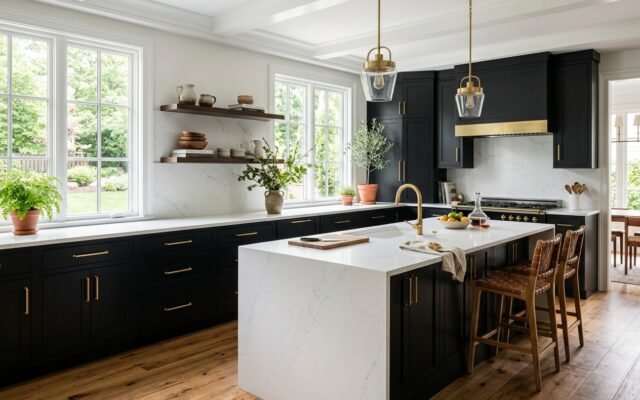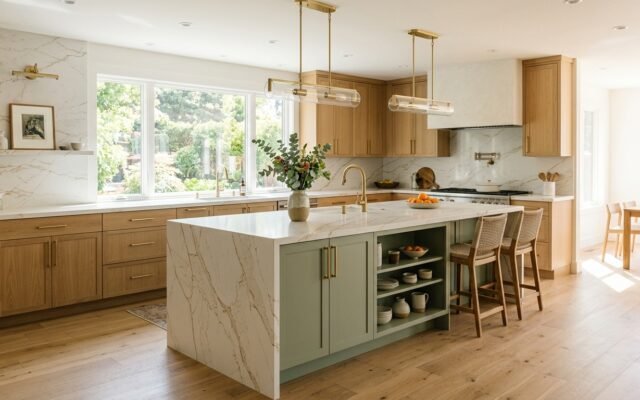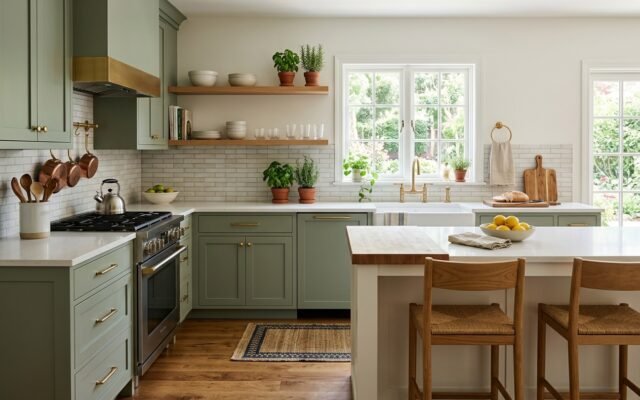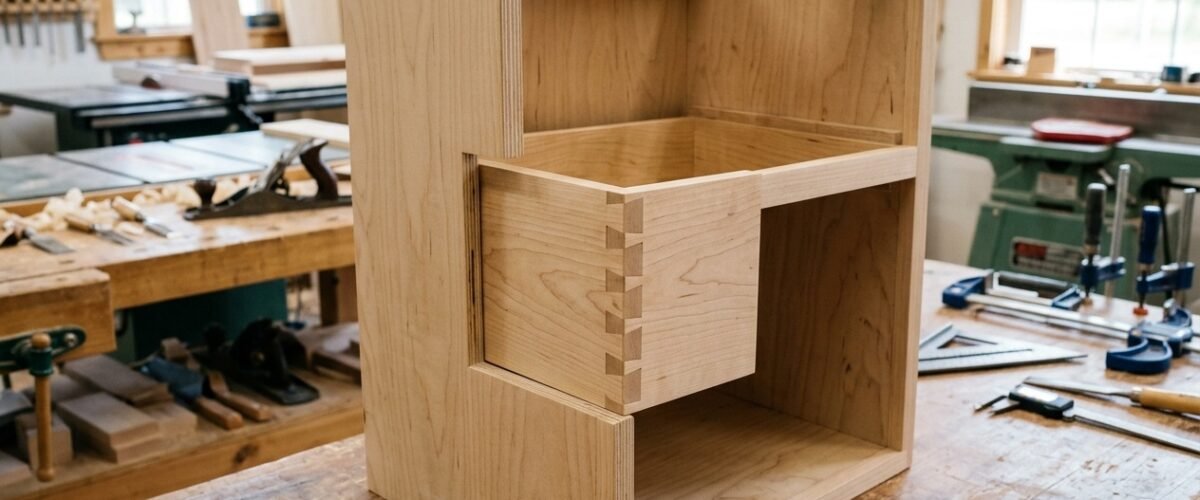
Kitchen cabinet boxes form the structural carcass that supports heavy countertops, drawer slides, and daily shelving loads. While cabinet doors determine front-facing style, the carcass material, thickness, and joinery method dictate whether your cabinetry survives for ten years or fifty years. In fact, premium three-quarter inch furniture plywood kitchen cabinet boxes consistently outperform particleboard by resisting water leaks, preventing shelf sag, and anchoring heavy hardware screws securely.
Therefore, investing in high-grade cabinet carcasses protects your kitchen investment over decades. Replacing damaged cabinet boxes requires removing heavy countertops, disconnecting plumbing lines, and rebuilding entire cabinet runs. In contrast, you can easily repaint or replace doors down the road if your underlying boxes remain solid and plumb. Homeowners should understand box materials, wall thicknesses, and joinery methods before signing cabinet purchase agreements.
Core Carcass Materials Compared
Furniture-Grade Plywood Boxes
Furniture-grade plywood consists of cross-laminated wood veneers glued with waterproof adhesives. Because the grain direction alternates ninety degrees with each consecutive layer, plywood provides exceptional dimensional stability across varying humidity levels. Consequently, plywood panels resist warping, cupping, and bowing far better than composite sheet goods under heavy everyday loads.
In addition, plywood offers superior screw-holding power along both face surfaces and machined edges. Kitchen cabinet hinges and drawer slides stay firmly anchored through decades of continuous cycling. Most importantly, plywood demonstrates remarkable moisture resistance under kitchen sinks. When an accidental plumbing leak occurs, plywood dries out with minimal thickness swelling, preserving your cabinet structure.
Cabinetmakers frequently specify maple or birch veneers for interior box surfaces to create wipe-clean interiors. For homeowners exploring premium cabinetry options, reviewing kitchen cabinet wood types helps match box construction with exterior door selections.
High-Density Particleboard and Furniture Board
High-density particleboard, frequently sold under the trade name furniture board, utilizes compressed wood chips and resin binders surfaced with melamine. Manufacturers press these wood particles under heat and pressure to create flat, uniform boards. Afterward, factories apply thin melamine or vinyl foil veneers to seal both surfaces.
While heavy and flat, particleboard swells permanently when exposed to plumbing leaks and holds screws less firmly over time. When plumbing drips penetrate unsealed edges, the compressed wood chips absorb moisture like a sponge and expand irreversibly. Furthermore, high-density particleboard weighs more than plywood, placing extra strain on wall anchors.
Similarly, particleboard holds mechanical fasteners far less firmly over repeated door cycles. Hinges fastened directly into particleboard side panels can pull out if cabinet doors experience aggressive tugging. While particleboard works reliably for dry pantry storage, wet sink base locations require extra vigilance.
Medium-Density Fiberboard (MDF)
Medium-density fiberboard consists of finely ground wood fibers combined with wax and synthetic resin binders. MDF is denser and smoother than particleboard, making it common for painted panels. However, MDF is heavy, prone to edge sagging on wide spans, and absorbs water rapidly if unfinished.
In addition, MDF brings notable limitations when utilized for complete cabinet carcasses. First, MDF is substantially heavier than standard plywood, making upper cabinet hanging and proper kitchen cabinet installation much more labor-intensive. Second, long MDF shelves sag noticeably under heavy ceramic plate stacks when unsupported over spans exceeding thirty inches.
Finally, raw MDF edges absorb moisture rapidly if water penetrates surrounding paint or laminate layers. For base cabinet boxes supporting stone countertops, plywood remains a far more reliable structural choice.
Marine Plywood vs Standard Birch Plywood
Marine plywood and European birch plywood feature multiple void-free plies, providing extreme dimensional stability. They represent the gold standard for premium custom cabinetry in humid climates. Standard birch plywood typically contains five to seven plies per three-quarter inch panel. In contrast, Baltic birch features nine to thirteen void-free hardwood plies bonded with exterior water-resistant resins.
Because these premium multi-ply sheets eliminate internal air pockets, fasteners bite into dense wood across every millimeter of thread depth. As a result, European multi-ply boxes provide extreme shear strength and maximum dimensional stability. Marine plywood utilizes even higher grade exterior veneers treated to withstand prolonged dampness.
Consequently, custom cabinet builders recommend multi-ply birch boxes for coastal residences and humid climates. Although these panels increase carcass material costs by twenty to forty percent, their structural lifespan easily exceeds fifty years.
Standard Carcass Thickness Specifications
Three-Quarter Inch Construction
Three-quarter inch construction is the premium standard across custom cabinetry. Three-quarter inch side and bottom panels support solid quartz and granite slabs without internal sagging or additional structural brackets. Full three-quarter inch panels provide immense structural rigidity throughout the entire cabinet run.
Furthermore, three-quarter inch side panels accommodate deep dado joints and sturdy shelf support pins. Screws driven into three-quarter inch partitions hold heavy under-mount drawer slides without poking through to adjacent cabinet compartments. If your remodeling budget permits, selecting full three-quarter inch box construction guarantees long-term durability.
Five-Eighths Inch Construction
Five-eighths inch construction offers a popular compromise common in European frameless systems and quality RTA cabinetry. Five-eighths inch provides adequate rigidity while reducing overall freight weight. Consequently, shipping costs drop and individual box handling becomes significantly easier during installation.
In addition, five-eighths inch carcasses perform admirably under standard three-centimeter granite countertops when installers level the base run properly. While slightly thinner than custom three-quarter inch panels, premium five-eighths inch plywood remains far stiffer than three-quarter inch particleboard.
Half-Inch Side Panels
Half-inch side panels are found in budget stock cabinetry lines. Half-inch panels are adequate for light storage but can flex under heavy cast iron cookware unless reinforced with corner gussets. Manufacturers utilize half-inch panels to lower material expenses and maximize warehouse freight efficiency.
However, half-inch side panels require solid hardwood face frames for front structural bracing. Homeowners comparing specifications can check kitchen base cabinet dimensions to plan box sizing accurately.
You can also browse options at Home Depot to see how different box thicknesses influence overall retail pricing across budget and semi-custom collections.
Back Panel Thickness Rules
Cheap cabinets use flimsy one-eighth or one-quarter inch hardboard backs, which tear away from wall studs. Quality boxes feature solid half-inch or three-quarter inch hanging backs. Cabinet back panels are critical for structural squareness and wall anchoring. When loaded with heavy dishware, thin hardboard backs can pull away from wall studs, creating dangerous cabinet sagging.
Alternatively, quality builders install thick hardwood hanging rails across top and bottom interior corners. These robust hanging cleats allow installers to sink three-inch cabinet screws directly into wall studs without ripping through backing material. When calculating how much do kitchen cabinets cost, always verify back panel thickness specifications.
Box Joinery and Construction Methods
Dado and Rabbet Joints
Dado and rabbet joints feature grooves routed into side panels to receive bottom and top shelves. Glued and fastened dados distribute heavy loads across entire side panels rather than single screw points. Specifically, a dado is a precision-milled rectangular groove that cradles the edge of a bottom shelf or top stretcher. Similarly, a rabbet is a step cut along an edge that receives the cabinet back panel.
As a result, base cabinet bottoms never sag or pull loose under heavy small appliances. Precision CNC milling machines cut tight-fitting dados in modern manufacturing plants, creating seamless, rigid joinery.
Pocket Screws and Face Frame Joints
Face-frame cabinetry attaches hardwood front frames with pocket screws, providing front box rigidity and solid hinge mounting points. Workers drill angled pocket holes into hidden interior faces of frame rails and stiles. Afterward, specialized hardened screws pull frame joints tight alongside waterproof wood glue.
Pocket screws create exceptionally rigid structural joints that prevent cabinet racking during shipping and installation. Furthermore, fastening the hardwood face frame to the plywood box creates a rigid front beam. This solid wood frame easily supports heavy European concealed hinges. Homeowners installing classic shaker kitchen cabinets benefit directly from this sturdy construction method.
Dowel and Cam-Lock Construction
Dowel and cam-lock construction is common in ready-to-assemble cabinetry. Fluted wood dowels aligned with steel cam fasteners allow quick DIY assembly without specialized woodworking clamps. Fluted hardwood dowels provide shear alignment and lateral strength, while steel cam fasteners draw adjacent panels tight with a simple turn of a screwdriver.
When buying ready to assemble kitchen cabinets, adding wood glue to every dowel hole doubles overall joint strength. For shoppers seeking modular options, you can browse options on Wayfair to examine how cam-lock cabinetry fits various remodeling budgets.
Corner Blocks and Metal Gussets
Structural bracing blocks installed in top interior corners keep base boxes square during countertop templating and heavy granite placement. Triangular plywood blocks glued and screwed into upper corners prevent boxes from twisting out of square during transport.
Furthermore, stone fabricators rely on these sturdy corner gussets when placing heavy granite slabs. Quality cabinets feature solid plywood corner gussets or stamped steel brackets rather than brittle plastic clips. These braces ensure that your cabinet boxes remain square for decades.
Face Frame vs Frameless Carcass Design
American Face Frame Boxes
American face frame boxes feature a solid three-quarter inch hardwood frame fastened to the box front. Face frames add rigidity and traditional shadow lines but slightly reduce drawer interior width. This hardwood border adds tremendous front rigidity and conceals raw plywood edges without requiring edge tape.
However, face frames slightly reduce interior accessibility. Because frame stiles overlap cabinet openings by up to one and a half inches, drawer boxes must be narrower than exterior carcass width. Nevertheless, face frames provide forgiving mounting surfaces for traditional hinges and decorative trims.
Installers frequently attach matching kitchen cabinet toe kick boards and trim pieces directly to the face frame base for a unified appearance.
European Frameless (Full Access) Boxes
Edges of the box panels are finished with thick edge banding without a front face frame. Frameless construction provides wider drawer openings and clean modern lines. Frameless cabinets are often called full access cabinets because drawers and pull-out organizers utilize full interior width of the carcass.
Consequently, frameless boxes deliver ten to fifteen percent more usable drawer volume compared to framed cabinets of identical dimensions. In addition, frameless construction provides clean sightlines favored in contemporary interior designs. When aligning frameless cabinets along uneven walls, installers rely on precision kitchen cabinet filler strips to prevent doors from binding against adjacent walls.
Shelf Support and Adjustable Pin Holes
System thirty-two millimeter drilled pin holes allow easy shelf relocation. Quality boxes feature metal shelf pins or metal sleeves to prevent hole enlargement over time. These vertical rows of pre-drilled holes spaced thirty-two millimeters apart allow homeowners to reposition interior shelves easily as kitchen storage needs change.
However, the quality of shelf support pins dramatically impacts shelf durability. Budget cabinets often include flimsy plastic shelf pins that shear under heavy stacks of ceramic plates. In contrast, premium boxes feature solid metal pins with silicone anti-slip cushions or threaded metal sleeves that prevent hole blowout. Homeowners can check current prices on Amazon for heavy-duty metal shelf pins to upgrade existing cabinet boxes instantly.
Box Maintenance and Reinforcement
Waterproofing the Sink Base Box
Applying peel-and-stick silicone mats or exterior marine spar varnish beneath sink plumbing prevents devastating leak damage before you discover a drip. Sink base cabinets face continuous exposure to plumbing leaks, wet dish sponges, and cleaning chemical spills. Therefore, proactive waterproofing is essential to prevent costly box rot.
In addition, install a fitted silicone under-sink drip tray or commercial waterproof mat with raised perimeter lips. These protective mats contain up to two gallons of water during minor drain leaks, giving you ample time to discover plumbing drips before moisture reaches subflooring.
Reinforcing Sagging Cabinet Shelves
Adding solid wood stiffener strips to front shelf edges stops shelf sag caused by heavy stacks of ceramic plates. Over time, wide cabinet shelves constructed from particleboard or thin plywood begin to sag under heavy dinnerware. Fortunately, you can restore sagging shelves with simple mechanical reinforcements. First, remove the sagging shelf and flip it upside down so gravity works in your favor.
Second, glue and screw a one-inch hardwood stiffener cleat along the front underside edge of the shelf. This wooden stiffener dramatically increases shelf load capacity without taking up valuable vertical storage space. For wide spans over thirty-six inches, adding a center vertical support partition prevents future shelf deflections entirely.
Repairing Stripped Hinge Screws
Filling stripped screw holes with hardwood dowels and wood glue creates a fresh anchor point for loose cabinet doors. Frequent door opening exerts intense leverage on hinge mounting screws. When screws strip out of particleboard or softwood plywood box walls, cabinet doors hang crookedly or detach. You can fix stripped hinge holes permanently using traditional woodworker techniques.
First, remove the hinge and ream the stripped screw hole clean. Next, coat a hardwood dowel or multiple birch toothpicks with PVA wood glue and tap them snugly into the enlarged hole. Allow the glue to cure completely for twenty-four hours before trimming excess wood flush. Finally, drill a fresh pilot hole and drive your hinge screw into solid new wood.
Cabinet Box Materials Comparison Table
Carcass Durability and Material Specifications
Selecting the right core material depends on your renovation budget, expected home tenure, and regional humidity levels. The comparison table below highlights critical durability metrics, moisture ratings, and realistic lifespan expectations across standard cabinet box construction options.
| Carcass Material | Moisture Resistance | Weight Capacity | Screw Holding Strength | Lifespan Expectation | Price Level |
|---|---|---|---|---|---|
| Furniture Plywood (3/4″) | Excellent | Very High | Superior | 30 to 50+ years | Premium |
| Furniture Board / Particleboard | Poor | Moderate | Fair | 10 to 15 years | Budget |
| Medium-Density Fiberboard (MDF) | Low | Moderate | Fair | 12 to 20 years | Moderate |
| European Multi-Ply Birch | Outstanding | Exceptional | Exceptional | 40 to 60+ years | Luxury |
FAQ
Are plywood kitchen cabinet boxes really better than particleboard?
Yes, plywood holds screws significantly better, supports heavy stone counters without sagging, and resists moisture damage far better than particleboard. While high-density particleboard works acceptably in dry pantry cabinets, plywood withstands accidental plumbing leaks and heavy stone countertops without sagging or permanent swelling.
What is the best thickness for kitchen cabinet boxes?
Three-quarter inch plywood is the optimal thickness for cabinet sides, bottoms, and shelves, ensuring maximum stability without bending. Full three-quarter inch panels provide maximum structural rigidity, resist bowing across wide spans, and support heavy granite or quartz countertops without requiring auxiliary center brackets.
Can you reuse old cabinet boxes during a kitchen remodel?
Yes, if your existing cabinet carcasses are plumb, sturdy, and free from moisture rot, you can save thousands of dollars by refacing doors while keeping the boxes. Many homeowners save thousands of dollars during kitchen renovations by refacing sturdy plywood cabinet boxes with new doors, drawer fronts, and updated hardware.
Why do cabinet manufacturers use particleboard if plywood is better?
Particleboard costs thirty to fifty percent less than furniture-grade plywood, allowing manufacturers to offer affordable entry-level cabinetry. Furthermore, particleboard provides exceptionally consistent panel flatness without natural wood voids, allowing high-volume cabinet factories to maintain affordable entry-level price points.