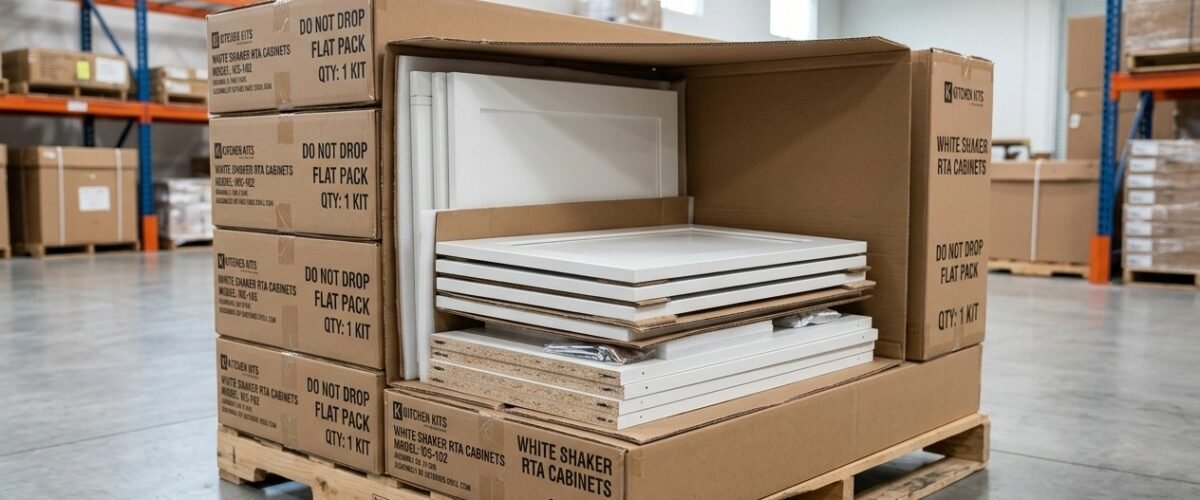
Ready-to-assemble kitchen cabinets are worth buying when your total kitchen renovation budget sits below $8,000 and you are willing to spend a weekend on assembly. At that price point, quality ready-to-assemble kitchen cabinets built from 3/4-inch plywood boxes with soft-close Blum or Grass hardware will outperform anything you find on a big-box shelf and arrive at your door in 7 to 14 business days. When your budget climbs past $12,000 or your layout includes unusual dimensions, blind corners, or stacked crown situations that demand true custom sizing, that is when ready-to-assemble kitchen cabinets start working against you. This guide ranks the top brands, explains what separates a cabinet that lasts 20 years from one that sags in three, and gives you the exact job-site tests a contractor uses before signing off on a shipment.
Quick Comparison Table: Top RTA Kitchen Cabinet Brands
| Brand | Box Material | Finish | Hinge Brand | Drawer Slide | Price / Linear Ft | Rating |
|---|---|---|---|---|---|---|
| Forevermark Cabinetry | 3/4-in plywood | Birch veneer, UV topcoat | Blum | Undermount soft-close | $110 to $160 | 4.6 / 5 |
| IKEA SEKTION | 5/8-in HDF honeycomb | Foil wrap, thermoplastic | IKEA proprietary | IKEA integrated soft-close | $65 to $95 | 4.2 / 5 |
| Cabinets To Go | 1/2-in plywood (most lines) | Thermofoil or painted MDF door | Grass | Side-mount soft-close | $80 to $130 | 3.9 / 5 |
| The RTA Store | 3/4-in plywood | Solid wood door, painted or stained | Blum | Undermount soft-close | $120 to $175 | 4.5 / 5 |
| Lily Ann Cabinets | 3/4-in plywood | Solid wood shaker door | Blum | Undermount soft-close | $115 to $165 | 4.4 / 5 |
| Wholesale Cabinets USA | 1/2-in to 3/4-in plywood (varies by line) | Painted MDF or solid wood door | Generic soft-close | Side-mount soft-close | $70 to $120 | 3.7 / 5 |
What RTA Construction Quality Actually Means
The cabinet industry loves to use words like “premium” and “solid construction” on product pages. Those words mean almost nothing without specs behind them. Here is what actually separates quality ready-to-assemble kitchen cabinets from a box that will fail in five years.
The Back Panel Test
Walk into any showroom or open a sample unit and press your thumb firmly into the back panel. On quality ready-to-assemble kitchen cabinets you will feel 3/8-inch plywood with zero flex. The panel stays rigid under firm pressure, and the surface feels dense. On a budget box you feel 1/4-inch MDF board that bows under light pressure. That flex is not cosmetic. The back panel is what keeps the cabinet square on the wall. Once it bows, the doors rack, the hinges stress, and the finish cracks at the corners. Reject any ready-to-assemble kitchen cabinet with a back panel thinner than 3/8-inch plywood.
Box Material: Plywood vs MDF
A full run of 10 linear feet of base cabinets will have its box sides, top rail, bottom, and back exposed to humidity cycles, cleaning products, and mechanical stress from hinges and slides every single day. For a detailed breakdown of how these two materials perform under those conditions, read our guide to MDF vs plywood cabinet boxes. The short version: 3/4-inch furniture-grade plywood holds screws four to five times better than MDF, resists moisture swelling, and does not crumble when you re-drive a screw during assembly. Choose plywood boxes every time you can afford to do so.
Joinery: Dovetail, Dowel, and Staple
Pull a drawer box out of any ready-to-assemble kitchen cabinet sample and look at the corners. Dovetail joinery in a solid wood or plywood drawer box is the benchmark. Dowel construction is acceptable in a plywood box. Staples alone on an MDF drawer box will open up within two years of daily use. The drawer slide brand matters almost as much: Blum Tandem and Grass Dynapro are the two names worth trusting. Both carry rated load capacities above 100 pounds and have replaceable parts. Generic no-name slides feel smooth in the showroom and develop lateral slop inside 18 months.
Door Construction and Finish Durability
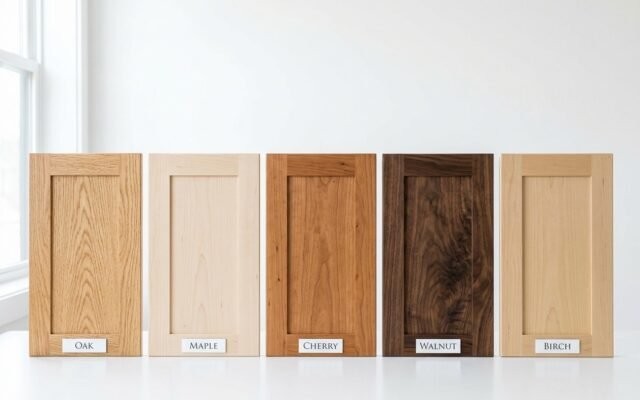
Solid wood shaker doors are the standard against which everything else is measured in ready-to-assemble kitchen cabinets. A five-piece door with 3/4-inch stiles and rails and a solid wood or MDF center panel will stay flat and hold paint for decades. Thermofoil doors look sharp at the point of sale and cost less, but the foil layer peels away from MDF at edges and near heat sources like ovens and dishwashers. Once the foil lifts, there is no repair that holds. Budget for solid wood doors whenever possible, especially near appliances.
Top Ready-to-Assemble Kitchen Cabinet Brands Ranked
1. Forevermark Cabinetry
Forevermark consistently delivers the best balance of price, plywood construction, and finish quality in the ready-to-assemble kitchen cabinet segment. The boxes are 3/4-inch plywood throughout, the Blum hinges are genuine (not knockoffs), and the UV topcoat on the interior resists staining better than any competitor at this price range. The lead time on special-order items can stretch to three weeks, and the selection of door styles is narrower than some competitors. For most homeowners doing a standard shaker kitchen, Forevermark hits the quality ceiling of what ready-to-assemble kitchen cabinets can offer without crossing into semi-custom pricing.
Pros: True 3/4-inch plywood, genuine Blum hardware, UV interior coating, wide dealer network for in-person inspection before buying.
Cons: Limited specialty sizes, longer lead times on non-standard orders, finish color options more conservative than The RTA Store.
2. The RTA Store
The RTA Store earns second place primarily because of its solid wood door quality and the consistency of its Blum hardware across every product line. The brand is direct-to-consumer online only, which cuts out the dealer markup. The trade-off is that you cannot inspect a sample unit before ordering. Their return policy requires you to document damage within 72 hours of delivery, so photograph every box before it goes inside.
Pros: Solid wood doors standard, 3/4-inch plywood boxes, Blum Tandem undermount slides, strong customer support for contractors.
Cons: Online only, 72-hour damage claim window is tight on large orders, some door styles have longer lead times in painted finishes.
3. Lily Ann Cabinets
Lily Ann is a strong option for homeowners who want real solid wood doors at a price point closer to the middle of the ready-to-assemble kitchen cabinet market. Construction specs are nearly identical to Forevermark: 3/4-inch plywood boxes, Blum hinges, and undermount slides. The finish quality on their painted lines is slightly less consistent than Forevermark based on multiple job-site inspections, with occasional grain telegraph on lighter colors. Their assembly video library is the best in the category and makes a real difference for first-time builders.
Pros: Competitive pricing on solid wood doors, excellent assembly support resources, plywood construction throughout.
Cons: Painted finish consistency can vary batch to batch, customer service response times slower than competitors during peak seasons.
4. IKEA SEKTION
IKEA sits fourth despite its enormous popularity because the construction specs are genuinely below the plywood-box benchmark that top ready-to-assemble kitchen cabinets should meet. The SEKTION system uses HDF panel construction with a honeycomb core, not solid plywood. Under the back-panel thumb test, SEKTION panels flex noticeably more than a 3/4-inch plywood competitor. That said, IKEA has engineered the system to compensate: the cam-lock assembly method creates a rigid box when assembled correctly, and the proprietary hinge and rail system is precise and durable. The real advantage is the 25-year warranty and the ability to walk into a store and inspect units in person. For rental properties and budget renovations, SEKTION is hard to argue with at its price point.
Pros: 25-year limited warranty, in-person showroom available, wide door front selection via third-party IKEA-compatible doors, strong resale parts availability.
Cons: HDF construction rather than plywood, proprietary system limits modification flexibility, door fronts sold separately add to final cost.
5. Cabinets To Go
Cabinets To Go offers showroom locations in many markets, which is a genuine advantage when shopping for ready-to-assemble kitchen cabinets. You can touch the product before committing. The line quality varies significantly by collection. Their premium Assembled line uses 1/2-inch plywood, which clears the MDF bar but falls short of the 3/4-inch standard set by Forevermark. The Grass hinges in most lines are solid. Watch out for their entry-level collections, which use thermofoil doors on MDF boxes and are not appropriate for high-use kitchens.
Pros: Showroom locations, Grass hardware in mid-range lines, assembly services available through their contractor network.
Cons: Box construction varies by product line (always confirm plywood vs MDF before ordering), entry-level thermofoil lines age poorly near heat sources.
Honorable Mention: Wholesale Cabinets USA
Wholesale Cabinets USA undercuts most ready-to-assemble kitchen cabinet competitors on price but also undercuts them on consistency. The plywood specification varies between their product lines, and customer service quality is uneven. For a secondary space like a laundry room or garage, this brand can deliver acceptable value. For a primary kitchen that gets daily use, the quality variance is too unpredictable to recommend confidently.
When to Choose Ready-to-Assemble Kitchen Cabinets vs Semi-Custom
This decision comes down to four variables: budget, timeline, layout complexity, and how long you plan to stay in the home. Our full breakdown of stock vs semi-custom vs custom cabinets covers every scenario in detail. For the quick version: choose quality ready-to-assemble kitchen cabinets when your layout fits standard sizing increments (3-inch width steps from 9 to 36 inches), your timeline allows 2 to 3 weeks for delivery, and your budget is under $10,000 for a full kitchen. Choose semi-custom when you need non-standard heights (not the 34.5-inch base cabinet standard), unusual depth requirements, or interior fittings like pull-out organizers and custom drawer configurations that RTA lines do not offer.
One overlooked factor is resale value. Ready-to-assemble kitchen cabinets from a quality brand with plywood construction and solid wood doors show just as well as semi-custom cabinets to a typical home buyer. The difference is primarily felt by the people living with them daily over 10 or more years. If you are flipping or renovating to sell, quality ready-to-assemble kitchen cabinets are the financially smart move. If you are building your forever kitchen, the $3,000 to $5,000 step up to semi-custom buys you better interior fittings and exact sizing that no RTA box can match.
Before committing to any option, work through our kitchen cabinet cost guide to build an accurate budget that accounts for delivery, installation labor, hardware, and finishing trim pieces that are easy to underestimate.
Assembly Tips from the Job Site
These are the steps contractors skip at their own expense. Follow them and your ready-to-assemble kitchen cabinets go together square and stay that way.
- Check every panel for square before assembly. Lay the box sides on a flat surface and measure diagonal corner to corner. Both measurements must match within 1/16 inch. A racked panel makes a racked cabinet, and no amount of shimming fixes that on the wall.
- Apply wood glue to every cam-lock joint before driving the cam. The cam-lock alone is structural, but glue eliminates joint creep over years of opening and closing doors. Use standard yellow wood glue and wipe squeeze-out immediately.
- Set your drawer slides with a level, not by feel. A slide that is 1/16 inch out of level on a 24-inch-wide cabinet creates a noticeable sag at the front of the drawer box after six months of use. Take the extra three minutes with a level.
- Hang uppers first, always. Working off a ledger board screwed into studs at 54 inches from finish floor keeps every upper cabinet at the same elevation and gives you room to maneuver without base cabinets in the way.
- Torque hinge mounting screws to the point of resistance, then stop. Over-driving hinge screws into a plywood face frame strips the threads and creates a loose hinge that no amount of adjustment will fix. If a screw strips, fill the hole with a toothpick and wood glue, let it cure 24 hours, and re-drive.
- Invest in the hardware before you install. The hinge and slide brands that ship with quality ready-to-assemble kitchen cabinets are already good. Do not swap them for generic hardware to save $40 on a $6,000 cabinet order. Read our piece on kitchen cabinet hardware quality to understand why the brand on the hinge matters more than how it looks in the showroom.
Frequently Asked Questions
Are ready-to-assemble kitchen cabinets as good as pre-assembled cabinets?
A properly assembled ready-to-assemble kitchen cabinet from a quality brand using 3/4-inch plywood and Blum hardware is structurally equal to a pre-assembled cabinet from the same product line. The cabinet does not know whether it was assembled in a factory or in your kitchen. The difference is labor: RTA saves you $30 to $80 per cabinet in factory assembly cost, and that saving is passed through to the buyer. The risk is improper assembly, which is why following the manufacturer sequence and using glue on joints matters.
How long do ready-to-assemble kitchen cabinets last?
A plywood-box ready-to-assemble kitchen cabinet with quality hardware, properly assembled and installed, will last 20 to 30 years in a normal residential kitchen. MDF-box cabinets with thermofoil doors in a high-humidity environment typically show failure at door edges and bottom panels within 7 to 12 years. The box material and the back panel thickness are the primary durability predictors, not the brand name on the box.
What is the biggest mistake people make when buying ready-to-assemble kitchen cabinets?
Ordering without requesting a sample door and box corner first. Every quality RTA brand will send a sample for a nominal fee or free. Hold the box corner in your hand, press the back panel, open and close the sample drawer 50 times, and look at the inside finish under good lighting. That 15 minutes of inspection will tell you more than any product description page.
Can a homeowner assemble ready-to-assemble kitchen cabinets without contractor experience?
Yes, with patience and the right tools. You need a power drill, a rubber mallet, a 24-inch level, a tape measure, and the ability to find wall studs. Most quality RTA brands provide step-by-step video assembly guides. Budget two hours per cabinet for your first few boxes and about 45 minutes per cabinet once you have the process down. The more important skill is wall installation: hanging cabinets plumb and level on a wall that may not be flat requires more patience than strength.
Do ready-to-assemble kitchen cabinets hurt home resale value?
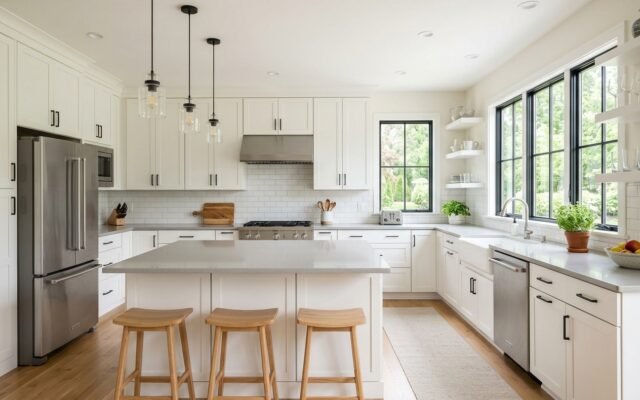
No, provided they are quality units that are properly finished and installed. A buyer or appraiser inspects the visual result, not the product category. White shaker ready-to-assemble kitchen cabinets from Forevermark or The RTA Store, installed flush and level with quality hardware, present identically to semi-custom shaker cabinets from a regional dealer. Where RTA can hurt resale is if the finish was a visible compromise, the hardware is visibly cheap, or the installation is off-level. The category is not the problem; quality execution is what appraisers and buyers respond to.