Slab kitchen cabinets feature completely flat, unadorned doors and drawer fronts that deliver a sleek, minimalist aesthetic. Because they lack profiles, grooves, or raised frames, slab cabinets are exceptionally easy to clean. They fit modern, transitional, and European kitchen styles effortlessly. In addition, these flat panels showcase bold natural wood grains or smooth painted textures without visual clutter. Homeowners seeking clean architectural design will find that slab doors create a streamlined, open culinary space.
When planning a kitchen remodel, cabinet doors establish the visual foundation for the entire room. While traditional styles rely on decorative moldings, slab doors prioritize functional simplicity and crisp geometry. Consequently, they pair seamlessly with modern stone countertops, integrated appliances, and subtle architectural lighting. In this guide, we examine slab door construction, popular finishes, realistic costs, and proven hardware combinations for your home.
What Are Slab Kitchen Cabinets
Defining Flat Panel Slab Doors
Flat panel slab doors consist of a single solid flat panel without rails, stiles, or decorative molding. They represent the hallmark of European modern cabinetry and mid-century contemporary design. Because there are no recessed panels or bevels, the entire surface remains smooth from edge to edge. Therefore, cleaning requires only a quick wipe across the face without scrubbing dust out of tight corners.
Manufacturers construct modern slab doors using engineered cores wrapped in natural wood veneer, acrylic, or durable laminates. In fact, an engineered core prevents the panel from expanding or warping across seasonal humidity shifts. For homeowners exploring diverse kitchen cabinet door styles, slab fronts offer the purest modern geometry available today.
Frameless European vs Face Frame Cabinets
Most slab doors mount directly onto frameless European cabinet boxes with concealed hinges. Frameless construction eliminates the front wooden face frame entirely. As a result, the doors fit tightly against one another with narrow gaps between adjacent panels. This tight spacing creates a flush, monolithic appearance across entire wall runs.
On the other hand, face frame cabinets feature a wooden frame around the front opening of the box. While face frame versions of slab doors do exist, frameless boxes maximize interior accessibility and usable drawer width. In addition, frameless construction allows full extension drawers to glide out without catching on frame lips. Thus, European frameless boxes remain the gold standard for authentic slab designs.
Slab vs Shaker Cabinet Comparison
Homeowners often compare slab fronts directly against classic Shaker doors when updating a kitchen. Specifically, shaker kitchen cabinets feature a recessed center frame bounded by horizontal rails and vertical stiles. While Shaker doors fit craftsman and farmhouse homes, their recessed perimeters collect dust, grease, and crumbs in the lower corners.
In contrast, slab doors offer a continuous flat face that sheds airborne grime effortlessly. Furthermore, slab doors highlight rich wood grain patterns across adjoining drawers far better than framed doors. When wood veneer runs horizontally across consecutive slab drawers, it creates an uninterrupted visual ribbon. Shaker frames inevitably break up that continuity with their vertical stiles.
Common Materials and Finishes
Real Wood Veneer Slab Doors
Real wood veneer slab doors feature thin sheets of genuine hardwood bonded securely over stable core panels. Premium manufacturers use rift-cut white oak, walnut, cherry, or maple veneers over dense medium density fiberboard cores. Consequently, veneered slab doors showcase stunning continuous horizontal or vertical grain matching without warping over time.
Because solid hardwood planks cup when exposed to humidity shifts, engineered veneer provides superior dimensional stability in busy kitchens. In addition, architectural veneer matching allows craftsmen to align wood grain patterns seamlessly across consecutive drawer stacks. Homeowners who want warm organic texture in a contemporary layout frequently choose natural oak veneer fronts.
High-Gloss and Matte Acrylic
Acrylic finishes provide deep reflective mirror gloss or velvety ultra-matte surfaces for modern kitchens. Premium acrylic doors consist of a thick polymer sheet fused onto a solid moisture-resistant substrate. High-gloss acrylic reflects natural daylight beautifully, making compact kitchens appear noticeably brighter and larger.
Meanwhile, matte acrylic finishes absorb ambient light and resist unsightly fingerprint smudges. In addition, quality acrylic resists UV color fading and does not yellow over years of sun exposure. Cleaning acrylic requires only warm water and a soft microfiber cloth. Thus, acrylic represents an ideal choice for busy homeowners who prioritize low maintenance and high visual impact.
Thermofoil and Melamine Laminates
Thermofoil and thermally fused melamine offer budget-friendly durability for high-traffic family kitchens. Thermofoil consists of a flexible vinyl foil vacuum-sealed over routed fiberboard under heat and pressure. This seamless wrapping covers the front face and edges simultaneously, creating dependable moisture resistance on flat surfaces.
Similarly, modern textured melamine features resin-saturated decorative papers fused onto particleboard cores. Today, high-pressure melamine replicates the tactile grain of timber with remarkable precision. These durable laminate surfaces resist scratches, scuffs, and household chemicals effectively. Many homeowners combine crisp white kitchen cabinets with textured woodgrain laminate islands for maximum visual appeal.
Solid Hardwood Slab Doors
Solid hardwood slab doors are relatively rare in production cabinetry because wide solid lumber naturally moves. Hardwood planks expand across their width during humid summers and contract during dry winter months. Without rail and stile frame joints to accommodate that natural movement, wide solid planks can cup or twist.
However, boutique custom cabinet shops build solid wood slab doors successfully when taking specific precautions. For instance, builders rout concealed expansion channels into the back of the doors and insert rigid steel stabilizer battens. In addition, pairing solid wood doors with painted units creates stunning two-tone kitchen cabinets that balance craft with engineering.
Best Hardware and Handleless Options
Edge Pulls and Tab Handles
Edge pulls are low-profile metal tabs that mount cleanly along the top edge of base cabinet doors. On upper wall cabinets, installers mount these pulls along the bottom edge for easy reaching. Because edge pulls grip the perimeter of the door, they preserve the pristine flat expanse of the front face.
Furthermore, edge pulls protect the delicate top edges of cabinet doors from hand oils and repeated physical contact. They come in brushed brass, matte black, stainless steel, and polished chrome to match contemporary plumbing fixtures. You can check current prices on Amazon to compare low-profile edge pull designs for your kitchen.
Long Bar Pulls for Vertical Lines
Sleek bar pulls spanning eight to twelve inches create dramatic lines across vertical slab doors and wide drawers. When mounted vertically on tall pantry cabinets, long bar pulls accentuate ceiling height and draw the eye upward. On wide base drawers, horizontal bar pulls provide a sturdy, ergonomic grip for heavy cookware.
In addition, choosing contrasting hardware finishes adds depth to minimalist cabinetry. For example, matte black pulls pop sharply against warm white oak veneer. Similarly, brushed brass complements deep navy or charcoal slab doors. Homeowners debating between knobs and long pulls can explore our detailed comparison of cabinet knobs vs pulls for installation advice.
Push-to-Open Mechanical Latches
Push-to-open mechanical latches eliminate external handles entirely for an uninterrupted flat facade. These spring-loaded magnetic latches allow homeowners to open doors with a gentle press of a knee, hip, or forearm. Consequently, you can access trash pullouts or base cabinets easily even when your hands are full.
Quality hardware manufacturers like Blum provide integrated mechanical systems that combine push-to-open activation with soft-close cushioning. Therefore, the cabinet door pops open smoothly when pressed and glides shut quietly without slamming. This handleless approach delivers the purest architectural appearance possible in modern residential design.
Integrated J-Pull and Channel Grooves
Integrated J-pull doors feature a continuous finger channel routed directly into the top or side edge of the panel. This recessed profile allows fingers to hook behind the door face to pull it open effortlessly. Because the handle is carved into the door itself, no external metal hardware interrupts the sleek exterior.
Alternatively, European Gola channel systems recess an aluminum rail behind the cabinet doors within the cabinet box carcass. Homeowners simply reach into the recessed continuous rail space behind the door edge to swing it open. To learn more about various mounting configurations, consult our guide to kitchen cabinet hardware options.
Design Trends and Kitchen Pairings
Warm Minimalist Wood and White
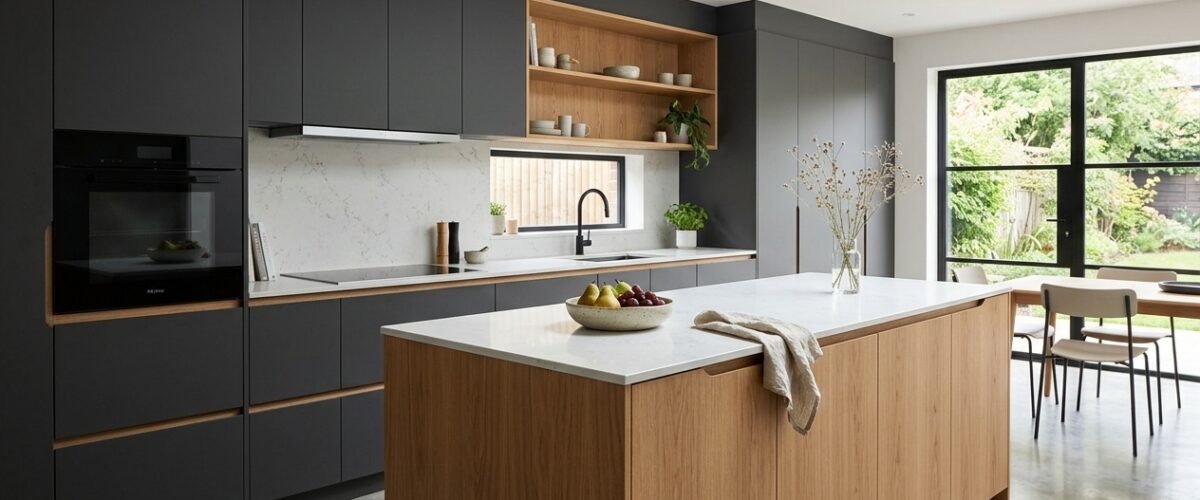
Warm minimalism has become one of the most requested design aesthetics in contemporary home remodeling. Rather than relying on stark clinical whites, warm minimalism blends natural organic textures with clean geometry. In particular, pairing natural rift white oak bases with flat matte white uppers creates an inviting, balanced environment.
White quartz countertops with gentle warm veining bridge the transition between the wood bases and white uppers. In addition, open wood floating shelves break up solid cabinet blocks and provide display space for ceramic dishware. This thoughtful combination feels light, spacious, and grounded in natural beauty.
Moody Dark Slab Cabinets
Moody dark kitchens make a bold, sophisticated design statement using deep matte slab surfaces. Designers frequently specify charcoal, matte black, or forest green slab doors in upscale urban apartments and modern homes. Because slab doors lack decorative shadows or ornate carvings, dark colors appear crisp rather than heavy.
Furthermore, dark slab cabinetry pairs exceptionally well with dramatic marble quartz backsplashes and brushed brass hardware accents. Integrated under-cabinet LED channel lighting casts a warm wash across dark vertical faces, highlighting the velvety matte texture. As a result, the kitchen feels luxurious, intimate, and tailored for evening entertaining.
Two-Tone and Mixed Texture Layouts
Combining complementary colors and tactile textures prevents large modern kitchens from feeling monotonous. For instance, designers often install textured walnut slab island doors while surrounding the room with satin off-white cabinetry. This deliberate contrast establishes the island as the architectural centerpiece of the room.
Similarly, mixing matte painted cabinets with fluted glass slab upper doors introduces subtle translucence. To order modular units online, you can shop slab styles on Wayfair to explore diverse two-tone finishes and configurations. Homeowners can also review our guide to ready to assemble kitchen cabinets to calculate potential cost savings.
Cost Comparison by Material and Tier
Stock and RTA Slab Cabinets
Stock and ready to assemble slab cabinets represent the most economical entry point for a kitchen remodel. Retailers like IKEA SEKTION sell melamine and thermofoil slab cabinets between 70 dollars and 180 dollars per cabinet box. Because these modular units arrive flat-packed, shipping costs remain low and DIY assembly saves on labor.
However, budget stock cabinets generally use standard density particleboard cores and basic melamine edge banding. While they perform well in low-moisture environments, homeowners must protect exposed sink edges from standing water. For rental properties or budget-conscious home renovations, stock slab units deliver high modern visual value at accessible price points.
Semi-Custom Slab Cabinets
Semi-custom slab cabinets offer an excellent balance of upgraded materials, durable finishes, and dimensional flexibility. Semi-custom manufacturers offer real hardwood veneers, durable high-gloss acrylics, and factory-baked polyurethane lacquer finishes. Prices typically range from 180 dollars to 450 dollars per cabinet box depending on selected door finishes.
In addition, semi-custom lines allow modifications in one-inch increments, ensuring tight fits around corners, soffits, and kitchen appliances. When ordering semi-custom cabinetry, reviewing standard kitchen base cabinet dimensions ensures adequate clearance for walkways and counter overhangs. To browse semi-custom selections and compare local cabinet pricing, you can browse options at Home Depot online.
Custom Architectural Slab Cabinetry
Custom architectural slab cabinetry provides bespoke craftsmanship tailored precisely to your home floor plan. Bespoke cabinetmakers hand-select premium hardwood veneers and execute sequential grain matching across entire wall spans. Custom architectural cabinetry typically runs from 500 dollars to 1200 dollars per cabinet box.
Moreover, custom cabinets feature heavy-duty plywood carcasses, dovetail solid wood drawer boxes, and integrated soft-close slides. Custom fabricators also create custom depths and integrated LED light channels built flush into the cabinet bottoms. While custom cabinetry requires a larger upfront investment, its superior construction delivers decades of dependable service.
Slab Cabinet Materials Comparison Table
Comparing Material Performance and Price Tiers
Choosing the best material for your slab doors requires weighing aesthetic priorities, household traffic, and available remodeling funds. The comparison table below outlines durability ratings, maintenance demands, average door costs, and optimal design styles for common materials.
| Material Type | Durability Rating | Maintenance Level | Average Cost per Door | Best Style Match |
|---|---|---|---|---|
| Real Wood Veneer | High | Low to Medium | 80 to 220 dollars | Warm modern and Scandinavian |
| Matte or Gloss Acrylic | Very High | Very Low | 90 to 250 dollars | Contemporary and European |
| Thermofoil Foil | Medium | Low | 40 to 110 dollars | Budget modern and rental properties |
| Textured Melamine | High | Very Low | 45 to 120 dollars | High traffic family kitchens |
As indicated in the data above, acrylic and textured melamine offer exceptional surface durability with minimal daily cleaning requirements. On the other hand, natural wood veneer provides unmatched organic grain character that elevates luxury residential spaces. Therefore, evaluating your daily cooking habits helps determine whether resilient laminate or natural timber veneer fits your household better.
Frequently Asked Questions
Are slab kitchen cabinets cheaper than shaker cabinets?
Basic laminate and melamine slab cabinets often cost less than five-piece shaker doors because they require fewer manufacturing steps. However, high-end grain-matched wood veneer or custom acrylic doors can exceed standard shaker pricing due to premium materials. Ultimately, the total cost depends on the specific core substrate, surface finish, and hinge hardware selected.
Do slab cabinets show fingerprints easily?
High-gloss acrylic and dark paint finishes show smudges more because light reflects directly off smooth dark surfaces. However, choosing satin sheens, natural wood veneers, or matte anti-fingerprint coatings keeps daily maintenance remarkably low. A quick wipe with a damp microfiber cloth easily removes routine kitchen smudges from any slab door.
Can slab cabinets look timeless?
Indeed, natural hardwood veneer slab cabinets in white oak or walnut have remained popular in modern design for decades. Because flat panel doors emphasize natural materials and clean proportions, they avoid dated ornamental trends. Pairing wood slab doors with classic stone countertops ensures your kitchen remains stylish across generations.
How do you clean slab kitchen cabinet doors?
Wipe the flat panels using a soft microfiber cloth with warm water and soap, then dry with a clean towel. Because slab doors have no recessed corners or decorative grooves, grime cannot collect in hard-to-reach crevices. Avoid using abrasive scrubbing pads, harsh bleach, or ammonia cleaners, as these chemicals can dull protective clear coats.