A solid wood pantry cabinet costs $400 to $1,200 for the cabinet itself, and the spread between the cheapest and the most useful type is wider than the price tags suggest. Ranked by usable storage per dollar, the double-door pantry wins, the tall single-door comes second, and the pull-out tower finishes last on value even though it solves a problem nothing else can.
A pantry that does not fit the wall is a return, not a purchase, and the shelf weight limits in your current cabinets tell you how much a new pantry shelf needs to carry.
1. Double-Door Pantry: 31.5 Usable Cubic Feet for $600 to $1,000
The double-door pantry is the best storage per dollar you can buy in solid wood. A 36-inch wide, 24-inch deep, 84-inch tall box holds about 42 cubic feet gross, and about 31.5 cubic feet stays usable after shelves and door clearance take their share. At a mid price of $800, that is about $25 per usable cubic foot.
Best for: a family kitchen that needs one big dry-goods store instead of three small ones. The 36-inch width fits two rows of cans per shelf.
Typical cost: $600 to $1,000 for solid wood, 30 to 36 inches wide.
Downside: it needs 36 inches of clear wall and 24 inches of depth, so it does not fit a galley under 8 feet wide without blocking the walkway.
Measured stat that justifies the rank: 3.9 usable cubic feet per $100 spent, the highest of the six.
2. Tall Single-Door Pantry: 21 Usable Cubic Feet for $400 to $700
The tall single-door pantry is the value pick for a small kitchen. A 24-inch wide, 24-inch deep, 84-inch tall box holds about 28 cubic feet gross and about 21 usable, and at a mid price of $550 that is about $26 per usable cubic foot.
Best for: a kitchen with one open wall section between the fridge and a doorway.
Typical cost: $400 to $700 for solid wood, 24 inches wide.
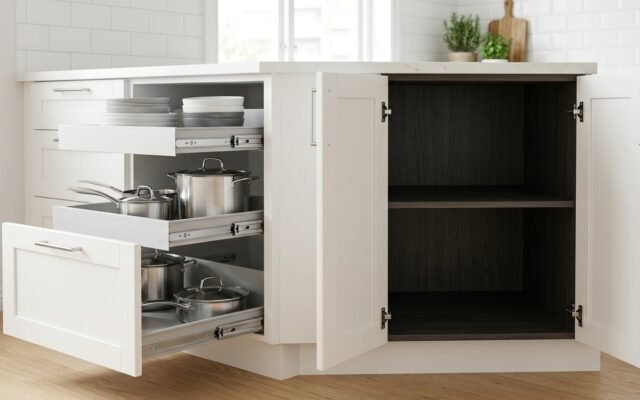
Downside: one door means one deep column of shelves, so items at the back of a 24-inch deep shelf hide behind the front row unless you add pull-outs. Add one pull-out shelf at waist height and the back row stops hiding, for about $40 in hardware and ten minutes with a drill.
Measured stat that justifies the rank: 3.8 usable cubic feet per $100 spent, effectively tied with the double-door on value.
3. Farmhouse Hutch Pantry: 31 Usable Cubic Feet for $900 to $1,800
The farmhouse hutch pantry ties the double-door on total storage and loses on price. A 48-inch wide, 20-inch deep, 80-inch tall hutch holds about 44 cubic feet gross and about 31 usable, but the open display top gives up closed storage, and the mid price of $1,350 works out to about $43 per usable cubic foot.
Best for: a dining area or open kitchen where the pantry doubles as display for dishes and glassware.
Typical cost: $900 to $1,800 for solid wood, 36 to 48 inches wide.
Downside: the open upper shelves collect dust and need styling to look right. Plan on dusting the open shelves weekly, and keep everyday dishes below and display pieces above.
Measured stat that justifies the rank: 2.3 usable cubic feet per $100 spent, nearly tied with the drawer pantry below.
4. Pantry With Drawers: 24.5 Usable Cubic Feet for $800 to $1,400
The pantry with drawers trades raw volume for access. A 30-inch wide, 24-inch deep, 84-inch tall box holds about 35 cubic feet gross and about 24.5 usable, because drawer boxes eat vertical space, and at a mid price of $1,100 that is about $45 per usable cubic foot.
Best for: a cook who wants small items visible and reachable, with drawers for spices, liners, and baking tools below eye level.
Typical cost: $800 to $1,400 for solid wood with 1 to 3 drawers, 30 to 36 inches wide.
Downside: every drawer costs you a shelf of bulk storage, so a household that buys in bulk runs out of room faster than the cubic feet suggest.
Measured stat that justifies the rank: 2.2 usable cubic feet per $100 spent, the lowest of the closed-storage types.
5. Freestanding Armoire Pantry: 21 Usable Cubic Feet for $500 to $1,500
The freestanding armoire pantry is the no-install option. A 36-inch wide, 20-inch deep, 72-inch tall armoire holds about 30 cubic feet gross and about 21 usable, and at a mid price of $1,000 that is about $48 per usable cubic foot.
Best for: a renter or a kitchen with no free wall run.
Typical cost: $500 to $1,500 for solid wood, 30 to 40 inches wide.
Downside: at 72 inches tall it gives up a full foot of storage, and the furniture look never sits flush with the rest of the kitchen. Measure the delivery path first: a 36-inch wide armoire needs a 36-inch clear doorway, not a 32-inch one. Check the hallway corners too, not just the door.
Measured stat that justifies the rank: 2.1 usable cubic feet per $100 spent, second-lowest on value, first on flexibility.
6. Pull-Out Pantry Tower: 17.9 Usable Cubic Feet for $700 to $1,200
The pull-out pantry tower holds the least and costs the most per cubic foot, and it still earns its place. An 18-inch wide, 24-inch deep, 84-inch tall tower holds about 21 cubic feet gross and about 17.9 usable, because pull-out shelves waste almost nothing, and at a mid price of $950 that is about $53 per usable cubic foot.
Best for: the 18-inch gap beside a fridge or at the end of a run where no other pantry fits.
Typical cost: $700 to $1,200 for solid wood with full-extension pull-out hardware, 18 inches wide.
Downside: the hardware alone adds $150 to $300 to the price, and the narrow shelves cannot hold a stand mixer.
Measured stat that justifies the rank: 1.9 usable cubic feet per $100 spent, the lowest on value and the only type that fits an 18-inch gap.
What Size Fits Your Wall: 84, 90, and 96 Inches Explained
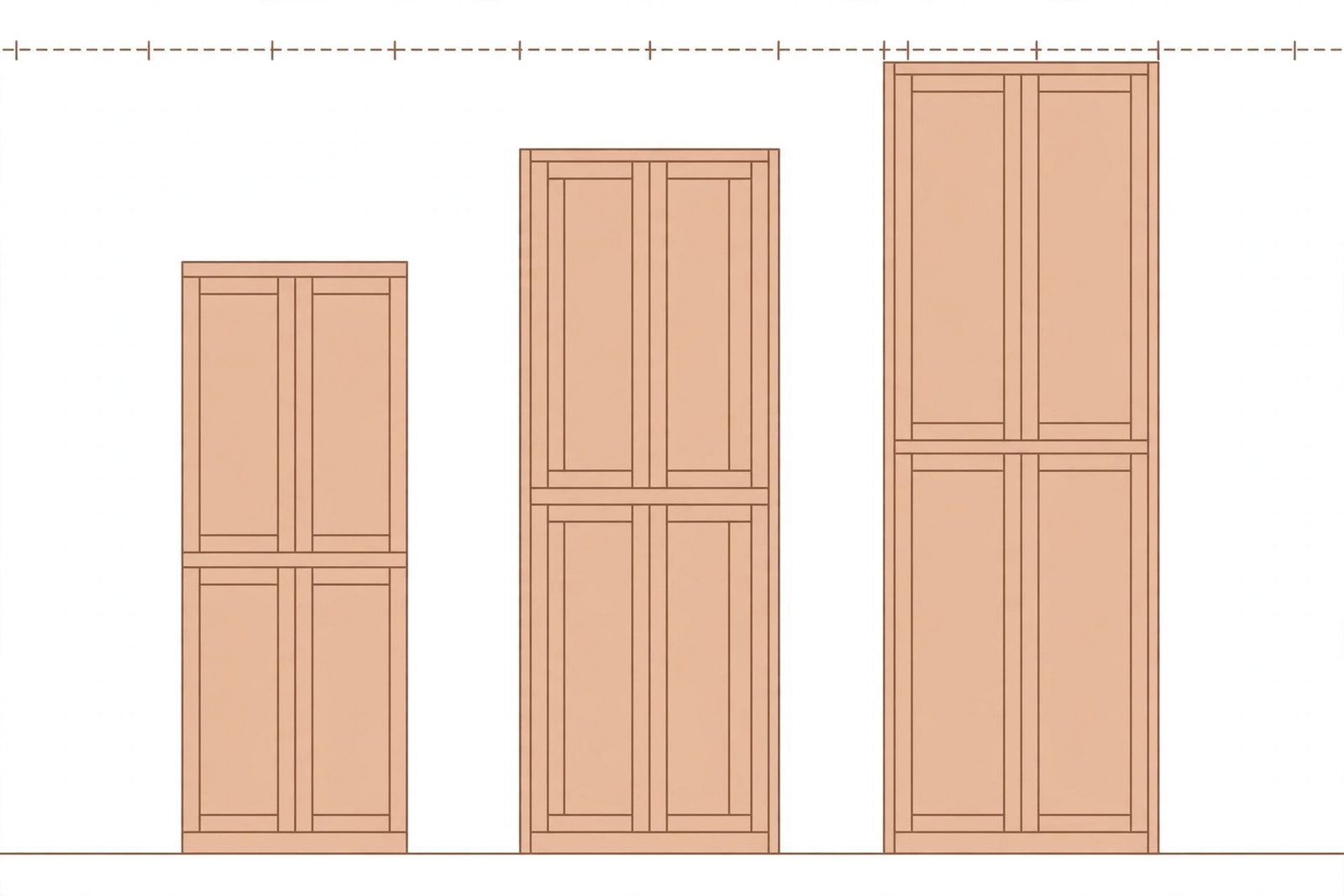
Standard pantry cabinets come 84, 90, or 96 inches tall, 12 or 24 inches deep, and 18, 24, 30, or 36 inches wide. An 84-inch pantry is the most common height and leaves about 12 inches below a standard 8-foot ceiling for crown molding. A 96-inch unit runs floor to ceiling on an 8-foot ceiling and adds roughly one more shelf of storage.
Depth decides what you can see. A 12-inch deep pantry holds cans and boxes in a single visible row. A 24-inch deep pantry matches your base cabinets and holds large appliances. 18 inches fits pull-out shelves, 24 inches takes a single door, and 30 to 36 inches takes double doors.
Which Wood Holds Up: Maple 1,450, Birch 1,260, Pine 380

Hardness decides whether a pantry door still looks new after five years. The Janka test presses a steel ball into the wood and reports the force in pounds, and a higher number means the surface resists dents better. Hard maple rates 1,450 pounds, yellow birch rates 1,260, white oak rates 1,360, and eastern white pine rates 380.
| Wood | Janka hardness (lb) | Dent resistance vs pine | Best pantry use |
|---|---|---|---|
| Hard maple | 1,450 | 3.8x | Doors and drawer fronts that take daily hits |
| White oak | 1,360 | 3.6x | Stained showpiece pantries, heavy use |
| Yellow birch | 1,260 | 3.3x | Painted pantries, best value hardwood |
| Eastern white pine | 380 | 1.0x | Budget or rustic looks, dents easily |
Maple costs the most of the four and holds up the best. Birch is the value hardwood: nearly as hard as oak, takes paint cleanly, and costs less than maple. Pine is the cheapest solid wood and the softest. If you want the look of light kitchen cabinets, maple and birch both take a pale finish.
How Much Weight a Shelf Holds: 75 Pounds per 30-Inch Shelf
Cabinet shelves are tested at 15 pounds per square foot for seven days, and a shelf passes if it does not deflect excessively or show joint separation. Apply that test load to pantry shelf sizes and the capacity is simple math: shelf area times 15 pounds.
| Shelf size (W x D) | Area (sq ft) | Test load (lb) |
|---|---|---|
| 18 x 24 in | 3.0 | 45 |
| 24 x 24 in | 4.0 | 60 |
| 30 x 24 in | 5.0 | 75 |
| 36 x 24 in | 6.0 | 90 |
A loaded shelf of canned goods weighs 15 to 25 pounds, bulk flour and sugar weigh 20 to 35 pounds, and a full dense shelf runs 30 to 50 pounds. A 30-inch shelf rated at 75 pounds carries a full load of cans. A 36-inch shelf carries 90 pounds, so it needs 3/4-inch plywood or solid wood.
How These Were Ranked: Cost per Usable Cubic Foot in 6 Rows
The ranking uses one measurable number: usable cubic feet per $100 spent. Usable volume is gross volume minus what shelves, door clearance, and drawer boxes take: about a quarter for a shelf pantry, about 30 percent for a pantry with drawers or an open hutch top, and about 15 percent for a pull-out tower.
| Type | Gross cu ft | Usable cu ft | Mid price | $ per usable cu ft | Usable cu ft per $100 |
|---|---|---|---|---|---|
| 1. Double-door | 42.0 | 31.5 | $800 | $25 | 3.9 |
| 2. Single-door | 28.0 | 21.0 | $550 | $26 | 3.8 |
| 3. Hutch | 44.4 | 31.1 | $1,350 | $43 | 2.3 |
| 4. With drawers | 35.0 | 24.5 | $1,100 | $45 | 2.2 |
| 5. Armoire | 30.0 | 21.0 | $1,000 | $48 | 2.1 |
| 6. Pull-out tower | 21.0 | 17.9 | $950 | $53 | 1.9 |
The table ranks value, not suitability. The pull-out tower finishes last on value and first on access for a narrow gap, and the decision tree below routes you to it when the gap is 18 inches. If you build your own, run the same math first: read how to build kitchen cabinets before you cut a board.
Which One Should You Buy: 4 Questions, 1 Answer
Answer four questions in order and the type picks itself.
How wide is the gap? 18 inches leaves one option: the pull-out tower. 24 inches points to the single-door. 30 to 36 inches opens the double-door and the drawer pantry. 36 inches or more with display in mind points to the hutch.
Do you buy in bulk? Bulk buying needs closed shelf volume, so the double-door wins. If you shop weekly and cook from a small set of staples, the single-door or the armoire covers it.
Do small items get lost in your kitchen? If spices, packets, and baking tools vanish into deep shelves, the drawer pantry or the pull-out tower earns its premium in access, even though both cost more per cubic foot.
Are you renting or planning to move? The armoire is the only type that moves with you without a contractor.
If two types still tie, buy the one with the lower cost per usable cubic foot.
3 Mistakes That Cost $40 to $400 to Fix
A shelf sags under canned goods. A 36-inch span with a thin particleboard shelf bends a visible curve within a year of canned goods. Fix it with a 3/4-inch plywood shelf and a center support, about $40 to $90 in materials, and check the shelf thickness before you buy, not after it sags.
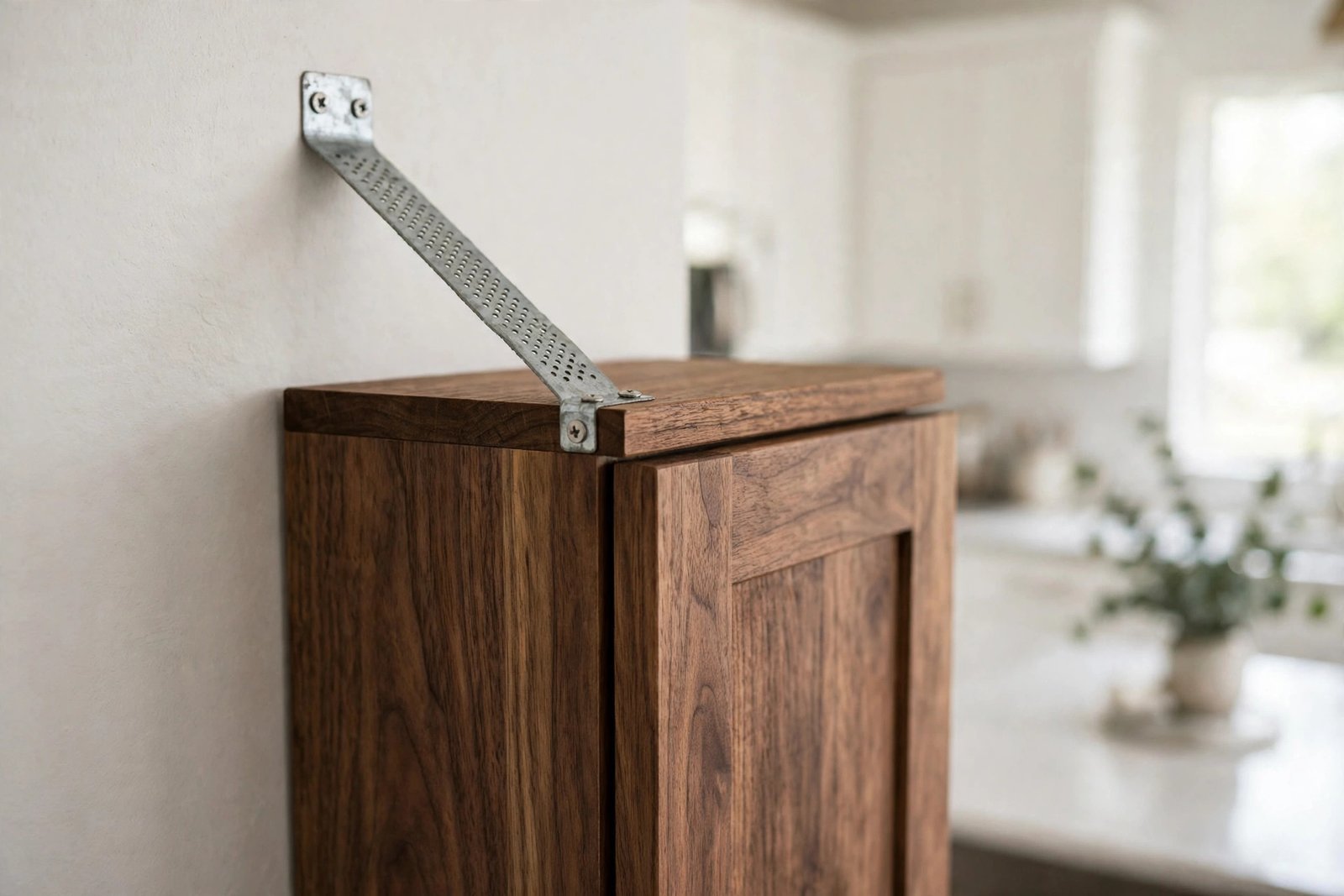
A tall pantry tips forward. An 84-inch pantry loaded with 100 pounds or more is top-heavy, and a child pulling a drawer open can pull it over. Fix it before it happens with an anti-tip strap and two screws into a stud, about $10 to $15. After a tip-over, the repair runs into hundreds of dollars in broken dishes and damaged flooring.
The depth blocks the walkway. A 24-inch deep pantry in a narrow galley leaves no room to stand in front of it with the doors open. Fix it by ordering a 12-inch or 18-inch deep unit for a tight wall. A return after delivery can cost $0 to $150 in restocking and freight.
Pre-Order Checklist: 7 Measurements Before You Pay
- Wall width at the top, middle, and bottom: use the smallest number.
- Floor to ceiling at the left, center, and right: use the shortest, minus 1/2 inch for clearance.
- Depth from the back wall to the nearest obstruction: counter, island, or door swing.
- Doorway and hallway width on the delivery path: a 36-inch pantry does not fit through a 32-inch door.
- Outlet and light switch positions on the wall: note them on a sketch.
- Floor level across the footprint: an uneven floor needs shims and changes the final height.
- Door swing clearance in front of the pantry: you need room to open both doors fully and stand in front of them.
Frequently Asked Questions: 6 Answers
How much does a solid wood pantry cabinet cost?
A solid wood pantry cabinet costs $400 to $1,200 for a standard 30 to 40 inch unit, and $1,200 to $2,500 or more for a premium or custom build with soft-close hardware and pull-outs.
What size pantry cabinet fits a small kitchen?
A 24-inch wide, 12 to 18 inch deep, 72 to 84 inch tall pantry fits most small kitchens. It holds about 21 usable cubic feet and fits through a standard 30-inch doorway.
Is solid wood better than MDF for a pantry?
Solid wood holds screws better, resists dents better at the same thickness, and lasts 20 to 50 years against 5 to 10 for MDF. MDF costs less and paints smoothly, so it suits a painted pantry on a tight budget.
How do you stop a tall pantry from tipping over?
Screw an anti-tip strap from the top back of the pantry into a wall stud. One strap and two screws cost about $10 to $15 and stop the most common tip-over.
Can a pantry cabinet hold small appliances?
Yes, on the bottom shelf or a dedicated appliance shelf. A stand mixer weighs 15 to 30 pounds, which a solid wood shelf rated at 75 pounds carries easily. Keep the appliance at waist height or below.
How many shelves does a pantry cabinet need?
Five to eight adjustable shelves suit a 72 to 84 inch pantry. Space them 10 to 12 inches apart for cans and boxes, and leave one taller gap of 15 to 18 inches for cereal boxes and bulk items.