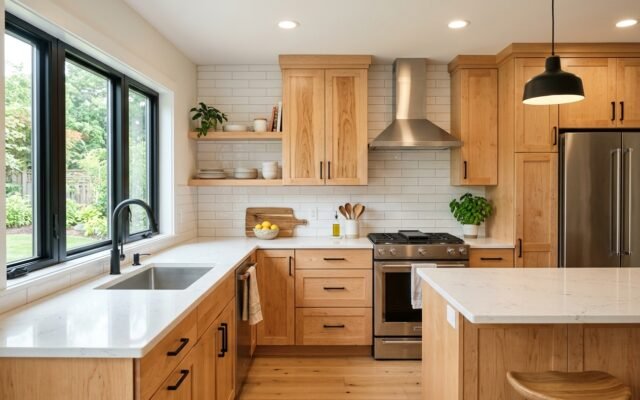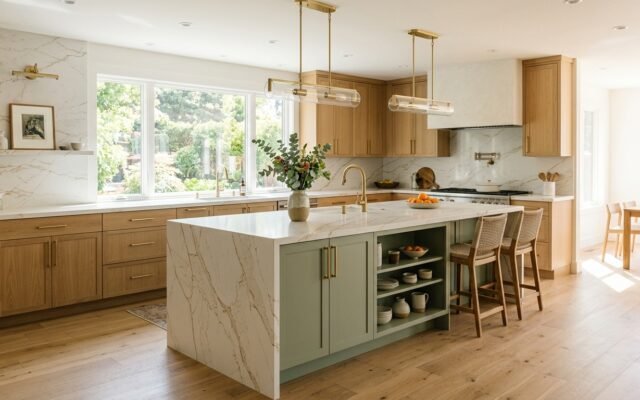
Wood kitchen cabinets remain the gold standard for residential durability, repairability, and long-term property value. Genuine wood kitchen cabinets deliver unmatched structural strength across decades of intense meal preparation. Unlike synthetic thermofoil or laminate surfaces that peel near hot ovens, genuine hardwood cabinets can be sanded, re-stained, or repainted multiple times over decades of use. In addition, premium solid wood face frames anchor heavy granite and quartz countertops securely without structural sagging.
Choosing the right wood cabinetry requires balancing species hardness, grain aesthetics, carcass box materials, and overall budget. This comprehensive contractor guide breaks down the best hardwood species, box joinery methods, protective finishing systems, and realistic pricing. As a result, you can design a kitchen that looks gorgeous and withstands heavy family use for generations.
Top Hardwood Species for Kitchen Cabinets Compared
Selecting the right lumber species sets the foundation for kitchen beauty and long-term durability. Hardwood species vary significantly in hardness, grain structure, and tone. Therefore, understanding these core species ensures you pick the ideal match for your home.
Hard Maple
Hard maple stands as the top choice for modern and transitional kitchens. Because maple features a tight, uniform grain, it creates a flawlessly smooth surface. Furthermore, hard maple achieves a Janka hardness rating of 1450, which provides outstanding dent resistance against dropped pots and cooking utensils.
In addition, hard maple serves as the industry benchmark for factory painted finishes. Its closed grain prevents paint absorption ridges over time. However, clear stains on maple can occasionally appear blotchy without a quality pre-stain wood conditioner. Maple delivers remarkable strength and clean visual lines for high-traffic homes.
Cherry Wood
Cherry wood is celebrated for its warm, rich red undertones and silky smooth grain. While cherry features a moderate Janka hardness rating of 950, it resists everyday scuffs quite well. Moreover, cherry wood contains natural gum pockets and subtle pitch marks that add authentic character to traditional spaces.
Most notably, cherry wood darkens significantly with age and exposure to natural sunlight. Consequently, your cabinets will develop a deep, lustrous copper patina over their first two years. For best results, homeowners should pair cherry with natural or medium amber stains to highlight its distinctive wood grain.
Red and White Oak
Oak remains an enduring favorite among custom cabinet builders and busy households. White oak features a Janka hardness of 1360, while red oak rates at 1290. Both varieties boast a prominent cathedral grain pattern that masks minor scratches, fingerprints, and dings effortlessly.
In particular, white oak offers closed cellular pores that resist moisture intrusion exceptionally well. This water resistance makes white oak ideal for coastal designs and rustic farmhouse kitchens. Furthermore, rift cut and quarter sawn white oak provide stunning linear grain lines that look magnificent in contemporary cabinetry.
Walnut Hardwood
Walnut represents the pinnacle of luxury cabinet hardwoods. With its rich chocolate brown heartwood and subtle purple undertones, walnut creates an upscale ambiance in modern kitchens. In fact, walnut grain flows smoothly with elegant swirl patterns that command attention across large kitchen islands.
Although walnut has a slightly softer Janka rating of 1010, its dimensional stability is exceptional. Because walnut shrinks and expands minimally with seasonal temperature shifts, door joints remain tight. Therefore, custom cabinet makers frequently choose walnut for architectural millwork, luxury feature walls, and statement furniture pieces.
Hickory Hardwood
Hickory is the strongest and heaviest domestic hardwood used in kitchen cabinetry. With an astonishing Janka hardness rating of 1820, hickory resists impacts, pets, and heavy kitchen traffic without flinching. For instance, dropped heavy cast iron skillets rarely leave noticeable marks on solid hickory frames.
In addition, hickory displays dramatic visual contrast between creamy white sapwood and dark brown heartwood. This wild grain pattern gives cabinets an unmistakable rustic aesthetic. However, its intense density makes hickory challenging to cut, drill, and stain evenly during workshop fabrication.
Full Hardwood Species Comparison Table
To help you evaluate your options quickly, this comparison table details hardness ratings, grain textures, ideal finishes, and typical material costs across all five major species.
| Hardwood Species | Janka Hardness | Grain Texture | Best Finish Application | Relative Cost Tier |
|---|---|---|---|---|
| Hard Maple | 1450 | Fine, closed grain | Factory enamel paint, clear lacquer | Moderate to Premium |
| Cherry Wood | 950 | Smooth, tight satin grain | Warm translucent stains, clear coat | Premium |
| White Oak | 1360 | Coarse cathedral, rift ray flecks | Matte conversion varnish, wire brushed | Premium |
| Red Oak | 1290 | Pronounced open cathedral grain | Traditional honey and dark wiping stains | Budget to Moderate |
| Walnut | 1010 | Rich flowing grain, fine pores | Natural oils, satin clear coats | Luxury |
| Hickory | 1820 | Bold contrast, coarse wild grain | Clear coat, light honey stains | Moderate to Premium |
Solid Wood vs Engineered Wood in Cabinet Construction
Homeowners often assume that the best kitchen cabinets are constructed entirely of solid hardwood boards. However, professional cabinet builders know that solid wood and engineered wood serve distinct structural purposes. Using the right material in the right place prevents catastrophic seasonal failure.
Where Solid Hardwood Belongs
Solid hardwood belongs on high-stress exterior components that encounter physical contact. Specifically, cabinet face frames, door stiles, door rails, and drawer fronts should always be genuine hardwood. Solid wood holds screw threads firmly, ensuring that heavy cabinet doors never pull loose from their hinges.
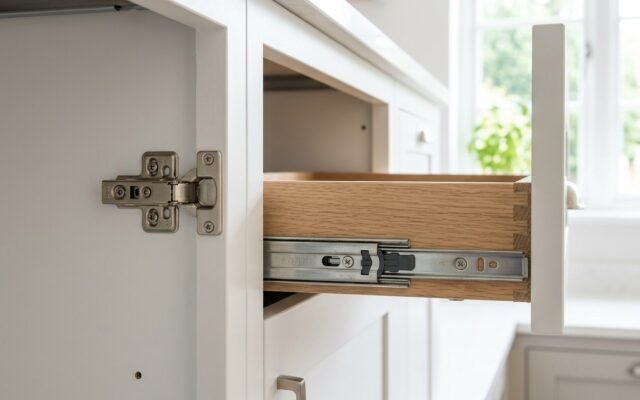
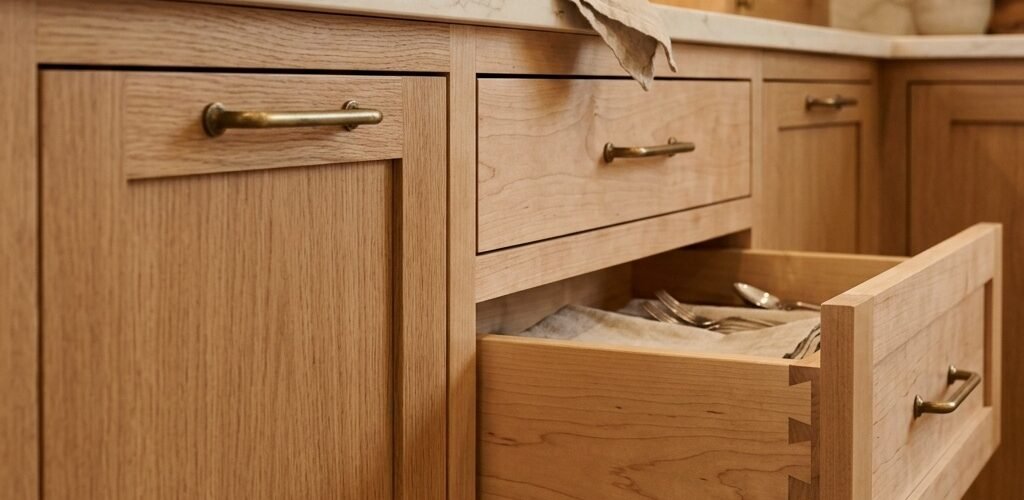
Similarly, solid hardwood makes the best drawer box sides. When joined with precision dovetails, solid maple or birch drawer boxes carry heavy dishware without flexing. Furthermore, solid wood edges withstand years of contact with silverware and cooking tools without chipping.
Why Engineered Plywood Tops Solid Wood for Cabinet Carcasses
While solid lumber excels for doors, cabinet box carcasses require dimensional stability. Wide solid wood planks naturally expand and contract across their grain when indoor humidity fluctuates. As a result, wide solid wood side panels would cup, warp, or crack during humid summer months.
Instead, premium cabinet makers construct strong kitchen cabinet boxes using furniture grade plywood. Plywood consists of alternating layers of real wood veneer glued at cross angles. Consequently, this cross laminated construction prevents warping across wide 24 inch base box sides while delivering superb weight capacity.
Avoiding Particleboard and MDF Cores in Wet Zones
Lower grade cabinets often substitute particleboard or standard fiberboard for box carcasses. Although particleboard costs less, it absorbs moisture quickly when water leaks occur. Once wet, particleboard edges swell permanently and crumble, causing cabinet bottoms to buckle underneath heavy sink fixtures.
Therefore, knowledgeable homeowners carefully review MDF vs plywood cabinets before placing an order. Installing high quality plywood in wet sink zones protects your home against expensive plumbing accidents. In contrast, standard MDF should remain confined to painted door center panels where moisture exposure remains low.
Wood Joinery Methods and Structural Rigidity
Cabinet longevity depends heavily on how components join together in the workshop. Weak fasteners loosen under daily vibration. On the other hand, traditional interlocking wood joinery maintains square corners and rigid joints for decades.
Dovetail Drawer Joinery vs Glued Butt Joints
Dovetail joinery represents the gold standard for wooden drawer construction. In a dovetail joint, wedge shaped fingers called pins and tails interlock tightly along box corners. Because the trapezoidal shape resists pulling forces mechanically, the drawer front cannot separate from the side walls when pulled open.
In contrast, cheap cabinets rely on simple butt joints held together by staples and hot melt glue. Over time, repeated drawer slide impacts break down the fragile glue bonds. As a result, drawer fronts eventually wobble, detach, and fail under heavy loads of silverware and cookware.
Mortise and Tenon vs Dowel Frame Joinery
Cabinet doors undergo thousands of open and close cycles every year. To withstand this constant strain, cabinet makers employ mortise and tenon joinery on door frames. In this joint, a protruding tenon fits snugly inside a carved mortise cavity, creating vast surface area for strong wood glue adhesion.
Alternatively, dowel joinery utilizes fluted wooden pegs pressed into machine drilled alignment holes. While dowel joinery provides good strength in automated factory production, mortise and tenon joints offer superior racking resistance. Consequently, mortise and tenon door frames stay square through more than 50,000 door openings without sagging.
Full-Depth Dado Box Joinery
Cabinet box rigidity relies on the connection between side panels, bottom shelves, and back stretchers. High end cabinet builders cut full depth dado grooves directly into plywood side panels. These 1/2 inch recessed channels lock horizontal shelves securely into place with glue and mechanical fasteners.
Furthermore, dado joinery spreads the downward load of heavy stone countertops evenly across the cabinet sides. In contrast, cabinets built with simple surface screws can pull apart under heavy loads. Investing in full dado box joinery ensures your cabinet framework remains rigid and level for decades.
Protective Finishes and Maintenance for Real Wood Cabinets
Even the toughest hardwood requires a protective coating to repel cooking grease, steam, and food spills. Modern finishing technology provides clear barriers that preserve natural wood beauty without constant rewaxing. Understanding finish options helps you protect your investment properly.
Acid-Catalyzed Conversion Varnishes
Conversion varnish stands as the premier professional finish for custom wood cabinetry. In factory spray booths, technicians mix clear synthetic resins with an acid catalyst before spraying. The chemical reaction creates a cross linked molecular shield that cures under heat lamps into an exceptionally tough finish.
Furthermore, conversion varnish resists household chemicals, boiling water, alcohol spills, and food splatters effortlessly. Unlike standard lacquer, conversion varnish will not yellow, peel, or soften near hot dishwashers. As a result, factory finished conversion varnish remains the best defense for hardworking family kitchens.
Polyurethane and Staining Maintenance
For site finished wood cabinets, polyurethane topcoats offer dependable protection and easy application. Oil based polyurethane provides a warm amber glow, while water based polyurethane dries crystal clear without yellowing. Nevertheless, all clear topcoats experience light surface abrasion after several years of continuous cleaning.
To preserve natural wood sheen, you should apply a specialized natural beeswax paste every six months. Regular conditioning hydrates the wood grain and prevents premature clear coat dulling. You can check current prices on Amazon for quality wood waxes and microfiber applicator pads that protect your cabinets safely.
Managing Indoor Humidity and Seasonal Wood Movement
Because real wood is a hygroscopic material, it constantly absorbs and releases airborne moisture. In summer, elevated humidity makes wood swell, while winter heating systems dry out the air and cause wood shrinkage. If humidity swings wildly, cabinet door joints can develop hairline finish cracks called witness lines.
Therefore, contractors advise homeowners to maintain indoor relative humidity between 35 and 55 percent year round. Using whole home humidifiers during winter and air conditioning during summer stabilizes the wood structure. Consequently, your cabinet doors will fit flush and open smoothly in every season.
Cost Comparison Across Wood Cabinet Grades
Wood cabinetry pricing varies based on species, carcass construction, customization, and finishing methods. Homeowners can select from three main tiers depending on their budget. Here is what you can expect to pay across the market.
Stock and RTA Wood Cabinets
Stock and ready to assemble wood cabinets represent the most economical pathway to genuine wood cabinetry. These units typically feature solid wood face frames paired with plywood carcasses. Homeowners usually pay between $80 and $200 per linear foot for standard off the shelf configurations.
If you prefer factory assembled units over flat pack boxes, you can explore pre assembled cabinets that save dozens of assembly hours on site. Additionally, budget conscious builders can browse wood cabinets at Home Depot to find affordable shaker style lines with short lead times.
Semi-Custom Hardwood Lines
Semi-custom wood cabinetry bridges the gap between mass production and custom woodworking. Manufacturers offer an extensive selection of hardwood species, door styles, custom paint colors, and interior pullout accessories. Prices for semi-custom lines generally range from $200 to $500 per linear foot installed.
Furthermore, semi-custom builders allow dimensional adjustments in one inch increments to fill awkward kitchen gaps cleanly. This flexibility lets you achieve a tailored look without paying master cabinet maker prices. For freestanding storage pieces, you can find wood kitchen pieces on Wayfair to supplement your built in cabinet layout.
Full Custom Architectural Woodwork
Full custom cabinetry provides unlimited design freedom and heirloom craftsmanship for discerning homeowners. Skilled cabinet makers build every box from scratch using hand selected hardwood lumber and premium Baltic birch plywood. Custom architectural cabinetry typically costs between $500 and $1,200 or more per linear foot.
In addition, custom builders can craft specialty wood hoods, integrated paneled appliances, curved banquettes, and exotic wood veneers. Every dimension is tailored precisely to your kitchen ceiling height and wall contours. Ultimately, full custom cabinetry delivers unmatched visual artistry and maximum resale appeal for luxury residential properties.
Wood Cabinet Costs, Doors, Plywood, and Molding: The Rest of the Picture
Species is only part of the decision. The same walnut or oak costs very different amounts depending on whether the cabinets are stock, semi-custom, or full custom, what the doors and boxes are made of, and how the run is finished with molding.
Custom Kitchen Cabinets Cost
Custom kitchen cabinets cost runs well above stock and semi-custom lines, because every box is built to the kitchen’s exact measurements in the species you choose. Stock wood cabinets use standard sizes and limited species, while custom work lets you pick the species, the door style, and the interior layout. See our Custom Kitchen Cabinets Cost guide for linear-foot pricing by grade.
MDF Cabinet Doors and Plywood Kitchen Cabinets
MDF cabinet doors are common on painted wood kitchens because MDF paints smoothly and does not expand and contract like solid wood. The doors can be MDF while the boxes are plywood. Plywood kitchen cabinets use plywood for the box, which holds screws better and resists moisture better than particleboard. See our MDF vs Plywood Cabinets guide and our Kitchen Cabinet Plywood guide for grades and thickness specs.
Kitchen Cabinet Crown Molding and Kitchen Cabinet Molding Ideas
Kitchen cabinet crown molding is the molding that caps the top of wall cabinets and ties the run to the ceiling. Kitchen cabinet molding ideas for wood kitchens include crown molding on top, light rail molding under the uppers, and base molding at the floor, all in the same species or a matching stain. See our Kitchen Cabinet Crown Molding guide for profiles and sizing.
Solid Wood Pantry Cabinet and the Best Finish for Kitchen Cabinets
A solid wood pantry cabinet is a tall unit built entirely from solid wood rather than plywood or MDF, and it suits kitchens where the pantry is a visible furniture piece. It costs more than a plywood pantry and needs stable indoor humidity, because solid wood moves with the seasons. The best finish for kitchen cabinets depends on use: conversion varnish is the hardest and most moisture-resistant finish for a working kitchen, while oil and wax finishes look warmer but need more maintenance.
Frequently Asked Questions About Wood Kitchen Cabinets
Are solid wood kitchen cabinets better than MDF?
Solid wood provides superior structural strength, screw holding power, and long-term repairability for face frames and doors. However, MDF resists temperature and humidity warping better for painted door center panels. In fact, combining solid wood frames with MDF center panels prevents unsightly paint joint cracks.
How do you clean real wood kitchen cabinets safely?
First, wipe cabinet surfaces with a soft microfiber cloth dampened in warm water and mild dish soap. Next, dry the wood immediately with a clean towel to prevent water spot damage. Avoid using harsh chemical degreasers, ammonia, or abrasive scrubbing pads that strip protective conversion varnish.
Which wood species is most durable for family kitchens?
Hickory and hard maple offer the highest dent resistance for active family kitchens. Hickory features a Janka hardness of 1820, while hard maple scores 1450. Furthermore, white oak provides outstanding scratch resistance and hides everyday wear behind its handsome cathedral wood grain.
Can you paint over stained wood kitchen cabinets?
Yes, you can paint over stained wood cabinets successfully with proper surface preparation. First, clean all grease using trisodium phosphate and scuff sand the clear coat thoroughly. Next, apply a high adhesion stain blocking bonding primer before brushing two coats of premium cabinet enamel paint.
How long do genuine wood kitchen cabinets typically last?
High quality wood cabinets easily last 30 to 50 years when built with dovetail joinery and plywood carcasses. Because solid wood can be sanded, re-stained, or repainted multiple times, cabinets outlive appliances and countertops. Regular cleaning and stable indoor humidity preserve wood beauty across decades.
Are plywood kitchen cabinets better than MDF cabinets?
For the box, yes. Plywood kitchen cabinets hold screws better and resist moisture better than particleboard or MDF boxes. MDF cabinet doors are a different matter: MDF paints smoothly and is a good choice for painted doors, while the box behind them should still be plywood.
What is the best finish for kitchen cabinets?
The best finish for kitchen cabinets is conversion varnish for a working kitchen, because it is the hardest and most moisture-resistant finish available. Oil and wax finishes look warmer on wood but need regular maintenance, and standard polyurethane sits in the middle on durability and upkeep.
Related Wood Guides
For a species-by-species ranking, see Kitchen Cabinet Wood Types. For individual species, see our Walnut Kitchen Cabinets and White Oak Cabinets guides, and for box materials, see MDF vs Plywood Cabinets.