Kitchen cabinet corner solutions convert the most wasted storage zone in any kitchen into fully accessible, functional space. The best option depends on your corner type, cabinet depth, budget, and how frequently you access the stored items. In particular, magic corner pull-outs and lazy Susans dominate most new kitchen installations for good reason. Choosing the right hardware ensures that you never lose cookware in dark corners again.
Every homeowner knows the frustration of reaching into a deep corner cabinet. In fact, standard kitchen corners create large triangular voids that swallow pots, pans, and dry goods. Fortunately, modern corner hardware transforms these awkward caverns into organized storage. We will review every major corner mechanism to help you select the ideal system for your home.
Understanding Kitchen Corner Cabinet Types
L-Shaped Kitchen Corners
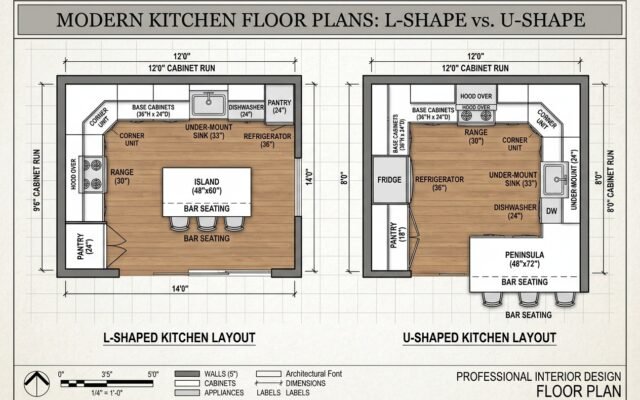
An L-shaped corner occurs where two perpendicular runs of base or upper cabinets meet at a 90-degree inside angle. Consequently, this intersection creates a triangular dead zone that standard pull-out drawers cannot reach without specialty hardware. Without an organizer, you must crouch down and reach over two feet into an unlit recess.
Because the corner space remains enclosed on two sides, accessing items in the back requires specialized hardware. You can study your layout options in our detailed guide on kitchen cabinet layout planning. Proper hardware selection restores full utility to this deep inside corner.
Blind Corner Cabinets
A blind corner cabinet extends straight into the corner while one face of the cabinet remains hidden behind the adjacent cabinet run. Therefore, the hidden portion remains completely inaccessible without a dedicated pull-out solution. Standard blind base cabinets measure 36 to 48 inches in total width, yet only 15 to 21 inches are exposed as a door opening.
Homeowners often store rarely used items in this dark interior cavity. However, retrieving those items requires clearing out everything in the front section first. If you want to compare different cabinet layouts, explore our overview of kitchen base cabinet configurations for practical layout advice.
Diagonal Corner Cabinets
A diagonal corner cabinet sits at a 45-degree angle across the inside corner. Instead of using two perpendicular boxes, this design replaces the corner intersection with a single wide angled cabinet. Consequently, it eliminates the blind corner void while creating a large interior volume.
However, diagonal cabinets push into the kitchen walkway and reduce the continuous run length of your countertop. The angled face also creates non-standard countertop edges that require careful fabrication. Still, many homeowners appreciate the seamless look and generous interior capacity of a diagonal unit.
Lazy Susan Corner Cabinet Solutions
Full-Round Lazy Susan
A full-round lazy Susan features two complete circular trays that rotate 360 degrees around a central metal pole. These units mount inside corner cabinets that use bi-fold pie-cut doors. Standard shelf diameters measure 28, 32, and 36 inches. In addition, the vertical clearance between shelves ranges between 28 and 34 inches.
Full-round systems rank among the most economical corner organizers available today. In fact, installed costs typically range from $80 to $250. You can easily check current prices on Amazon for replacement trays or complete aftermarket kits. Rotation brings items directly to the cabinet opening with minimal effort.
Half-Round Kidney-Shaped Lazy Susan
Half-round and kidney-shaped lazy Susans utilize D-shaped shelves that pivot smoothly on a side-mounted or central post. In many designs, the tray connects directly to the cabinet door and swings forward automatically as the door opens. Therefore, the shelf clears the face frame easily without catching on adjacent cabinet stiles.
This design fits standard 90-degree corner cabinets that lack bi-fold doors. As a result, homeowners can upgrade existing cabinets without replacing their original door fronts. Kidney-shaped units cost between $100 and $200, making them an accessible retrofit choice for older kitchen layouts.
Lazy Susan Pros and Cons
Lazy Susans deliver dependable functionality at an attractive price point. First, the simple mechanical design ensures long-term durability with very few moving parts. Second, the wide rotating trays hold dozens of spice jars, canned goods, or mixing bowls. You can discover more storage strategies in our guide on kitchen cabinet organization.
Nevertheless, lazy Susans suffer from distinct drawbacks during daily kitchen use. Because the shelves are circular, the square corners of the cabinet box remain empty and wasted. Furthermore, small items can tumble off the tray edges and jam the rotating mechanism below. Finally, tall slender bottles frequently tip over when you spin the shelf too quickly.
Blind Corner Pull-Out Solutions
Standard Blind Corner Pull-Out
A standard blind corner pull-out consists of a sliding wire or wooden basket assembly mounted inside the blind cavity. When you open the cabinet door, the front shelf glides forward into the kitchen walkway. Then, an internal sliding linkage pulls the rear basket sideways into the door opening for easy loading.
This mechanism allows complete access to cookware stored 24 to 36 inches deep inside the cabinet. In addition, solid metal guide rails keep heavy Dutch ovens and stockpots steady during travel. Quality pull-out hardware costs between $100 and $300 depending on tray material and weight ratings.
Swing-Out Blind Corner Organizers
A swing-out blind organizer takes storage convenience one step further. This double-shelf unit glides forward on heavy ball-bearing tracks and swings outward perpendicular to the cabinet frame. Consequently, both upper and lower tiers fully exit the cabinet interior and hover in the kitchen aisle.
Because both shelves clear the cabinet opening completely, you can reach items from all three sides. In fact, swing-out units represent the most efficient way to utilize deep blind corners. Professional units cost between $150 and $400 installed. You can browse blind corner pull-outs on Amazon to find models compatible with your cabinet opening width.
Installation Requirements for Blind Pull-Outs
Blind corner pull-outs require exact interior dimensions to operate without jamming against face frames. Specifically, most systems require a minimum 9-inch clear opening on the blind side after subtracting the thickness of the adjacent cabinet wall. Always review exact manufacturer clearance templates before purchasing hardware.
In addition, check our reference on standard kitchen base cabinet dimensions before ordering. Cabinet interiors must remain completely empty and free of plumbing lines or electrical junction boxes. Finally, secure the heavy mounting brackets directly into cabinet floor studs to prevent sagging under load.
Magic Corner and Le Mans Systems
Magic Corner Pull-Out
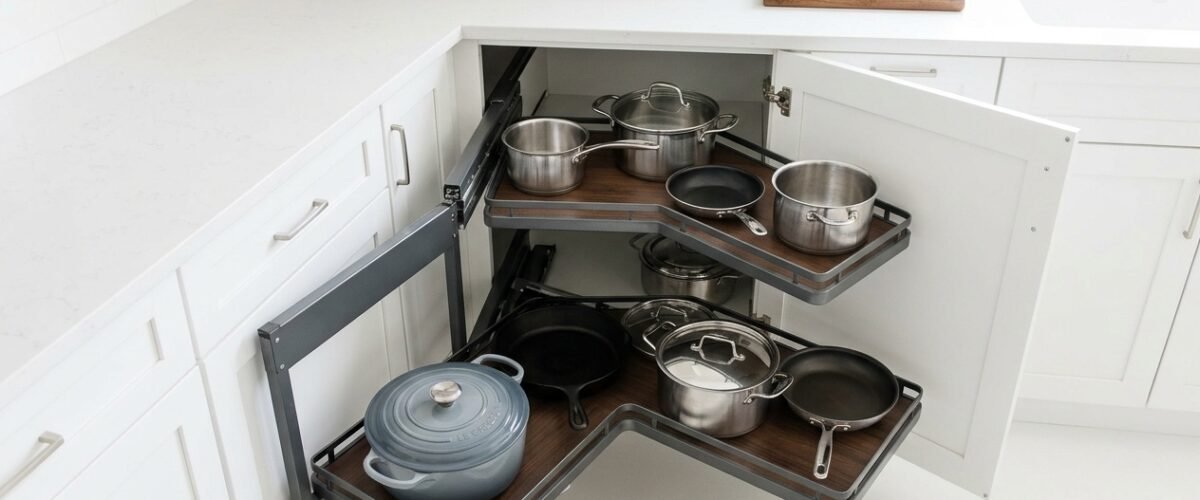
A magic corner pull-out represents the gold standard for blind corner storage engineering. The system features two linked sets of rectangular L-shaped shelves joined by a heavy articulated pivot arm. When you pull the cabinet door open, the front baskets glide forward and swing aside in a continuous motion.
Simultaneously, the rear baskets slide sideways from the blind cavity right into the door opening. As a result, you gain effortless access to every single square inch of stored cookware. These premium organizers cost between $300 and $700 installed. They are ideal for storing heavy cast iron skillets, Dutch ovens, and countertop blenders.
Le Mans Half-Moon Corner System
The Le Mans corner system uses two independent kidney-shaped shelves that pivot on an elegant curved arm. German engineers named this mechanism after the famous racetrack due to its graceful sweeping movement. When you pull either shelf, it swings completely out of the cabinet interior on an effortless curve.
Each tray operates independently, which means you only pull out the specific tier you need. Furthermore, each Le Mans shelf handles up to 55 pounds of cookware while gliding on damped soft-close mechanisms. Installed costs range between $250 and $600. Homeowners who want high-end cabinetry can also browse options at Home Depot to see pre-configured corner base units.
Comparing Magic Corner vs Le Mans
Both systems deliver premium performance, yet their internal geometry differs considerably. First, the magic corner system uses rectangular shelves that match square cabinet walls closely. Consequently, magic corners provide higher total surface area and waste less internal volume.
On the other hand, the Le Mans system utilizes curved trays that sacrifice small perimeter zones. However, the Le Mans requires less physical effort to pull outward because each tray operates separately. Magic corners pull all baskets at once, creating slightly more initial resistance. Ultimately, both mechanisms eliminate bending and stretching into deep corner cavities.
Diagonal and 45-Degree Corner Cabinets
Diagonal Sink Base Corner Cabinets
A diagonal sink base cabinet houses a prep sink or primary wash basin directly inside the kitchen corner. Because the front door sits at a 45-degree angle, plumbers gain generous clearance for water supply valves and drain pipes. Standard diagonal sink base face widths range from 24 to 36 inches.
Placing a sink in the corner frees up extended countertop runs on both flanking walls. In addition, the extra interior depth behind the sink easily accommodates bulky garbage disposals and water filtration tanks. However, only one person can stand comfortably at a corner sink station at any given time.
Diagonal Corner Cabinet with Lazy Susan
When you combine a 45-degree diagonal base cabinet with a heavy-duty lazy Susan, you maximize usable storage volume. The diagonal door provides a wider opening than traditional 90-degree corner frames. Therefore, you can install oversized 32-inch or 36-inch rotating trays that swallow large roasting pans with ease.
Furthermore, diagonal cabinets preserve visual symmetry in large U-shaped and L-shaped kitchens. The continuous face frames create a pleasing focal point between cabinet runs. Homeowners frequently choose this setup when building custom or semi-custom kitchen cabinetry.
Diagonal Cabinet Countertop Implications
Installing a diagonal corner base cabinet significantly impacts your countertop fabrication. Specifically, the 45-degree front face requires two mitered countertop joints on flanking cabinet sides. Fabricators must measure angles precisely to avoid gaps between slab sections.
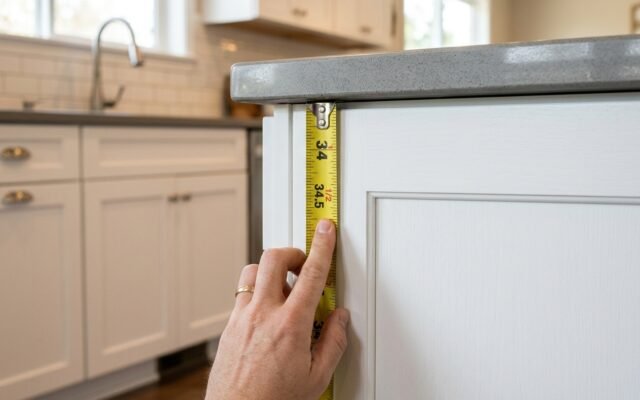
Before ordering stone countertops, learn how to measure kitchen cabinets to avoid expensive cutting mistakes. Quartz and granite slabs require careful templating so the miter does not leave a fragile pointed edge. In addition, ensure your cabinet installers shim the corner base perfectly level before stone delivery.
Upper Corner Cabinet Solutions
Upper Blind Corner Cabinets
Upper wall corners present unique storage challenges because they sit at eye level and have limited depth. Typically, upper blind corner cabinets store lightweight goods like seasonal platters, surplus glassware, or dry pantry staples. A simple two-tier turntable or fan-shaped shelf insert restores quick access to these upper blind compartments.
Because wall cabinets measure only 12 to 15 inches deep, reach issues are less severe than base cabinets. Nevertheless, without an organizer, items stored behind the blind panel remain forgotten for years. Installing a multi-tier lazy Susan insert instantly doubles your usable wall cabinet storage.
Corner Glass Front Cabinets
A diagonal 45-degree upper cabinet fitted with glass inserts transforms a utilitarian corner into an eye-catching focal feature. In open-concept floor plans, this corner cabinet remains visible from the dining room and living areas. You can showcase fine china, heirloom ceramics, or decorative glassware behind illuminated glass panels.
If you want to upgrade your upper cabinetry, consult our detailed walkthrough on kitchen cabinet glass inserts for practical styling ideas. Adding warm interior LED puck lights further elevates the decorative impact. Glass corners soften sharp cabinet intersections and create an expansive visual feeling in compact kitchens.
Open Corner Shelf Solutions
Many modern kitchen designers now eliminate bulky upper corner cabinets entirely. Instead, they install pairs of floating hardwood shelves that wrap continuously around the 90-degree corner. This open design creates an airy, modern aesthetic that makes smaller kitchens feel noticeably larger.
Floating corner shelves work wonderfully for stacking everyday dinner plates, coffee mugs, or small potted herbs. However, open shelves require consistent dusting and disciplined organization. If you prefer low-maintenance concealed storage, stick with an enclosed diagonal cabinet instead.
Corner Cabinet Solutions Comparison Table
Direct Comparison of Corner Storage Options
Selecting the ideal corner mechanism requires balancing cost, storage volume, and accessibility. The comparison matrix below outlines how each popular corner solution performs across critical residential remodeling criteria. Use these figures to determine which hardware best matches your kitchen budget and layout requirements.
| Solution Type | Corner Type | Cost Range | Storage Efficiency | Access Rating | Best For |
|---|---|---|---|---|---|
| Full-Round Lazy Susan | L-shaped with pie-cut doors | $80 to $250 | Medium | Good | Budget kitchens, pots and pans |
| Kidney Lazy Susan | L-shaped standard doors | $100 to $200 | Medium | Good | Budget to mid-range kitchens |
| Blind Corner Pull-Out | Blind corner | $100 to $300 | High | Very Good | Narrow blind corners |
| Swing-Out Blind Organizer | Blind corner | $150 to $400 | Very High | Excellent | Wide blind corners |
| Magic Corner Pull-Out | L-shaped with single door | $300 to $700 | Excellent | Outstanding | High-use items |
| Le Mans Half-Moon | L-shaped with double doors | $250 to $600 | Very High | Excellent | Medium budgets |
| Diagonal Corner Base | Any L-shaped | $200 to $500 | High | Excellent | Sinks or display use |
As the table demonstrates, traditional lazy Susans offer unmatched affordability for standard remodel budgets. Conversely, articulated magic corner systems demand higher initial investment but deliver unparalleled physical accessibility. Review your daily cooking habits before making a final purchasing commitment.
FAQ
What is the best kitchen cabinet corner solution?
Magic corner pull-out systems provide the best overall combination of access, shelf area, and storage efficiency for L-shaped kitchens. They pull all stored items out into the open room in one fluid motion. However, lazy Susans remain the most cost-effective solution for budget-conscious homeowners.
Are lazy Susans outdated?
No, lazy Susans remain the most common corner cabinet solution because they are affordable, easy to install, and reliable. While swing-out and magic corner units offer superior accessibility, they cost two to four times more. Modern lazy Susans also feature durable solid wood and brushed metal finishes.
What is a blind corner cabinet?
A blind corner cabinet extends deep into the kitchen corner while one face remains hidden behind an adjacent cabinet panel. Because the adjacent cabinet covers half the box, reaching the recessed portion is difficult. Without a pull-out organizer, that recessed interior area becomes dead storage space.
How deep is a blind corner cabinet?
Standard blind corner base cabinets measure 24 inches deep on the accessible side and extend 12 to 15 inches into the hidden blind zone. Consequently, the cabinet provides a total internal depth of 36 to 39 inches. This massive cavity requires dedicated sliding hardware for practical everyday access.
What size lazy Susan fits a standard corner cabinet?
Standard corner base cabinets with 36-inch wide face frames accept 28-inch to 32-inch diameter lazy Susan shelves. In contrast, pie-cut corner cabinets with full 36-inch corner openings can comfortably accommodate 32-inch to 36-inch diameter units. Always measure clear diagonal openings before purchasing hardware.