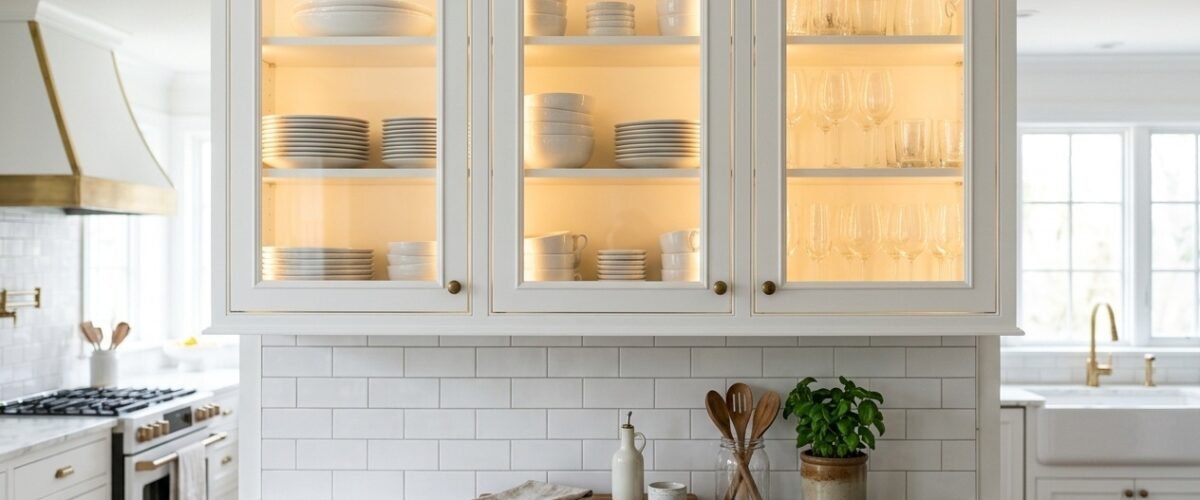
Kitchen cabinet glass inserts add visual depth and a custom look to upper cabinets at a fraction of the cost of replacing the entire door. Ultimately, this simple upgrade transforms basic cabinetry into a beautiful focal point. Clear glass shows everything inside, so the cabinet interior must be organized and well lit. In contrast, frosted and seeded glass hide contents while still letting light through. Furthermore, they bring a high end designer feel to any space.
Therefore, adding glass is one of the most effective kitchen remodels available today. Similarly, it creates an illusion of a larger and brighter room. First, you should evaluate your current doors. Second, you must choose the right glass style. Finally, you can install the panels yourself or hire a professional.
Before starting, homeowners should consider their display habits. Obviously, clear glass demands neat stacks of matching dishware. Alternatively, textured glass offers more forgiveness for cluttered shelves. In addition, installing glass inserts provides an excellent opportunity to add interior lighting.
Consequently, your kitchen will feel much warmer and more inviting at night. Moreover, you can update just a few strategic cabinets instead of the whole room. For instance, modifying the cabinets flanking the sink creates a beautiful symmetrical display. Thus, you save money while maximizing the visual impact. Let us explore the different types of glass available and their associated costs.
Replacing solid wood center panels with glass inserts is a popular project among DIY enthusiasts. Indeed, it requires minimal tools and basic carpentry skills. However, measuring accurately is absolutely critical to avoid costly mistakes.
Also, selecting the right type of glass impacts both safety and aesthetics. Specifically, tempered glass is heavily recommended over standard plate glass for all kitchen applications. Because cabinet doors slam shut frequently, safety must remain your top priority. Ultimately, the choice between doing it yourself and hiring a professional depends on your comfort level with a router.
Types of Kitchen Cabinet Glass Inserts
Clear Glass Inserts
Clear glass inserts are completely transparent and show cabinet contents fully. Therefore, this option requires organized and well lit interiors. Standard thickness is usually three millimeters or four millimeters of tempered glass. Also, they work perfectly for displaying fine china and elegant glassware.
If you have beautiful colorful bowls, clear glass highlights them beautifully. Consequently, your cabinets become a functional display case. However, messy stacks of plastic containers will look terrible behind clear glass. Thus, you must commit to maintaining a tidy cabinet interior at all times.
Seeded and Textured Glass Inserts
Seeded glass has small air bubbles embedded in the glass creating a vintage farmhouse look. As a result, it partially obscures contents while adding delightful texture. Furthermore, this is the most popular glass type for cottage and traditional kitchens.
The tiny bubbles capture the interior lighting and create a sparkling effect. Consequently, seeded glass adds warmth and character to plain white cabinetry. Similarly, ribbed or fluted glass offers a different linear texture that works well in transitional spaces. Thus, textured glass provides the perfect middle ground between transparent and opaque.
Frosted and Rain Glass Inserts
Frosted inserts feature an etched or acid washed surface. Consequently, this obscures contents completely but lets light pass through beautifully. In addition, this style is best for modern and transitional kitchens requiring a sleek aesthetic. Frosted glass hides mismatched dishes effortlessly while maintaining a bright airy feel. Therefore, it is the perfect solution for busy families who cannot maintain perfect organization. Furthermore, the soft diffused light behind frosted glass creates a wonderful ambient glow at night.
Leaded and Decorative Glass Inserts
Leaded glass involves traditional stained or leaded glass panels. However, these are very expensive and best for formal traditional kitchens. Specifically, custom panels cost two hundred dollars to six hundred dollars per panel. The intricate metal caming connecting the glass pieces adds incredible historical charm. Furthermore, you can incorporate beveled edges that catch the light like prisms. Consequently, leaded glass transforms a simple kitchen cabinet into a true work of art. Thus, they are often used sparingly as accents.
Wire Glass and Chicken Wire Inserts
Wire glass provides an industrial and farmhouse look with wire embedded in clear glass. Since it is often not tempered, it is not recommended for high traffic lower cabinets. Nevertheless, it remains highly popular in cottage and vintage styles for upper cabinets. The wire mesh adds a distinctly rustic and utilitarian vibe to the space. Consequently, it pairs beautifully with aged brass hardware and farmhouse sinks. In addition, chicken wire alone without glass is a charming alternative for country kitchens.
| Glass Type | Visibility | Best Style | Cost per Panel | Tempered Available? |
|---|---|---|---|---|
| Clear | High | All Styles | $20 to $60 | Yes |
| Seeded | Medium | Farmhouse | $60 to $150 | Yes |
| Frosted | Low | Modern | $50 to $120 | Yes |
| Leaded | Varies | Traditional | $200 to $600 | No |
| Wire | High | Industrial | $50 to $100 | Rarely |
Kitchen Cabinet Glass Insert Costs
Cost of Standard Clear Glass
Standard three millimeter tempered clear glass costs twenty to sixty dollars per panel. Specifically, this price applies when cut to size at a local glass shop. Alternatively, online ordering runs thirty to eighty dollars per panel including shipping. Therefore, local glass shops almost always provide the best value and fastest turnaround. In addition, picking it up locally eliminates the risk of shipping damage entirely. Consequently, you can inspect the exact dimensions before leaving the store.
Cost of Specialty Glass Types
Specialty styles require a significantly larger budget than standard clear glass. For example, authentic seeded glass runs sixty to one hundred fifty dollars per panel. Frosted glass usually costs fifty to one hundred twenty dollars depending on the etching method. Meanwhile, custom leaded glass demands two hundred to six hundred dollars for specialized artisan work. Ultimately, prices vary heavily based on the overall size and complexity of the pattern. Therefore, get multiple quotes before committing to specialty glass.
Cost of Retrofitting vs Ordering New Doors
Retrofitting existing doors costs one hundred fifty to four hundred dollars per door. Specifically, this estimate includes professional carpentry labor and the glass itself. On the other hand, ordering new glass front doors from a cabinet maker costs eighty to two hundred fifty dollars per door unfinished. Thus, buying brand new ready for glass doors can sometimes be cheaper. Consequently, you must weigh the labor costs of routing your old doors.
DIY vs Professional Installation Cost
DIY material cost is roughly thirty to one hundred fifty dollars per door. In contrast, professional installation adds eighty to two hundred dollars per door for labor. Consequently, your total DIY saving is fifty to one hundred fifty dollars per single door. Therefore, a kitchen with six glass doors saves nearly a thousand dollars if done yourself. Furthermore, the required tools are relatively inexpensive to rent or purchase.
| Glass Type | Panel Cost | Retrofit Labor | Total per Door | DIY Possible? |
|---|---|---|---|---|
| Clear | $20 to $60 | $80 to $200 | $100 to $260 | Yes |
| Textured | $60 to $150 | $80 to $200 | $140 to $350 | Yes |
| Frosted | $50 to $120 | $80 to $200 | $130 to $320 | Yes |
| New Door | $80 to $250 | $0 | $80 to $250 | Yes |
Best Cabinet Door Styles for Glass Inserts
Shaker Doors with Glass Inserts
Shaker doors are the most popular and versatile combination for glass upgrades. Specifically, the flat recessed wood panel is simply removed and replaced with glass. Furthermore, this clean aesthetic works beautifully with absolutely all glass types. Because Shaker doors feature straight simple lines, the routing process is incredibly straightforward. Consequently, they are the absolute best candidates for DIY retrofitting projects.
Raised Panel Doors with Glass Inserts
Raised panel doors provide a very formal and traditional look. First, the thick center carved panel is carefully routed out and replaced with glass. Ultimately, this works best with clear or leaded glass in highly traditional kitchens. Because the frame itself has complex curves, routing requires more care and precision. Thus, professional modification is often recommended for expensive raised panel doors.
Mullion Pattern Doors
Mullion doors feature wooden dividers creating multiple separate glass panes. Indeed, this provides a classic elegant French door appearance. However, this look requires purchasing entirely new doors from a manufacturer. Because you cannot easily retrofit structural mullions to existing flat doors, you must plan accordingly. Specifically, building mullions from scratch requires advanced joinery skills.
Flat Front Slab Doors with Glass Inserts
Flat front slab doors create a highly modern and frameless European look. First, a precise rectangular cutout must be routed directly through the solid slab. Next, a rabbet is carved into the back and the glass is set inside. Specifically, this style pairs perfectly with frosted or completely opaque painted glass. Therefore, the resulting look is highly contemporary and sleek.
How to Install Glass Inserts in Kitchen Cabinet Doors Step by Step
Step 1 Measure the Opening
First, measure the cabinet opening precisely with a steel tape measure. Next, order your glass one eighth of an inch smaller on each dimension. Because wooden doors expand and contract with seasonal humidity, this clearance is vital. If the glass fits too tightly, the expanding wood will shatter it. Therefore, accurate measurements prevent catastrophic failures down the road.
Step 2 Remove the Existing Panel
Second, use a sharp router or jigsaw to remove the existing center wood panel. Carefully trace the inside edge of the frame to establish your cutting line. Then, route a three eighths inch deep rabbet ledge along the back edge. Finally, sand the new rabbet completely smooth to remove any splinters. Because a smooth surface is required for the silicone, do not skip sanding.
Step 3 Set the Glass in the Rabbet
Third, lay a very thin continuous bead of clear silicone inside the sanded rabbet. Next, carefully set the glass panel into the opening and press down firmly. However, do not press so hard that all the silicone squeezes out the sides. Because the silicone acts as a flexible cushion, you want a thin layer remaining. Therefore, gentle even pressure is the best approach.
Step 4 Secure with Glass Retainer Clips or Moulding
Then, use small plastic glass retainer clips spaced every six inches around the perimeter. Alternatively, use a thin wood quarter round moulding glued and pinned to the inside. Because clips are removable, they make replacing broken glass much easier in the future. Meanwhile, wood moulding provides a much cleaner finished look on the inside. Need new hardware while you are at it? Browse kitchen cabinet hardware upgrades.
Step 5 Cure and Rehang
Finally, allow the silicone sealant to cure completely for twenty four hours before rehanging. Next, check for any loose rattling by pressing the glass gently after it cures. In addition, reattach your hinges and mount the door back onto the cabinet box. Because the door is now significantly heavier, you might need to adjust your hinges. Therefore, test the soft close mechanism to ensure it still functions properly.
Interior Cabinet Lighting for Glass Front Cabinets
LED Strip Lighting
LED strip lighting is the most popular and efficient option for glass cabinets. For instance, use 2700K warm white for traditional styles to create a cozy glow. Alternatively, select 4000K neutral white for modern sleek designs. Typically, the flexible strip is mounted invisibly along the top interior face frame. Check out excellent options on Amazon LED lighting.
Puck Lights
Puck lights come in both battery operated and hardwired electrical options. Specifically, these round fixtures are mounted directly on the interior ceiling of the cabinet. As a result, they provide a focused light beam that creates a spotlight effect. Therefore, puck lights are excellent for highlighting a specific beautiful vase or antique bowl. See more about wiring in our kitchen cabinet lighting guide.
What to Display in Glass Cabinets
White dishes and clear glassware consistently look best on display behind glass. Therefore, carefully curate your items and avoid cluttered or mismatched plastic containers. Instead, group your beautiful items by color and height for maximum visual balance. Because the eye loves symmetry, keep your stacks of plates perfectly aligned and spaced. Furthermore, do not overstuff the shelves; leave negative space for a high end look.
Glass Insert Design Ideas by Kitchen Style
Traditional Kitchen Glass Inserts
Traditional kitchens frequently use seeded glass paired beautifully with mullion doors. In addition, expensive leaded glass works exceptionally well in formal estate kitchens. Furthermore, warm interior lighting behind delicate china and crystal adds immense elegance. Because traditional design favors details, ornate glass textures enhance the overall aesthetic perfectly. Therefore, classic clear or bubbled glass remains the top choice for historical homes.
Modern Kitchen Glass Inserts
Modern kitchens frequently feature completely frosted glass set in flat front slab doors. Also, they strictly use no mullions and prefer concealed LED strip lighting. Consequently, this combination creates a highly minimalist and uncluttered display. Because modern design values clean lines, frosted glass hides messy interiors while maintaining lightness. Therefore, it is the perfect solution for keeping a streamlined aesthetic intact.
Farmhouse Kitchen Glass Inserts
Farmhouse kitchens proudly utilize rustic chicken wire or heavily seeded glass inserts. Similarly, flanking open wooden shelving beside glass doors is a very common design layout. Specifically, displaying simple white ironstone dishes and clear mason jars completes the authentic look. Because farmhouse style embraces imperfections, slightly wavy antique glass is highly prized here. Therefore, the goal is to look charmingly collected over time.
Two Tone Kitchen Glass Inserts
Two tone designs strategically use glass inserts in the upper wall cabinets only. Meanwhile, the lower base cabinets remain completely solid and often painted a darker color. Indeed, this is the single most common application in modern transitional kitchens today. Read more about two tone kitchen cabinets. Also consider inset kitchen cabinets for a perfectly flush designer look.
FAQ
How much do kitchen cabinet glass inserts cost?
Standard clear glass panels typically cost twenty to eighty dollars each. Meanwhile, specialty frosted or seeded glass runs fifty to one hundred fifty dollars. In addition, professional retrofit labor is eighty to two hundred dollars per door. Ultimately, doing it yourself saves fifty to one hundred fifty dollars per single door.
Can you put glass inserts in any cabinet door?
No, you can only easily retrofit framed or shaker doors with a recessed center panel. Conversely, solid flat front slab doors require completely routing a brand new opening. Therefore, shaker style doors are significantly easier and cheaper to modify for glass.
What glass is best for cabinet inserts?
Clear glass is absolute best for proudly displaying beautiful neat dishes. On the other hand, frosted glass works perfectly for privacy and modern sleek style. Furthermore, seeded glass fits farmhouse designs, while leaded glass perfectly suits formal traditional kitchens.