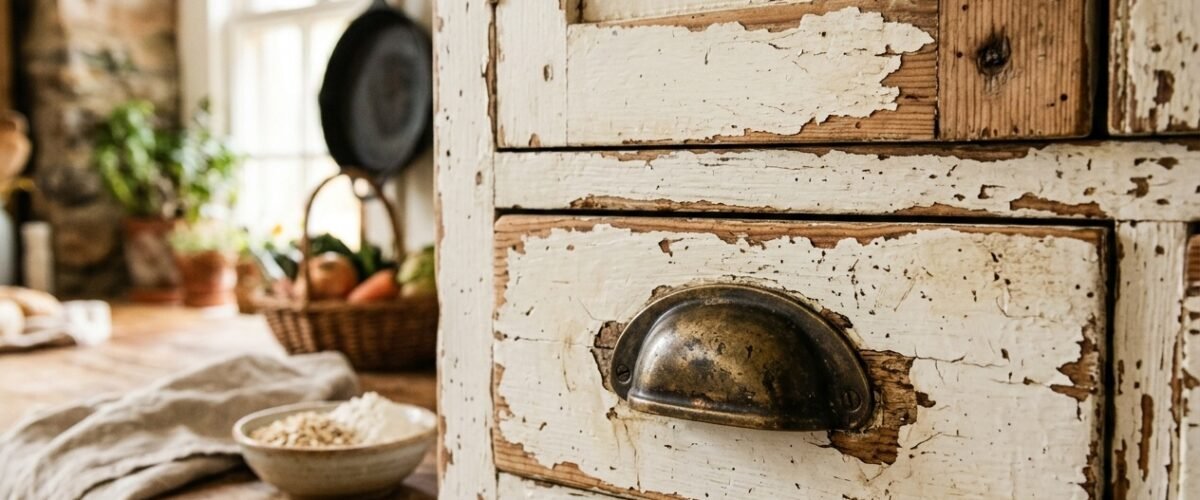
Distressed kitchen cabinets combine intentional aging techniques with rustic hardware and warm paint tones. As a result, they create a lived-in, characterful aesthetic that never reads as brand new. In fact, distressed kitchen cabinets provide immediate warmth by celebrating subtle worn edges, exposed wood grain, and layered finishes. This timeless style works wonderfully in farmhouse, cottage, and country spaces. In addition, homeowners can achieve this custom look on new or existing cabinetry during a weekend renovation project.
What Makes a Kitchen Cabinet Look Distressed
Defining the Distressed Aesthetic
Distressed cabinets show deliberate wear marks, layered paint, rough edges, and exposed wood grain as intentional design elements. The goal is controlled aging that reads as authentic vintage charm. In contrast to neglected millwork, genuine distressing requires balanced artistry across your kitchen.
As a contractor, I always remind homeowners that good distressing mimics natural wear patterns. Specifically, door pulls, bottom frame corners, and outer cabinet edges receive the most friction over years of cooking. Consequently, random gouges across flat center panels often look artificial and unappealing.
Distressed vs Antiqued vs Glazed Cabinets
Many homeowners confuse these three popular decorative finishes. First, distressed cabinets rely on physical abrasion, coarse sanding, and layered paint to reveal raw timber or base primer beneath.
On the other hand, antiqued cabinets incorporate dark glaze wiped into profiles and corners without heavy physical damage. This technique adds visual depth and simulates accumulated patina over time.
Finally, glazed cabinets apply a semi-translucent tinted finish across painted doors without physical wear marks or scraped edges. Therefore, you must decide whether you want textured physical wear or merely smooth tonal depth.
Best Kitchen Styles for Distressed Cabinets
Certain kitchen designs naturally complement aged cabinetry. For example, farmhouse kitchen cabinets pair effortlessly with apron sinks, open shelving, and chippy white finishes that reflect rural heritage.
Similarly, cozy cottage spaces look stunning with beadboard kitchen cabinets finished in muted sage or soft cream. The vertical grooved lines hold accent glazes beautifully while emphasizing handcrafted texture.
In addition, classic country kitchens benefit from knotty pine or rich stained hardwoods with gently worn edges. These warm, textured finishes soften stone countertops and create an inviting culinary gathering place.
Best Wood Types for Distressed Kitchen Cabinets
Knotty Pine for Distressed Cabinets
Knotty pine remains the quintessential choice for rustic distressed cabinetry in traditional homes. Because pine is a softwood, it dents and marks easily during the physical distressing process.
Furthermore, natural dark knots and swirling grain patterns show through sanded paint layers with incredible character. While pine requires proper sealing against resin bleed, it produces the most authentic worn look available.
Poplar for Painted Distressed Cabinets
Poplar serves as the premier hardwood choice for painted cabinetry projects in custom woodshops. In fact, poplar takes primer and paint exceptionally smoothly while remaining affordable for budget-conscious renovators.
Because poplar has moderate density, you can easily sand through paint layers without tearing wood fibers. In addition, hand tools like rasps and chains leave clean, believable impressions across its grain.
Hickory for Heavy Distressed Rustic Looks
Hickory offers unmatched hardness and dramatic natural grain variation for heavy-duty kitchen cabinetry. Specifically, the striking contrast between pale sapwood and dark heartwood creates an aged aesthetic even before applying tools.
However, hickory is extremely dense and resists light sanding techniques. Therefore, contractors often recommend a clear matte protective oil or light stain rather than heavy paint coats on hickory doors.
MDF Doors for Distressed
Medium-density fiberboard, commonly known as MDF, presents unique challenges for distressing projects. Because MDF lacks natural wood grain, sanded edges chip into fuzzy particles rather than revealing natural wood layers.
Nevertheless, you can use MDF center panels inside solid wood face frames. In this configuration, you distress only the structural solid wood components while keeping the interior panel stable and flat.
To compare how different timbers behave under stains and glazes, explore our breakdown of kitchen cabinet wood types before buying.
Distressing Techniques Step by Step
Dry Brushing for a Worn Painted Look
Dry brushing creates a delicate, sun-faded surface texture without heavy sanding or chemical stripping. To start, load a stiff bristle brush with a very small amount of chalk paint or acrylic enamel.
Next, wipe most of the wet paint onto a dry paper towel until the bristles appear almost dry. Drag the brush lightly across cabinet surfaces in long, steady parallel strokes.
As a result, the brush deposits subtle streaks of contrasting color across raised wood grain. This simple technique simulates decades of gentle contact along busy kitchen walkways. You can check current prices on Amazon for top-rated chalk paints and specialty distressing brushes.
Sanding Through Layers for a Chippy Paint Effect
The sand-through method creates an authentic chippy layered look on cabinet doors and drawer fronts. First, apply a dark or contrasting base coat and let it cure completely for twenty-four hours.
Next, apply your chosen top coat in a lighter shade such as off-white or soft linen. Once the top coat feels dry to the touch, begin hand-sanding high-friction zones.
Specifically, use 80 to 120 grit sandpaper along door edges, raised profiles, and handle locations. Sanding gently cuts through the top coat to reveal the rich dark base color below. If you want a complete transformation guide, read our tutorial on how to paint kitchen cabinets like a seasoned professional.
Chains, Nails, and Rasps for Physical Wear Marks
Physical mechanical distressing creates realistic dents, grooves, and antique marks in raw wood before painting. For instance, you can drop a cluster of metal keys or a heavy iron chain onto horizontal door panels.
In addition, an awl or small cluster of nails tapped into wood simulates historical beetle holes or pin marks. Dragging a cabinet rasp across outside edges softens sharp factory bevels.
Always practice restraint during this phase because deep gouges can weaken door joints. In short, aim for random, clustered markings rather than uniform patterns across every square inch of woodwork.
Glaze Wash for Antiquing Corners
A translucent glaze wash adds instant age and visual shadow to recessed moldings across your doors. First, thin a dark brown or raw umber artist paint with water or acrylic glaze medium.
Next, brush the wet glaze mixture generously into all recessed panel grooves, door corners, and decorative carvings. Allow the glaze to settle into the crevices for two to three minutes.
Then, wipe the flat door surfaces clean with a damp lint-free cotton rag. Leave the deep glaze pooled inside the corners to create dramatic depth and shadow. For more inspiring remodeling strategies, check out our guide on planning a kitchen cabinet makeover.
Wax Resist Technique for Multi-Layer Paint
The wax resist technique produces clean, organic paint separation without aggressive sanding methods. First, apply your chosen base color and allow it to dry thoroughly across the door frames.
Next, rub an ordinary wax candle or beeswax block along specific door edges, corners, and handle contact areas. The wax creates a slippery barrier that prevents subsequent paint coats from bonding.
Finally, brush your main top coat over the entire cabinet door. Once dry, wipe the waxed areas briskly with a coarse rag or fine steel wool. The top paint peels away effortlessly, revealing the vibrant base color beneath.
Best Paint Colors for Distressed Kitchen Cabinets
White and Off-White Distressed Cabinets
Classic white remains the most requested color for distressed cabinetry in rustic American homes. Specifically, Benjamin Moore White Dove OC-17 provides a soft, warm base that softens under a raw umber glaze wash.
Alternatively, Sherwin-Williams Alabaster SW 7008 offers a creamy undertone that pairs beautifully with dark espresso base coats. When sanded back along the rails, this combination produces an authentic chippy farmhouse appearance.
Sage and Soft Green Distressed Cabinets
Soft green tones bring the serene tranquility of nature directly into your kitchen workspace. For example, Benjamin Moore Saybrook Sage HC-114 applied over a warm tan or oatmeal base creates a stunning vintage appearance.
As you gently sand high edges, the underlying tan shade emerges like sun-bleached wood. Furthermore, soft sage distressed cabinets pair magnificently with unlacquered brass hardware and white subway tile backsplashes.
Slate Blue and Gray-Blue Distressed Cabinets
Blue cabinetry brings stately elegance and historical charm to country kitchens of any size. In particular, Sherwin-Williams Rainstorm SW 6230 and Benjamin Moore Van Deusen Blue HC-156 provide rich, timeless depth.
When you distress these saturated blue tones over warm cream primer, the contrast catches the eye immediately. For homeowners shopping for new packages, you can browse options at Home Depot to find ready-to-finish shaker doors.
To explore additional designer palettes for your kitchen remodel, review our comprehensive guide to kitchen cabinet paint colors.
Dark Walnut and Chocolate Stain Distressed
Stained distressed cabinetry offers rich warmth for homeowners who love visible wood grain over painted surfaces. First, apply a penetrating medium walnut or dark chocolate oil stain across the bare wood.
Next, use coarse 80 grit sandpaper along outer edge profiles to rub away concentrated color before sealing. Finally, apply a hand-rubbed penetrating oil or flat clear coat to enrich the exposed grain. To learn more about selecting the right penetrating finishes, read our guide on kitchen cabinet stain applications.
Best Hardware for Distressed Kitchen Cabinets
Antique Brass and Oil-Rubbed Bronze Pulls
Selecting proper decorative hardware completes the vintage character of your aged cabinets. Specifically, warm antique brass cup pulls and oil-rubbed bronze drop handles complement chippy finishes far better than cold brushed chrome.
Look for cast bronze or forged brass pulls with living finishes that continue to patina naturally over time. These textured metal surfaces echo the handmade character of your cabinet doors.
Ceramic and Porcelain Knobs
Hand-painted ceramic and porcelain knobs bring nostalgic cottage charm to upper cabinet doors and small drawers. In fact, subtle floral motifs, crackle glazes, or vintage transferware patterns add delightful personality.
Additionally, mixing complementary ceramic knob patterns across an island creates a collected, curated look. Homeowners seeking unique vintage fixtures can explore options on Wayfair to discover charming ceramic and metal hardware pieces.
Wrought Iron Bin Pulls and Bail Pulls
Heavy black wrought iron hardware references traditional blacksmith craftsmanship and historical colonial kitchens. For example, forged iron bin pulls and bail pulls provide bold visual contrast against light-painted doors.
Moreover, high-quality wrought iron resists corrosion, endures rigorous daily handling, and never requires brass polish. To evaluate handle sizes and configurations, consult our guide to kitchen cabinet hardware options.
If you are choosing handle styles for drawers and doors, examine our breakdown of cabinet knobs vs pulls before drilling.
Distressed Cabinet Techniques Comparison Table
Side by Side Technique Overview
Homeowners often ask which distressing technique suits their DIY skill level and kitchen schedule. The table below outlines tools, difficulty, and project timelines for each primary finishing method.
| Technique | Skill Level | Tools Needed | Best For | Estimated Time |
|---|---|---|---|---|
| Dry Brushing | Beginner | Stiff bristle brush, paint | Subtle worn surface color | 1 to 2 hours |
| Sand-Through Layers | Beginner to Intermediate | Sandpaper 80 to 120 grit | Chippy layered paint look | 3 to 5 hours |
| Chain and Rasp Physical Wear | Beginner | Chains, keys, rasp, wire brush | Heavy rustic ding marks | 30 to 60 minutes |
| Glaze Antiquing Wash | Intermediate | Dark glaze, brushes, rags | Aged profile and corner depth | 2 to 4 hours |
| Wax Resist Technique | Intermediate | Candle wax, topcoat | Clean layer-reveal at edges | 2 to 4 hours |
As demonstrated in the table, dry brushing and physical distressing provide the quickest path to rustic charm. Conversely, multi-layer sanding and glaze washing require greater patience but deliver unmatched dimensional realism across your cabinetry.
FAQ
What kind of paint do you use for distressed cabinets?
Chalk paint and milk paint represent the most popular choices for distressing because they adhere without intensive sanding. In addition, these specialty paints dry to a velvety matte finish that sands away cleanly without gumming up sandpaper.
Alternatively, high-grade satin latex cabinet enamel works well for layered finishes. However, enamel requires longer drying times between coats to ensure crisp sand-through edges.
How do you make new cabinets look distressed?
To age new cabinet doors, start by applying a rich contrasting base coat over clean wood. After the base dries, apply a lighter top coat across all surfaces.
Once dry, use 80 to 120 grit sandpaper along outer profiles, corners, and handle areas to expose the base tone. Finally, apply a diluted raw umber glaze wash into corner grooves and seal everything with a flat clear topcoat.
Are distressed kitchen cabinets still in style in 2026?
Yes, distressed cabinetry remains highly favored among homeowners seeking warm, character-rich kitchen interiors. However, modern trends lean toward subtle, refined distressing rather than heavily gouged surfaces.
Specifically, contemporary farmhouse and European country kitchens favor soft sand-through edges, muted earth tones, and authentic unlacquered brass hardware. This balanced approach creates cozy warmth without feeling dated.
What is the best sealer for distressed kitchen cabinets?
For decorative furniture pieces, paste wax delivers a soft, authentic sheen that feels wonderful to the touch. Nevertheless, busy kitchen environments demand far greater moisture and grease resistance.
Therefore, a dead-flat or ultra-matte water-based polyurethane provides the best protection for kitchen cabinetry. It shields the worn paint layers against cooking steam, resists yellowing, and cleans easily with mild soap.