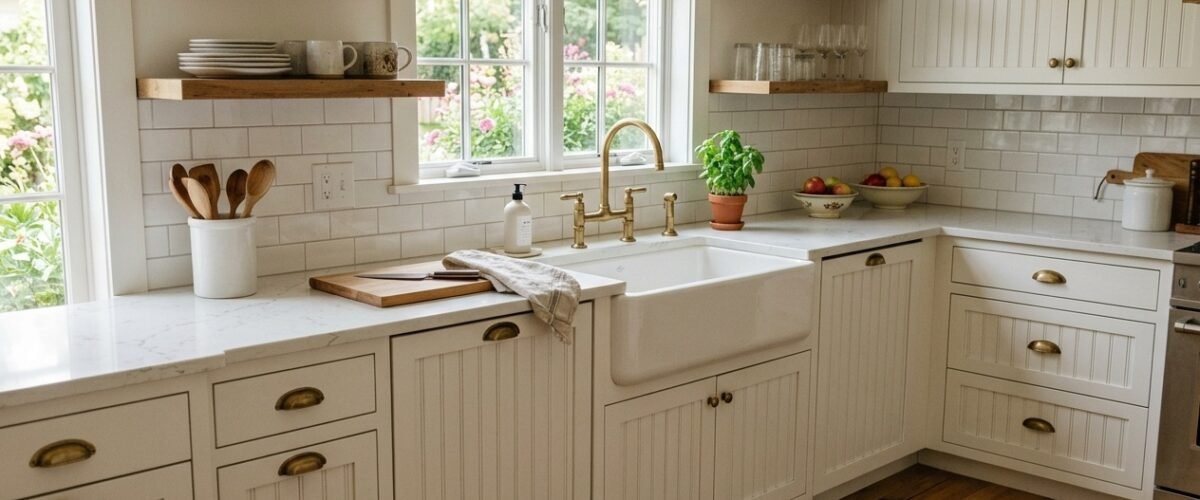
Beadboard kitchen cabinets add texture and traditional character that flat shaker or raised panel doors simply cannot replicate. Ultimately, beadboard kitchen cabinets instantly establish a welcoming and lived in feeling in your home. Real beadboard panels on cabinet doors are heavily utilized in cottage, farmhouse, coastal, and traditional kitchens.
For example, the look works best painted white or cream, though navy and sage green are growing in popularity in 2026. Therefore, understanding how to apply and style this feature will help you create a timeless space that you will love for years to come. In addition, these cabinets provide a durable surface that withstands daily wear beautifully. As a result, you get both aesthetic charm and practical functionality in one package.
What Are Beadboard Kitchen Cabinets
Beadboard Construction Explained
Beadboard construction involves vertical strips of wood with a rounded bead groove between each strip. Specifically, this detail creates vertical lines that draw the eye upward and add dimension. These strips are applied to cabinet doors as a recessed or flat panel insert.
Real wood provides an authentic texture, while MDF beadboard offers a smooth finish that resists warping over time. Consequently, MDF is often preferred for painted applications where moisture resistance is absolutely critical. Furthermore, the precision milling of modern beadboard ensures a consistent pattern across all your doors.
Beadboard vs Shaker vs Raised Panel
Beadboard provides vertical texture and a definitive cottage or coastal feel that is unmistakable. Meanwhile, shaker cabinets feature a clean, recessed square panel that leans more transitional. Raised panel doors display an ornate profile that suits formal traditional spaces much better. Side by side, beadboard feels more relaxed and handcrafted compared to the highly structured look of a shaker or raised panel. Therefore, your choice dictates the entire mood of the kitchen. Ultimately, beadboard injects personality into spaces that might otherwise feel too sterile or plain.
Real Beadboard vs Beadboard Wallpaper vs Beadboard Plywood
Real tongue and groove beadboard strips offer the most authentic appearance and cost between $2 to $5 per square foot. On the other hand, beadboard plywood sheets provide faster installation, costing roughly $1 to $3 per square foot.
Peel and stick beadboard wallpaper is a budget option for cabinet ends only, running around $0.50 to $2 per square foot. However, wallpaper lacks the tactile depth of real wood and will not withstand heavy wear on moving doors. Thus, investing in real wood or high quality plywood yields the best long term results.
Best Kitchen Styles for Beadboard Cabinets
Cottage and Country Kitchens
Cottage and country kitchens are the undisputed home territory of beadboard detailing. Furthermore, this texture works exceptionally well with open shelving, apron front sinks, and traditional cup pull hardware. White or cream is the standard color for these cozy spaces, reflecting natural light beautifully. As a result, the kitchen feels warm, inviting, and effortlessly charming for family gatherings. Indeed, no country kitchen is truly complete without the rustic touch of grooved paneling.
Coastal and Beach House Kitchens
Coastal and beach house kitchens thrive on light, airy finishes, making beadboard an excellent fit. For instance, beadboard in soft blue, white, or seafoam green captures the seaside aesthetic perfectly. It pairs beautifully with natural rope textures, rattan hardware, and light oak or painted wood floors. Ultimately, the vertical lines mimic the look of traditional wainscoting found in historic coastal homes. Therefore, it brings a breezy, relaxed vacation vibe right into your daily routine.
Farmhouse Kitchens
Farmhouse kitchens frequently use beadboard on cabinet ends and island skirts, rather than on all doors. Additionally, it is often paired with shiplap walls and a classic subway tile backsplash for maximum impact. This selective application provides lovely texture without overwhelming the visual space entirely. Thus, the kitchen remains balanced while still embracing rustic farmhouse elements perfectly. Moreover, mixing flat doors with a beadboard island creates a customized, curated appearance.
Traditional Kitchens
Traditional kitchens can successfully incorporate beadboard when combined with raised panel upper cabinets for a mixed style. In particular, this approach works best when beadboard is reserved for lower cabinets or the island only. By isolating the texture, you add visual interest without sacrificing the formal elegance of the room. Likewise, rich paint colors or dark wood tones elevate the traditional feel significantly. Consequently, the room feels sophisticated yet approachable for everyday cooking.
Styles Where Beadboard Does Not Work
Beadboard does not work well in modern, contemporary, or highly industrial kitchens at all. Specifically, beadboard reads as too traditional for flat front slab cabinets or handleless designs. The intricate grooves clash with the minimalist aesthetic required for modern spaces. Therefore, stick to flat panels if your design goals lean toward contemporary minimalism. Explore other kitchen cabinet door styles for sleek options that fit modern homes.
Beadboard Cabinet Color Guide
White Beadboard Cabinets
White is undoubtedly the most popular application for beadboard styling. For example, Benjamin Moore White Dove OC 17, Sherwin Williams Alabaster SW 7008, or Benjamin Moore Chantilly Lace OC 65 are top choices. Warm whites generally work better with natural wood floors and brass hardware accents. Ultimately, a crisp white finish highlights the vertical grooves and brightens the entire room effortlessly. Furthermore, white cabinets create a blank canvas for colorful decor and vibrant backsplashes.
Cream and Off White Beadboard
Cream tones like Benjamin Moore Linen White 912 or Sherwin Williams Antique White SW 6119 offer a beautiful alternative. These shades read softer and warmer than stark, bright white paints. Furthermore, cream is the best choice for traditional and cottage kitchens where a stark white might feel too sterile. Check current prices on Amazon for pre primed panels to speed up your painting process. Ultimately, cream provides a cozy, aged appearance that suits historic homes.
Painted Color Beadboard
Painted beadboard in a color makes the most visual impact, especially when paired with white uppers. For instance, sage green like Saybrook Sage HC 114, navy like Hale Navy HC 154, and soft blue like Wedgewood Gray HC 146 are stunning choices. Consequently, these colors highlight the beadboard texture while adding a distinct pop of personality. You can learn more about kitchen cabinet paint colors and two tone kitchen cabinets to perfect this dual color look.
Natural Wood Beadboard
Natural wood beadboard, such as unstained or lightly stained pine, creates a beautiful rustic or Scandinavian look. In addition, it works exceptionally well in small kitchens and breakfast nooks where warmth is needed most. Although less common than painted versions, natural wood highlights the authentic grain and true craftsmanship. Therefore, it is a great choice for log cabins or rustic retreats seeking organic textures. Besides, natural finishes hide scratches and wear better than solid paint.
Best Hardware for Beadboard Kitchen Cabinets
Cup Pulls for Beadboard
Cup pulls are the most traditional and authentic hardware choice for beadboard cabinets everywhere. Specifically, finishes like antique bronze, matte black, or polished nickel look absolutely exceptional against the grooves. You should aim for a 3 to 4 inch opening width for standard drawer fronts. Browse excellent options at Home Depot to find the perfect style for your specific space. As a result, your cabinets will look historically accurate and highly functional.
Bin Pulls and Bin Cups
Bin pulls and bin cups are similar to cup pulls but feature a distinctive trough shape. Furthermore, they are incredibly common in vintage and charming cottage kitchens. They are readily available in appealing finishes like oil rubbed bronze and beautiful antique white. Consequently, they add an instant touch of historic charm to any beadboard drawer you install. Indeed, these pulls feel substantial and comfortable in the hand when opening heavy drawers.
Simple Knobs for Upper Doors
Simple round or oval knobs in antique brass or chrome are ideal for upper doors. Conversely, you should avoid long bar pulls, which read too modern for traditional beadboard designs. Mixing cup pulls on drawers with knobs on doors creates a balanced, curated aesthetic overall. For more detailed ideas, read about kitchen cabinet hardware and cabinet knobs vs pulls. Ultimately, hardware is the jewelry of the kitchen.
How to Add Beadboard to Existing Cabinet Doors
Option 1: Apply Beadboard Sheet to Flat Front Doors
You can easily apply a beadboard sheet to existing flat front doors. First, route a rabbet around the door perimeter to create a secure seating ledge. Next, insert the cut beadboard panel carefully into the rabbet. Finally, glue and pin nail the panel securely in place. This method is best for flat front or simple shaker style doors. Therefore, it represents an affordable way to upgrade builder grade cabinets.
Option 2: Replace Center Panel with Beadboard
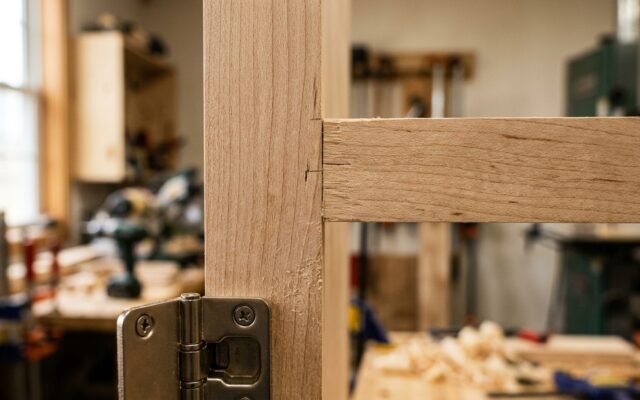
On raised panel or shaker doors, you can replace the center panel entirely with new beadboard. First, carefully remove the existing center panel using a router or table saw. Second, cut a new beadboard panel to fit the opening perfectly. Set it in the rabbeted groove, but use no glue so the panel can float naturally with humidity changes. Consequently, this prevents the wood from splitting during seasonal temperature shifts.
Option 3: Apply Beadboard to Cabinet Ends and Island Skirts
Applying beadboard to cabinet ends requires absolutely no structural modification to your boxes. First, measure and cut the beadboard sheet to the exact size needed. Then, glue or nail it directly to the exposed cabinet sides and plain island skirt panels. Ultimately, this is the easiest application for beginners and yields dramatic visual results quickly. In short, island wraps provide the highest return on investment for DIYers.
Tools and Materials Needed
You will need a table saw or circular saw, a reliable miter saw, a pin nailer, and strong wood glue. In addition, gather 120 and 220 grit sandpaper, high quality primer, and durable cabinet paint. You must also purchase a beadboard plywood sheet or individual tongue and groove strips. You can easily find the required hardware on Wayfair to complete the project successfully. Therefore, having all supplies ready prevents frustrating delays.
Step by Step Installation on Cabinet Ends
First, measure the panel area carefully twice to avoid any costly cutting mistakes. Next, cut the beadboard to the exact size needed using a fine tooth saw blade. Apply construction adhesive to the back, press firmly into place, and pin nail securely at the studs. Finally, fill nail holes with wood filler, sand perfectly smooth, prime, and paint to match. Read how to paint kitchen cabinets for detailed finishing steps.
Beadboard Kitchen Cabinet Cost Breakdown
Cost of Beadboard Materials
A standard beadboard plywood four by eight sheet costs between $20 to $50 locally. Alternatively, individual tongue and groove strips run $2 to $5 per linear foot on average. For a typical kitchen with 20 doors and 4 ends, expect to spend $300 to $700 in material. Therefore, it is a relatively affordable update compared to full door replacement. As a result, you save money while achieving a premium custom look.
Professional Installation Cost
Professional carpenter labor typically ranges from $40 to $80 per hour depending on your region. Consequently, a full kitchen beadboard application costs $500 to $2,000 in labor, depending heavily on complexity. If you have custom sizes or complex island wraps, expect costs to lean toward the higher end. However, hiring a professional ensures tight seams and flawless paint execution. Thus, it is worth the investment for pristine results.
DIY vs Professional Comparison
A DIY project totals between $300 to $900, while hiring a professional totals $800 to $2,700 overall. The DIY skill level is intermediate, requiring basic carpentry knowledge and power tools. Ultimately, if you are comfortable with a saw and nail gun, DIY is highly cost effective. On the other hand, busy homeowners benefit greatly from professional speed and precision. Therefore, weigh your available time against your renovation budget carefully.
| Scope | Material Cost | Labor Cost | Total DIY | Total Professional |
| Basic Island Wrap | $50 to $150 | $150 to $400 | $50 to $150 | $200 to $550 |
| Full Kitchen Doors and Ends | $300 to $700 | $500 to $2,000 | $300 to $900 | $800 to $2,700 |
Beadboard Cabinet FAQ
What is beadboard on kitchen cabinets?
Beadboard refers to vertical grooved wood panels applied directly to cabinet doors or ends. Specifically, this detailing creates a charming cottage or farmhouse texture that is simply not present in standard flat shaker doors. It adds incredible depth and character to otherwise plain surfaces. Furthermore, it remains a hallmark of traditional American cabinetry design.
Can you add beadboard to existing cabinets?
Yes, you can easily add beadboard to existing cabinets with basic tools. You can apply a beadboard sheet to flat front doors, or replace center panels on shaker doors entirely. Furthermore, you can apply it directly to exposed cabinet ends without making any major structural changes. Thus, it is a fantastic weekend makeover project.
What paint color is best for beadboard cabinets?
White and cream are undoubtedly the most common and classic choices for this style. However, sage green and navy are the most popular painted color choices in 2026. These rich colors add a bold modern twist to a historically traditional texture. Consequently, they make your kitchen feel both updated and timeless.
Is beadboard kitchen cabinets a good idea?
Yes, they are an excellent idea for cottage, farmhouse, coastal, and traditional kitchens. On the other hand, they are not recommended for modern or contemporary kitchen styles. Ultimately, beadboard adds warmth and architectural interest when used in the correct design context. Therefore, it is a brilliant choice for homeowners seeking character.