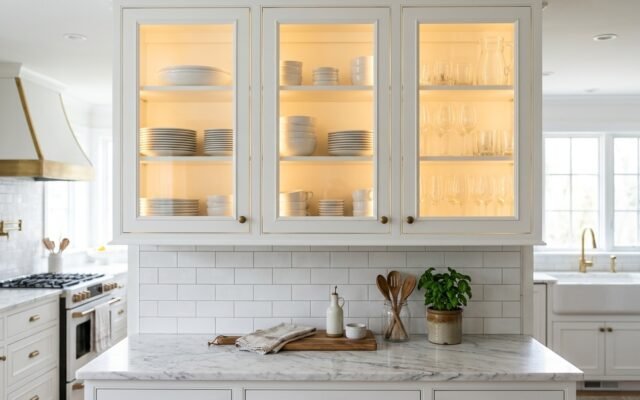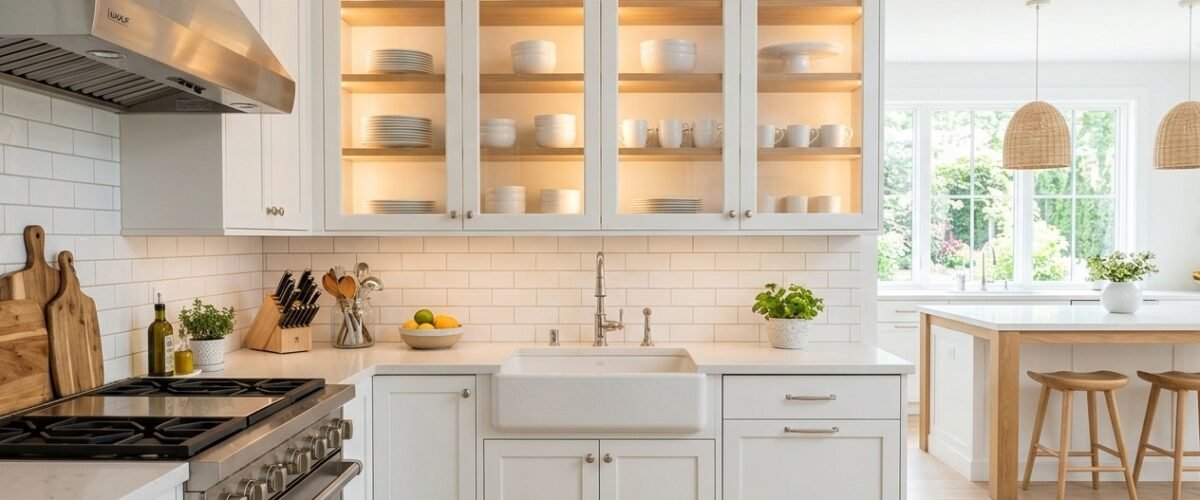
Glass front kitchen cabinets add visual depth to your walls and break up heavy runs of solid cabinetry. However, they expose every shelf to plain view and require consistent organization. In most residential remodels, installing glass doors on two flanking cabinets or a central focal point delivers the aesthetic lift without turning your storage into a chore. Therefore, skip full wall installations unless you keep matching dishware and install dedicated interior lighting.
Quick Comparison of Cabinet Glass Types
Different glass styles offer distinct trade-offs between display clarity and daily maintenance. The table below compares the primary options found in modern kitchen cabinet lines.
| Glass Style | Privacy Level | Daily Maintenance | Cost Per Door | Best Application |
|---|---|---|---|---|
| Clear Tempered | None (100% visible) | High (shows smudges) | $50 to $120 | Curated dinnerware and display glassware |
| Frosted (Acid-Etched) | Moderate (silhouettes only) | Low (resists fingerprints) | $75 to $160 | Everyday pantry items and mixed dishes |
| Seeded Glass | Low (slight distortion) | Medium (textures hide dust) | $90 to $190 | Transitional and farmhouse shaker uppers |
| Reeded or Fluted | Moderate (vertical ribs) | Low (grooves mask interior) | $110 to $220 | Modern slab profiles and coffee bars |
| Leaded Antique | Low to Moderate | Medium (cleaning around came) | $180 to $350 | Historic homes and traditional buffets |
When Glass Front Kitchen Cabinets Make Sense
Glass front kitchen cabinets work best when used as an intentional focal point rather than standard storage. For example, placing two glass doors on either side of a range hood creates symmetry. In doing so, this draws the eye upward and makes a standard eight-foot ceiling feel taller.
In addition, small kitchens benefit greatly from glass panels. Because solid wood doors form an uninterrupted visual barrier, they can make a compact room feel closed in. Instead, clear glass reflects natural window light. As a result, the room feels noticeably wider and brighter.
Finally, consider glass doors if you own cohesive tableware. For instance, white ceramic dishes, clear glassware, or uniform stoneware look deliberate behind glass. If your items match your overall design palette, glass fronts also turn ordinary storage into functional decor.
When to Skip Glass Cabinet Doors
You should skip glass front kitchen cabinets if your upper cabinets hold colorful plastic food storage, mismatched coffee mugs, or packaged groceries. After all, clear glass puts clutter on display every single day. Therefore, unless you want to reorganize your shelves after every dishwasher cycle, stick with solid doors.
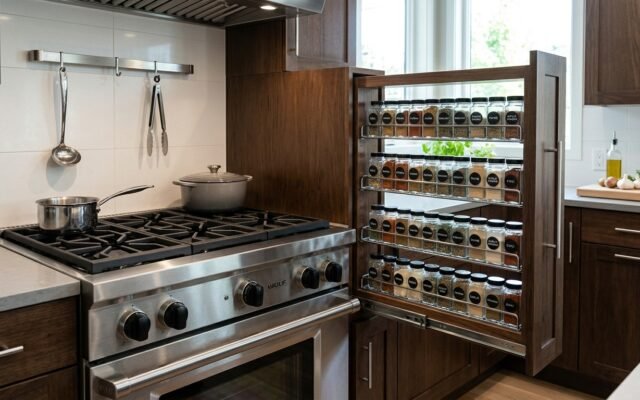
Similarly, avoid glass doors directly next to high-heat cooking zones. In fact, airborne grease sticks to glass quickly. Over several months, cooking vapors bond with microscopic surface pores. Consequently, keeping those glass panes clean becomes a weekly chore with degreaser.
Lastly, skip glass inserts if you have young children or pets that bump against lower surfaces. While upper cabinets remain relatively safe, lower glass hutches risk sudden impacts. In those high-traffic spots, solid wood doors provide superior impact durability instead.
Glass Types Compared: Clear, Frosted, Seeded, and Fluted
Selecting the right glass insert requires balancing visibility against maintenance. Specifically, each style performs differently under kitchen conditions.
Clear Tempered Glass
Clear tempered glass is the standard choice for modern and classic kitchens alike. In particular, it provides complete transparency and lets your interior cabinet finish show through. Specifically, building codes require tempered safety glass under ANSI Z97.1 specifications. Because of this heat treatment, tempered glass crumbles into dull pebbles rather than sharp shards if impacted.
However, clear glass shows fingerprints, grease film, and dust faster than textured alternatives. Therefore, plan on wiping these panels down regularly with a microfiber cloth and glass cleaner.
Frosted and Acid-Etched Glass
Frosted glass diffuses light while concealing the contents of your cabinet. While you can see general shapes and colors inside, specific brand labels remain hidden. As a result, frosted glass is an excellent compromise for homeowners who want an open feeling without displaying messy shelves.
In addition, true acid-etched glass is superior to sandblasted glass. Because acid etching produces a sealed surface, it does not absorb finger oils. Sandblasted glass, on the other hand, stains easily when handled with cooking hands.
Seeded Glass
Seeded glass contains tiny air bubbles trapped inside the glass pane during manufacturing. In fact, this artisan texture adds historic charm to classic shaker vs flat front cabinets. The small bubbles also scatter light gently across the shelf.
Because the surface is textured, seeded glass hides light water spots and dust much better than clear glass. For this reason, it works wonderfully in craftsman, colonial, and rustic country kitchen designs.
Reeded and Fluted Glass
Reeded glass features vertical convex ribs running from top to bottom. In practice, this pattern distorts the interior view while reflecting long beams of light. Consequently, reeded glass brings clean architectural texture into modern kitchens.
Furthermore, reeded panels pair exceptionally well with warm wood tones. If you are exploring cabinet and countertop color combinations, fluted glass over natural white oak provides immediate visual interest as well.
Real Costs of Glass Front Kitchen Cabinets
Adding glass doors increases your cabinet package budget through both door manufacturing and interior finishing costs. The table below outlines what you can expect to pay across different cabinet tiers.
| Cabinet Tier | Frame Preparation Cost | Glass Insert Cost | Interior Finish Surcharge | Total Added Cost Per Door |
|---|---|---|---|---|
| Stock RTA Cabinets | $30 to $50 | $40 to $70 | $25 to $40 | $95 to $160 |
| Semi-Custom Factory | $60 to $110 | $70 to $140 | $50 to $80 | $180 to $330 |
| Custom Cabinet Shop | $120 to $200 | $100 to $250 | $80 to $150 | $300 to $600 |
Notice the interior finish surcharge in the table above. When you order standard solid cabinets, the box interior is typically natural birch melamine or clear coated veneer. However, with glass doors, the interior must match the exterior door finish. Therefore, cabinet manufacturers charge extra to spray matching paint or stain inside the box interior. For a complete look at broader kitchen budgeting, review our detailed kitchen cabinet cost guide.
The Showroom Knuckle Test
Before ordering glass cabinet doors from a showroom or supplier, perform this physical inspection test. First, tap the center of the glass pane with the back of your knuckle. Next, listen carefully to the tone and feel the vibration.
Quality cabinet doors use 3/16-inch or 1/4-inch tempered glass mounted with continuous rubber gasket retainers. When you tap this setup, you hear a dull, solid thud. In addition, the pane remains stiff and stable inside the wooden frame.
In contrast, cheap budget units install 1/8-inch single-strength annealed glass secured by plastic clips. When tapped, thin annealed glass rattles inside the groove and produces a high-pitched ring. Thus, if the glass rattles under a gentle tap, it will vibrate every time you close the cabinet door. Always insist on heavy tempered glass with rubber glazing channels instead.
How to Light Glass Cabinets
Unlit glass cabinets look dark and hollow once evening arrives. Without interior illumination, the glass reflects the dark room rather than highlighting your items. Therefore, budget for interior lighting during the rough-in electrical phase.
First, install low-voltage 2700K or 3000K warm white LED puck lights or vertical tape light channels. In particular, vertical tape lights mounted behind the front face frame cast even illumination across all shelf levels. Puck lights in the top panel only light the highest shelf unless you use glass shelving.
Second, choose 3/8-inch tempered glass shelves with polished pencil edges instead of standard wood shelves. As a result, glass shelving allows overhead light to travel through the entire cabinet interior. Solid wood shelves, by comparison, block light and leave lower tiers in total shadow.
4 Mistakes That Ruin Glass Cabinet Installations
Contractors frequently see homeowners make avoidable mistakes with glass cabinet projects. Therefore, keep these four guidelines in mind before ordering.
- Skipping matching box interiors: Ordering glass doors without matching painted interiors leaves a raw wood box visible behind pristine white frames. Always specify matching interior veneers.
- Using wood shelves with overhead pucks: A single top puck light cannot illuminate past a three-quarter inch solid wood shelf. Pair overhead lights with tempered glass shelving instead.
- Forgetting silicone cushion bumpers: Clear rubber door bumpers absorb closure impact. Without soft bumpers, doors slam against the face frame and create stress on glass retainers.
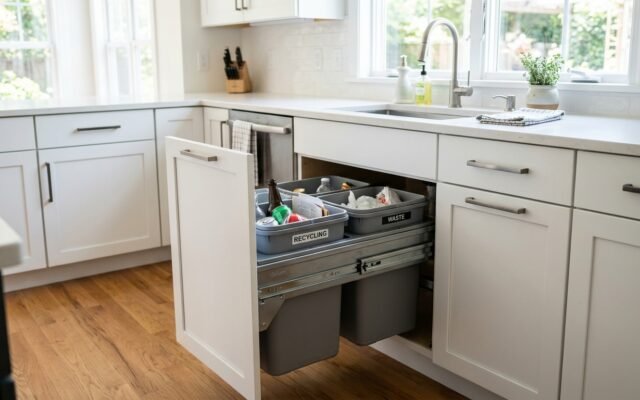
- Placing glass doors over trash pullouts: Never install glass doors near high-impact base units. Reserve glass strictly for upper wall cabinets and dedicated bar hutches.
Also, remember box material structural stability. High quality MDF vs plywood cabinet boxes resist humidity changes that cause door frames to rack or twist against rigid glass inserts.
Frequently Asked Questions
Are glass front kitchen cabinets out of style?
No, glass front kitchen cabinets remain a timeless design element. In fact, they break up heavy cabinetry runs and reflect natural light. Modern kitchens frequently feature fluted or reeded glass to blend vintage craftsmanship with clean contemporary lines.
Can you add glass inserts to existing cabinet doors?
Yes, you can modify existing recessed panel wood doors. Specifically, a carpenter routes out the center wooden panel, creates a retaining lip, and installs glass using silicone or glazing clips. As a result, the project typically costs $75 to $150 per door.
Is tempered glass required for kitchen cabinet doors?
While residential codes vary, tempered glass is strongly recommended for kitchen cabinets. In particular, tempered glass handles heat expansion from nearby stoves and resists physical impacts. If it breaks, it crumbles safely instead of forming dangerous jagged shards.
How do you clean grease off cabinet glass?
Mix equal parts warm water and distilled white vinegar with a drop of liquid dish soap. Then spray the solution onto a microfiber towel rather than directly onto the glass. This method prevents excess moisture from seeping into wooden frame seams.
Do glass cabinet doors cost more than solid doors?
Yes, glass cabinet doors cost 25% to 50% more than standard solid doors. For example, the price increase comes from specialized frame routing, tempered glass inserts, and factory-applied matching interior box finishes.