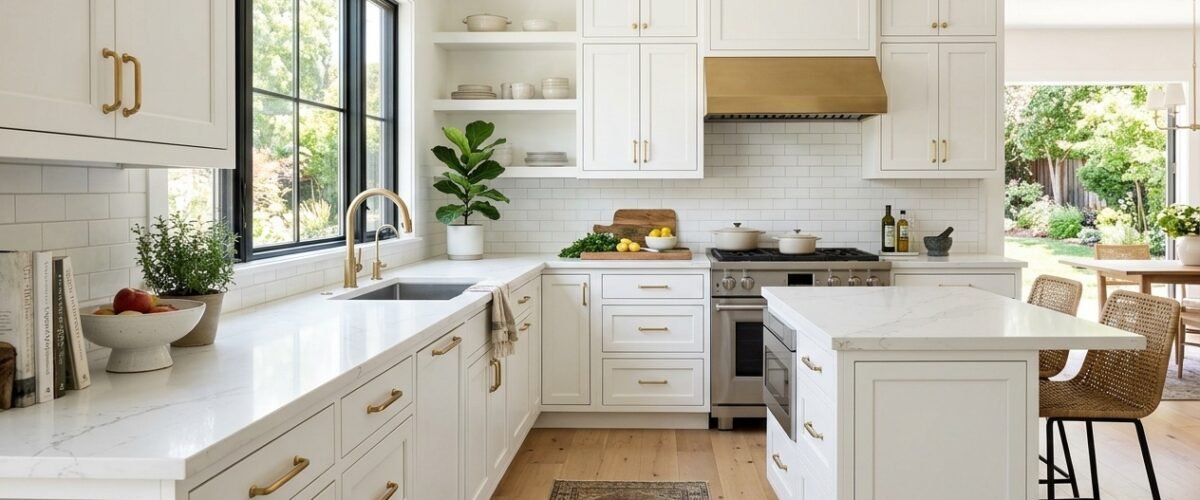
White kitchen cabinets remain the most popular finish in North American kitchens in 2026. Because they reflect light, they make spaces feel expansive and exceptionally clean. Therefore, homeowners consistently choose them for both remodels and new builds. When selecting your finish, you must navigate three key decisions. First, you have to select the perfect sheen level to balance durability and aesthetics. Second, you must pick hardware finishes that complement your undertones.
Third, you need to match your cabinet color to your countertop material. Ultimately, making the right choices prevents a sterile look and keeps your kitchen feeling warm. In this comprehensive buyer guide, we will break down every essential detail you need to know. Specifically, we cover paint types, hardware pairings, and the contractor secret to fixing yellowed cabinets.
White Kitchen Cabinet Paint Sheens Compared
Choosing the right paint sheen is critically important for long term durability. Specifically, kitchens require surfaces that can handle grease, steam, and constant touching. Consequently, flat or matte finishes rarely survive in a working kitchen environment. You must select a finish that provides a hard protective shell against daily wear and tear.
Flat and Matte
Matte finishes absorb light beautifully and hide surface imperfections very well. However, you should avoid them for kitchen cabinets entirely. Because matte paint lacks a protective glossy shell, it absorbs grease and stains instantly. Consequently, trying to scrub tomato sauce off a matte white cabinet will usually remove the paint itself. Obviously, this creates a maintenance nightmare for any active kitchen.
Eggshell and Satin
Satin is definitely the contractor sweet spot for kitchen cabinets. In fact, most professionals recommend products like Benjamin Moore Advance in a satin finish. The satin sheen provides enough of a hard shell to wipe clean easily. At the same time, it avoids the plastic look of high gloss paints. Therefore, it strikes the perfect balance between elegance and practicality.
Semi Gloss
Semi gloss paint offers maximum protection for high traffic kitchens. Because it reflects a lot of light, it highlights every dent and brush stroke on your cabinet doors. As a result, you must have perfectly smooth cabinets before applying semi gloss paint. If you have active children or messy cooks, surely the easy cleaning makes semi gloss a strong contender.
Furthermore, when selecting your specific white, you must consider Light Reflectance Value or LRV. For example, Benjamin Moore Chantilly Lace OC 65 has an LRV of 92.2, making it incredibly bright. On the other hand, Benjamin Moore White Dove OC 17 has an LRV of 85.9 with warm cream undertones. Similarly, Sherwin Williams Extra White SW 7006 sits at 86 LRV with a cool blue undertone. Finally, Sherwin Williams Pure White SW 7005 offers an 84 LRV for a softer neutral look.
White Cabinets with Different Countertop Colors
Pairing your cabinets with the right countertop is absolutely essential for a cohesive design. Specifically, you want to avoid matching bright white cabinets with off white quartz because it makes the quartz look dirty. Instead, you need intentional contrast or perfect harmony.
White Cabinets with White Countertops
Matching white with white carries significant risks. Because different materials reflect light differently, perfectly matching the shades is almost impossible. Consequently, you must break up the monotony with texture. For instance, pairing plain white cabinets with heavily veined marble quartz adds much needed visual interest.
White Cabinets with Gray Countertops
Gray countertops offer a classic pairing with white cabinets. However, you must pay attention to the vein color matching. If you choose a warm gray quartz, it pairs beautifully with warm whites like White Dove. Conversely, cool gray countertops demand crisp whites like Chantilly Lace or Extra White. Naturally, mixing warm cabinets with cool gray countertops creates a visual clash.
White Cabinets with Wood or Butcher Block
Wood countertops introduce incredible warmth to an otherwise stark space. Because white can feel cold, the natural grain of butcher block grounds the room perfectly. For example, walnut or dark oak tones work exceptionally well with crisp whites. On the other hand, yellow toned pine or maple can sometimes clash with creamy whites.
White Cabinets with Black or Dark Countertops
Black or dark soapstone countertops create a striking high contrast look. In this case, crisp whites like Extra White work best because they amplify the dramatic effect. Obviously, this classic tuxedo look never goes out of style. Therefore, it remains a favorite choice for transitional and historic homes alike.
Best Hardware for White Kitchen Cabinets
Hardware acts as the jewelry of your kitchen. Since white is a neutral canvas, you can choose almost any finish. Nevertheless, certain pairings produce distinct stylistic results that you must consider carefully.
Brass and Gold Hardware
Warm brass adds instant luxury to white cabinetry. Specifically, satin brass offers a muted, sophisticated glow that hides fingerprints well. On the other hand, polished gold creates a glamorous, highly reflective statement. Ultimately, warm brass pairs best with creamy whites, enhancing the warm undertones beautifully.
Matte Black Hardware
Matte black hardware provides exceptional contrast. Because it stands out so sharply against white, it draws the eye immediately. In fact, matte black looks best when paired with pure, stark whites. This combination strongly supports modern farmhouse and contemporary kitchen designs.
Brushed Nickel and Chrome
Brushed nickel has always been the classic pairing for white kitchens. However, standard brushed nickel can sometimes read as dated if not chosen carefully. Instead, polished chrome offers a timeless, clean sparkle that feels both vintage and fresh. If you want to explore all these amazing options, you can check current prices on Amazon for a massive variety of styles.
Why White Cabinets Yellow and How to Prevent It
Nothing ruins a pristine kitchen faster than yellowing paint. Unfortunately, many homeowners face this issue within just a few years of painting. Understanding the causes will definitely save you time and money.
What Causes Yellowing
Oil based paint oxidation is the primary culprit behind yellowing cabinets. In addition, cooking grease accumulation creates a sticky, yellow film over time. Furthermore, lack of UV exposure in dark corners actually accelerates the yellowing of certain alkyd paints. Finally, cheap paint with poor quality binders will inevitably shift color as it ages.
How to Choose Yellow Resistant White Paint
To avoid this nightmare, you must use a water based alkyd paint. Because water based paints do not contain traditional oils, they resist yellowing remarkably well. Additionally, high titanium dioxide content ensures the paint retains its bright white nature. For instance, Benjamin Moore Advance offers the durability of an oil paint without the yellowing risks found in budget brands. You can browse high quality options and browse options at Home Depot.
The Contractor Fix
If your cabinets have already yellowed, contractors use a very specific fix. First, they perform a light sanding using 220 grit sandpaper to degloss the surface. Next, they apply a high adhesion water based primer to seal the old finish. Finally, they spray two thinned coats of Benjamin Moore Advance, allowing a full 16 hours of dry time between coats.
White Cabinet Styles That Work Best
The door style you choose dramatically impacts how the white paint looks. Because different profiles cast different shadows, you must select your kitchen cabinet door styles carefully.
Shaker White Cabinets
Shaker cabinets remain the most popular choice by far. Because the recessed center panel creates subtle shadows, it prevents a wall of white from looking entirely flat. Consequently, this simple geometry works perfectly with almost any design aesthetic. Shaker doors also wipe clean relatively easily.
Flat Front White Cabinets
Flat front or slab doors offer a sleek modern pairing. However, this style requires absolutely perfect paint application. Since there are no details to distract the eye, every roller mark will be glaringly obvious. Therefore, you should always spray flat front cabinets for a factory smooth finish.
Beadboard and Glass Front White Cabinets
Beadboard inserts lend a charming cottage feel to white kitchens. Similarly, glass front upper cabinets break up heavy blocks of white while showcasing your beautiful dishware. Ultimately, these traditional pairings add necessary character to vintage or farmhouse designs.
Cleaning and Maintaining White Kitchen Cabinets
Keeping your kitchen pristine requires a consistent routine. Since white highlights every spill, you must stay on top of maintenance. You can read our full guide on how to clean kitchen cabinets for deeper insights into proper care techniques.
Daily Cleaning
For daily cleaning, a mixture of mild dish soap and warm water works best. You should always use a soft microfiber cloth instead of abrasive sponges. Most importantly, you must never use paper towels, as their rough wood fibers will eventually dull the paint sheen over time.
Grease Removal
When dealing with stubborn cooking splatters, diluted dish soap is usually sufficient. However, for heavy grease build up, you might need a dedicated gentle degreaser. At the same time, you must avoid harsh chemicals or magic erasers on painted wood, as they will strip the finish right off.
Touch Up Painting
Cabinet nicks inevitably happen in a busy kitchen. When they do, you need to know how to blend them without visible lap marks. First, clean the damaged area thoroughly. Then, use an artist brush to dab a tiny amount of your original paint precisely into the chip. Finally, avoid brushing outward, as this creates a noticeable texture difference.
White Kitchen Cabinet Comparison Table
Quick Reference Guide
Review the exact specifications of the most popular white cabinet paints below. Because choosing the right shade can be overwhelming, this guide simplifies the decision making process significantly.
| White Shade | LRV | Undertone | Best Pairing | Best Sheen |
|---|---|---|---|---|
| Chantilly Lace OC 65 | 92.2 | Neutral | Any countertop | Satin |
| White Dove OC 17 | 85.9 | Warm cream | Wood and brass | Satin |
| Extra White SW 7006 | 86 | Cool blue white | Dark countertops | Semi gloss |
| Pure White SW 7005 | 84 | Neutral | Gray countertops | Eggshell |
FAQ
Are white kitchen cabinets still popular in 2026?
Yes, they absolutely remain a dominant choice. In fact, over thirty five percent of new kitchen installations still feature white cabinetry. While colorful islands are trending, perimeter cabinets often stay bright and neutral to maximize light reflection.
What is the best white paint for kitchen cabinets?
Benjamin Moore Advance stands out as the industry standard. Specifically, colors like Chantilly Lace or White Dove offer beautiful, durable finishes. You can explore more about how to paint kitchen cabinets in our comprehensive step by step guide.
Do white cabinets show dirt?
Yes, pure white cabinets definitely show dirt more than off white or stained wood. However, if you choose a satin or semi gloss sheen, they wipe clean very easily. Ultimately, the bright look is worth the slight increase in daily maintenance.
How do I keep white cabinets from yellowing?
You must avoid oil based paints entirely. Instead, use a premium water based alkyd paint. Furthermore, keeping your kitchen well ventilated and cleaning grease regularly will significantly extend the life of your bright white finish. If you want to see other popular options, check out the kitchen cabinet color trends for this year.
Whether you are tackling a DIY renovation or hiring professionals, proper planning ensures spectacular results. For a vast selection of complete setups, you can browse Wayfair cabinets to find exactly what you need.