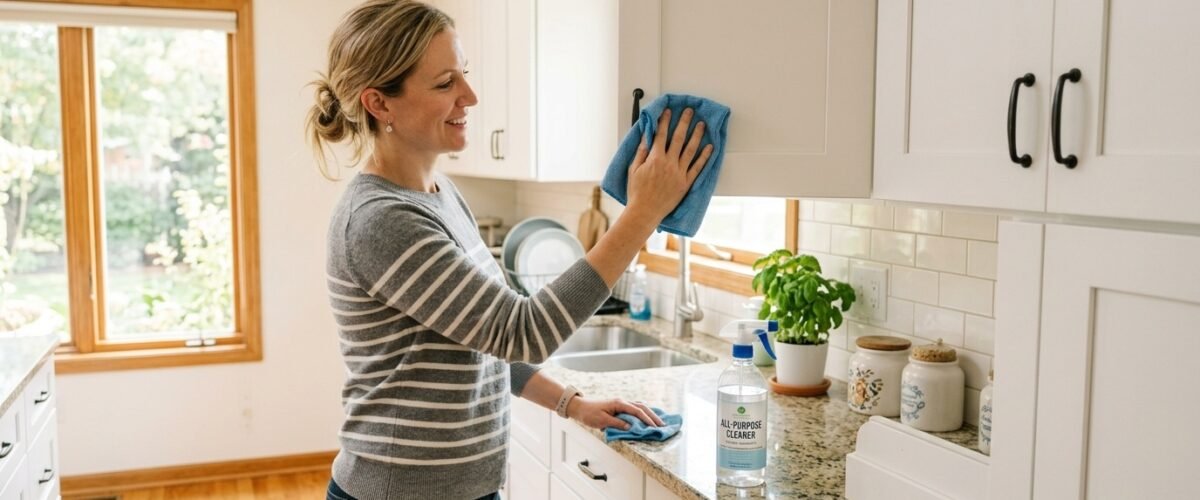
If you are wondering how to clean kitchen cabinets without causing damage, the process is actually simpler than you might think. For most cabinet types, a solution of dish soap and warm water applied with a microfiber cloth handles daily grime effectively. For heavy grease near the stove, diluted white vinegar or a degreaser rated for your finish cuts through buildup quickly without damage. We will go over everything you need to know about the right cleaning products, tools, and methods for every common kitchen cabinet surface.
What You Need Before You Start
Before you begin scrubbing, you must gather the right tools. First, get several clean microfiber cloths. Microfiber is gentle on all cabinet finishes and easily grabs dust and grease without scratching. Second, you will need a mild grease-cutting dish soap like Dawn. In addition, white vinegar is incredibly useful for cutting through stubborn grease when diluted properly.
You also need a clean spray bottle to mix your solutions. For tight corners or detailed trim work, a soft toothbrush is highly effective. Finally, always have a dry towel on hand. Leaving water on any cabinet surface can cause severe damage over time. Therefore, drying the surface immediately after cleaning is critical.
If you are missing anything, you can browse cleaning supplies at Wayfair or explore options at Home Depot to get fully prepared.
How to Clean Wood Kitchen Cabinets
Wood cabinets require special care to keep the finish looking healthy and rich. The baseline method for sealed wood cabinets is simple soap and water. Mix one teaspoon of dish soap into a spray bottle filled with warm water. Spray the mixture directly onto your microfiber cloth, rather than the cabinets. This prevents excess moisture from seeping into the wood grain. Always wipe in the direction of the wood grain to avoid leaving streaks.
To avoid warping, you must wipe the wood completely dry immediately after cleaning. If you prefer a commercial product, Murphy’s Oil Soap is a popular choice for wood. Mix one quarter cup of Murphy’s Oil Soap with one gallon of warm water. While dish soap is great for regular cleaning, oil soap can help restore moisture. First, test any new cleaner on the inside of a cabinet door. Once a year, you should apply a specialized wood polish or oil finish refresh to protect the seal and keep the wood hydrated.
How to Clean Painted Kitchen Cabinets
Painted cabinets are very popular, but they can be delicate. When learning how to clean kitchen cabinets that have been painted, you must always use a pH neutral cleaner. Avoid abrasive sponges, baking soda, and harsh chemicals entirely. These products will easily strip the paint or create dull spots. A mixture of warm water and a few drops of dish soap is usually sufficient. Similar to wood cabinets, apply the cleaner to your cloth and wipe gently.
Flat paint is much harder to clean than semi gloss paint because it absorbs grease and stains more readily. If you have flat paint, you might need to clean the cabinets more frequently. Before using any degreaser, spot test the product in an inconspicuous area. If you happen to notice chips or wear spots while cleaning, it might be time to read about how to paint kitchen cabinets to properly touch up those areas.
How to Clean Laminate Kitchen Cabinets
Laminate cabinets are durable and generally easy to clean, but they have their own specific rules. Never use oil based cleaners on laminate surfaces. Oil based products will leave a sticky residue that attracts even more dust and dirt. Instead, a standard all purpose spray or a simple vinegar and water solution works perfectly. Spray the cleaner onto your cloth and wipe down the surfaces smoothly.
While laminate is water resistant, the seams where the laminate meets the cabinet base are very vulnerable. Excess moisture can easily seep into these seams and cause delamination. Therefore, you must dry the cabinets thoroughly after cleaning. It is important to know that laminate is different from thermofoil. Thermofoil is wrapped around the door, while laminate is glued in sheets. Both materials are sensitive to extreme heat and prolonged moisture. If you are comparing materials, you might be interested in reading about MDF versus plywood cabinets for core construction details.
How to Remove Grease from Cabinet Doors
Grease buildup is the biggest challenge in any kitchen. To remove stubborn grease from cabinet doors, a vinegar and dish soap mix is highly effective. Mix equal parts white vinegar and warm water, then add a few drops of grease cutting dish soap. For very heavy grease, you can use a two to one ratio of vinegar to water. Apply the solution, let it sit for a minute to soften the grease, and then wipe it away. You might have to repeat this process for older stains.
If you have heavily caked on grease, you can create a baking soda paste. Mix baking soda with a little water until it forms a thick paste. Apply the paste directly to the grease spot and let it sit for five minutes. Gently scrub the area with a soft cloth and wipe it clean with a damp towel. However, do not use baking soda on painted cabinets as it acts as a mild abrasive. For extremely tough grease, commercial degreasers like Krud Kutter are excellent choices. You can easily check current prices on Amazon for these strong degreasers.
How to Clean Cabinet Hardware
Cleaning the cabinet doors is only half the job. Cabinet hardware collects incredible amounts of grime, oil, and food particles. First, it is often easier to clean knobs and pulls separately if they are very dirty. You can remove them with a screwdriver and soak them in a bowl of warm soapy water. A soft toothbrush is the best tool for scrubbing the intricate details and crevices of your hardware.
Different metals require different care. Brass hardware can tarnish, so you might need a specialized brass cleaner to restore its shine. Brushed nickel, on the other hand, is easier to maintain and usually only needs soap and water. Be careful not to soak cabinet hinges, as trapped moisture can cause rusting over time. To learn more about hardware options and maintenance, check out our guide on kitchen cabinet hardware or explore different kitchen cabinet door styles to see how hardware impacts the overall look.
Cleaning Schedule to Keep Cabinets Looking New
Maintaining clean cabinets is much easier if you follow a regular cleaning schedule. Weekly, you should wipe down the cabinets immediately surrounding the stove and sink. These areas collect grease and water splatters constantly. A quick weekly wipe prevents grease from hardening and becoming a major chore later. Second, plan for a monthly full clean where you wipe down every exterior cabinet door in the kitchen.
Quarterly, you should focus on the interior of your cabinets. Empty the shelves, vacuum up any crumbs, and wipe down the interior surfaces. Finally, schedule an annual deep clean. During this annual clean, wood cabinets should be polished or sealed to protect the finish. This consistent schedule will drastically extend the lifespan and beauty of your kitchen cabinets.
What to Avoid
There are several common mistakes that can permanently damage your cabinets. First and foremost, never use bleach or harsh chemicals on wood cabinets. Bleach will immediately strip the finish and discolor the wood. Second, avoid using steam cleaners. While steam is great for tile floors, the intense heat and moisture will melt glue, peel paint, and warp wood cabinet doors.
In addition, never use paper towels to scrub cabinet finishes. Paper towels can actually be slightly abrasive and may leave micro scratches in glossy paints and clear coats over time. Stick to microfiber cloths. Lastly, as mentioned before, never soak your hinges. Water trapped inside the hinge mechanism will inevitably lead to rust and mechanical failure.
FAQ
How often should I clean my kitchen cabinets?
You should wipe down the cabinets near your stove and sink once a week. The rest of the exterior cabinet doors should be cleaned monthly. A full deep clean, including the interior shelves, should be done two to four times a year.
Can I use Clorox wipes on my kitchen cabinets?
It is generally not recommended to use Clorox wipes on painted or wood cabinets. The harsh chemicals can dull the finish over time. A simple solution of dish soap and warm water is much safer and just as effective for daily cleaning.
What is the best homemade degreaser for cabinets?
The best homemade degreaser is a mixture of equal parts warm water and white vinegar, with a few drops of dish soap added. The vinegar naturally breaks down the grease while the dish soap helps lift it away from the surface without leaving a harsh chemical residue.
How do I clean sticky wood kitchen cabinets?
Sticky wood cabinets are usually the result of old, hardened grease. Use an oil soap like Murphy’s Oil Soap diluted in warm water, or a specialized wood cleaner. Apply the cleaner to a cloth, wipe the sticky area gently, and immediately dry the surface to protect the wood grain.