If you’re replacing cabinet hinges and wondering whether Blum is worth three times the price of a hardware-store pack, the short answer is yes : for most kitchens. The Blum CLIP top BLUMOTION 71B3550 has a proven 200,000-cycle life, tool-free 3-axis adjustment, and a dampening feel that competitors have been chasing for fifteen years. Grass TIOMOS and Hettich Sensys are genuine alternatives; generic hinges are fine for low-traffic areas and a risk everywhere else. Keep reading for the full breakdown so you can make the right call for your project.
Quick Comparison Table
The table below covers the four main tiers of soft close cabinet hinges side by side. All three name brands meet or exceed the ANSI/KCMA A161.1 standard of 25,000 cycles; Blum and Grass push far beyond it in independent testing.
| Brand / Model | Cycle Rating | Adjustment | Cost per Pair (USD) | Best For |
|---|---|---|---|---|
| Blum CLIP top BLUMOTION 71B3550 | 200,000+ | 3-axis, tool-free | $8 to $12 | Full kitchens, high-use doors, semi-custom builds |
| Grass TIOMOS 94° | 150,000+ | 3-axis, integrated damper | $7 to $10 | European-style frameless, heavy doors |
| Hettich Sensys 8631i | 100,000+ | 2-axis + snap-in | $6 to $9 | Residential remodels, framed & frameless both |
| Generic / Bulk Pack | ~25,000 (claimed) | 1-axis only | $1 to $3 | Utility rooms, low-traffic areas, temporary builds |
Blum CLIP top BLUMOTION 71B3550
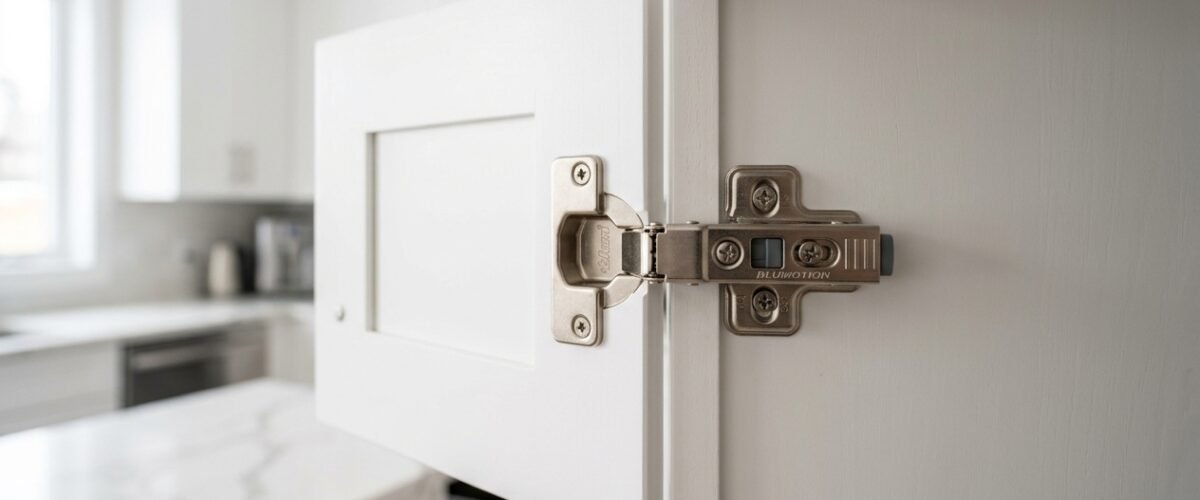
Blum is the benchmark. The CLIP top BLUMOTION 71B3550 is a 110° full-overlay concealed hinge with BLUMOTION dampening built directly into the hinge cup : there is no separate add-on clip to forget or lose. The damper is oil-based and self-adjusting across the closing arc, which is why the door feels the same whether you push it hard or just let it swing.
Specs that matter on the job site
- Opening angle: 110° standard (107° with integrated BLUMOTION cup)
- Overlay options: Full (0 mm inset), half overlay, and inset : all using the same hinge body with different mounting plates
- Cup bore diameter: 35 mm (industry standard)
- Door thickness range: 16 to 32 mm
- Cycle rating: 200,000+ (Blum internal testing), far above the ANSI/KCMA A161.1 25,000-cycle minimum
- Adjustment: 3-axis tool-free : side (+/−2 mm), height (+/−2 mm), depth (+/−2 mm) : all with a Phillips head or your thumb on the cam screws
The CLIP mounting system is the real differentiator for installers. You can clip the door on or off the cabinet in seconds without removing a single screw : extremely useful when fitting frameless vs framed cabinets where you’re constantly pulling doors to access the box during install. The plate stays on the cabinet; the hinge body snaps to it.
Showroom test result
Push the door half-open and release. A quality soft-close hinge catches at 30° and closes silently in under 3 seconds. The Blum BLUMOTION catches consistently at 25 to 30° regardless of how aggressively the door is released. No bounce. No thud. It is the quietest of the three name brands tested.
The one knock on Blum
Price. At $8 to $12 per pair retail (lower in contractor packs of 50+), a full 30-door kitchen runs $120 to $180 in hinges alone. That said, you are buying hinges you will never replace during the life of the kitchen. Most contractors spec Blum by default on any project where the client will be in the house long-term.
Grass TIOMOS 94°
The Grass TIOMOS 94° is the hinge European cabinet manufacturers reach for when they need heavy-door performance. TIOMOS stands for “Tool-less Integrated Opening Moment Adjustment System” : that’s a mouthful, but the practical result is a hinge that handles door weights up to 3.2 kg (7 lb) per hinge with no damper degradation over time.
Specs that matter on the job site
- Opening angle: 94° (pairs well with tighter-clearance frameless runs)
- Overlay options: Full overlay and half overlay; inset available in the TIOMOS 0° variant
- Cup bore diameter: 35 mm
- Door weight rating: Up to 3.2 kg per hinge (use 3 hinges on doors over 20 kg)
- Cycle rating: 150,000+ (Grass published data)
- Adjustment: 3-axis with integrated damper : the soft-close speed is field-adjustable via a small dial on the hinge arm
That adjustable damper speed is something Blum doesn’t offer on this model. If you’re installing on a heavy solid-wood door and the close is too slow for the homeowner’s taste, you can dial it up without replacing anything. This makes TIOMOS particularly good for door vs drawer base cabinets where the door panels are thick and weighty.
Showroom test result
Using the same half-open release test, the TIOMOS catches at approximately 30° and closes in around 2.5 to 3.5 seconds depending on damper dial position. The close is smooth but has a slightly different feel than Blum : a touch more mechanical, though still completely silent. Both perform at the same level for day-to-day use.
Where Grass loses ground
Availability. Blum is stocked at most cabinet supply houses and large distributors. Grass TIOMOS is often a special-order item in North America, which adds lead time on renovation jobs. The mounting plate system is also brand-specific, so you cannot mix Grass plates with Blum hinge bodies.
Hettich Sensys 8631i
The Hettich Sensys 8631i is the value play among European-made soft close cabinet hinges. “i” stands for integrated : the damper is built into the hinge arm rather than the cup, which gives you a slightly slimmer profile in the cup bore. Hettich rates the Sensys at 100,000 cycles, which is four times the ANSI/KCMA A161.1 minimum and plenty for a standard residential kitchen.
Specs that matter on the job site
- Opening angle: 110°
- Overlay options: Full overlay, half overlay, inset
- Cup bore diameter: 35 mm
- Door thickness range: 15 to 26 mm
- Cycle rating: 100,000+ (Hettich published data)
- Adjustment: 2-axis (height and side) via screw; depth via snap-in mounting plate position
The snap-in mounting plate is where Hettich is clever. The plate has three depth positions and snaps between them without tools, so you can make quick overlay adjustments during a fast-paced install. The trade-off is that depth fine-tuning is not as granular as Blum or Grass. For standard framed installs with consistent reveals, this is rarely a problem. Pair the Sensys with quality MDF vs plywood cabinet boxes and you get a solid, quiet kitchen at a reasonable cost.
Showroom test result
The Sensys catches around 30 to 35° and closes in approximately 3 to 4 seconds. Noticeably slower than Blum. On doors under 1.5 kg the close can feel slightly sluggish, but it never slams and there is no bounce-back. For a residential remodel where the homeowner just wants doors that don’t bang, the Sensys delivers.
Who should buy Hettich Sensys
Rental property owners, builders doing production homes, and DIYers who want a step up from generic without paying Blum prices. At $6 to $9 per pair, a 30-door kitchen costs $90 to $135 in hinges : call it $30 to $45 less than Blum for a result that most homeowners cannot distinguish in daily use.
Budget Hinges: When They’re Fine vs. When to Skip
Generic soft close cabinet hinges : those $12-for-10 packs on Amazon or the house brand at the local hardware store : are not automatically garbage. The issue is consistency. Manufacturing tolerances in budget hinges vary enough that two hinges from the same bag may close at different speeds. Here’s how to think about it.
When budget hinges are fine
- Utility cabinets and laundry rooms: Low traffic, low visual scrutiny. A hinge that lasts 8 to 10 years here is a win.
- Garage workshops and basement storage: Dampened closing is a nice-to-have, not a must-have.
- Rental property flips: If you’re budget-constrained and turning the unit in 18 months, generic hinges survive the short term.
- Temporary display or staging builds: No one lives with these cabinets long enough to care.
When to skip the budget option
- Full kitchen remodels: The cost difference between generic and Hettich is $2 to $4 per pair. On a 60-hinge kitchen that’s $60 to $120 extra. The warranty callbacks from failed hinges cost more than that in one service call.
- Heavy solid-wood or raised-panel doors: Budget dampers are not rated for doors over about 1 kg and will fail within months.
- Frameless cabinets with full overlay: Tolerances matter more when the door gap is only 2 to 3 mm. Generic hinges wander enough to create visible misalignment over time.
- Anywhere you’re pairing with quality undermount drawer slides: If you’re spending on slides, don’t cheap out on hinges : the quality mismatch is immediately obvious to a discerning homeowner.
The fake soft-close hinge test
This is worth doing before you buy a bulk pack. Push the door half-open and release. A quality soft-close hinge catches at 30° and closes silently in under 3 seconds. Cheap ones slam or bounce. If you can’t test in person, look for a damper that’s visibly built into the hinge body : not a thin rubber pad stuck to the mounting plate. The rubber-pad design typically fails within 6 to 12 months of daily use.
How to Install & Adjust Soft Close Cabinet Hinges
All three name-brand hinges use a standard 35 mm cup bore, so the installation process is the same regardless of brand.
Tools you need
- 35 mm Forstner bit (or a hinge boring jig if doing more than 10 doors)
- Drill/driver
- Phillips #2 screwdriver
- Tape measure and pencil
- Combination square
Step-by-step installation
- Mark the cup location. Standard placement is 3 to 4 inches from the top and bottom edges of the door. The cup centerline should sit 22.5 mm from the door edge for a full-overlay application.
- Bore the cup hole. Set your Forstner bit depth stop at 13 mm. Bore slowly to avoid tear-out, especially on MDF-core doors.
- Seat the hinge cup. Press the hinge cup into the bore hole and drive the two provided screws into the pre-drilled pilot holes. Do not overtighten : strip a screw here and you’re plugging and re-boring.
- Mount the plate. Screw the mounting plate to the cabinet face frame or interior wall at the correct reveal dimension. For a 3/8″ overlay, align accordingly.
- Clip the door. Snap the hinge arm onto the mounting plate. On Blum this requires a firm press and a click. On Hettich Sensys, slide the arm forward until it locks.
- Adjust alignment. With the door closed, check the reveal on all four sides. Use the side-adjust cam to center the door left-right, the height screw to raise or lower, and the depth cam to bring the door flush with adjacent doors.
Common adjustment mistakes
- Adjusting depth last. Always set side and height first, then depth. Depth changes affect the apparent height and side position.
- Over-adjusting on one hinge. Split adjustments evenly between top and bottom hinges to avoid racking the door.
- Skipping the soft-close speed check after adjustment. Any depth or side change can slightly alter the closing arc. Do the half-open release test after every final adjustment.
FAQ
Do soft close cabinet hinges wear out?
Yes, but not quickly if you buy quality. Blum rates the CLIP top BLUMOTION at 200,000 cycles. At an optimistic 20 opens per day, that’s 27 years of daily use. Budget hinges rated at 25,000 cycles hit that number in about 3.5 years under the same use pattern. The damper is the first component to fail : when it does, the door starts slamming again without warning.
Can I retrofit soft close hinges without replacing the whole cabinet?
Yes, in most cases. If your existing hinges use a 35 mm cup bore (the vast majority of concealed hinges installed since the 1990s), you can swap them for soft close cabinet hinges directly. The mounting plates may not be interchangeable between brands, but you can typically reuse the existing screw holes in the cabinet wall.
What is the ANSI/KCMA A161.1 cycle standard?
ANSI/KCMA A161.1 is the North American performance standard for kitchen cabinet hardware. It requires hinges to complete 25,000 open-and-close cycles without structural failure or significant performance degradation. All three name brands in this article exceed that standard by a factor of 4 to 8x. Budget hinges often claim compliance without independent verification : ask for the test documentation if it matters to your project.
How many hinges does a cabinet door need?
For doors up to 40 inches tall and under 10 lbs, two hinges are sufficient. Doors over 40 inches tall or over 10 lbs need three hinges. Solid wood raised-panel doors : particularly common on frameless vs framed cabinets : frequently need three hinges even at shorter heights due to weight. Overloading two hinges shortens their life dramatically and causes misalignment within months.
Blum vs Grass vs Hettich: which is the best value?
For most residential kitchens, Hettich Sensys 8631i offers the best value : genuine European quality at a price point close to generic. For high-use kitchens, client-facing remodels, or any project where callbacks are your reputation, spend the extra $2 to $4 per pair for Blum CLIP top BLUMOTION. Grass TIOMOS is the right call specifically for heavy doors or when an adjustable damper speed is required. Generic hinges belong in utility rooms only.