Drawer base cabinets cost $120 to $250 more per box than standard door cabinets, but they deliver 30% more usable storage and eliminate dead space entirely. While a standard 30-inch door base cabinet retails between $180 and $320, an equivalent three-drawer base cabinet runs $300 to $570. In fact, homeowners who invest in drawer bases recover that premium daily through superior ergonomics, instant visibility, and organized heavy storage.
Upgrading your base cabinetry represents the most impactful functional choice in any kitchen remodel. Before choosing your layout, read our guide on how to save money on kitchen cabinets so you can fund drawer upgrades without increasing your total project budget.
Quick Comparison
| Feature | Drawer Base Cabinet | Standard Door Base Cabinet | Door Cabinet with Roll-Out Trays |
|---|---|---|---|
| Average Cost (30-inch unit) | $300–$570 | $180–$320 | $280–$460 |
| Access Motion Required | 1 pull motion | 2 motions (open door, reach in) | 3 motions (open door, pull tray, close) |
| Usable Storage Efficiency | 90–95% (full-extension visibility) | 60–65% (deep items get buried) | 75–80% (tray edges eat width) |
| Hardware Weight Capacity | 75–100 lbs per drawer | 50–75 lbs per static shelf | 50–75 lbs per slide tray |
| Storage Flexibility | Fixed vertical drawer depths | Adjustable shelf heights | Adjustable tray heights |
| Cleaning Ease | High (removable drawer boxes) | Low (crawling on hands and knees) | Moderate (tight slide corners) |
Usable Storage Capacity: Why Door Cabinets Waste Space
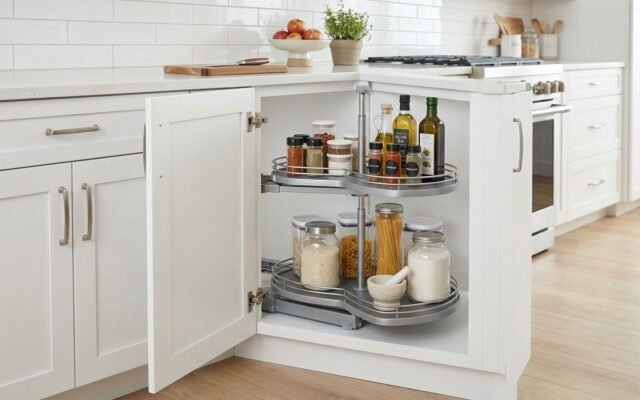
Standard door base cabinets waste approximately 30% to 40% of their interior volume because accessing deep items requires uncomfortable bending. A standard base cabinet measures 24 inches deep. When you store pots, pans, and mixing bowls on fixed or half-depth shelves, items placed in the rear darkness remain forgotten for years.
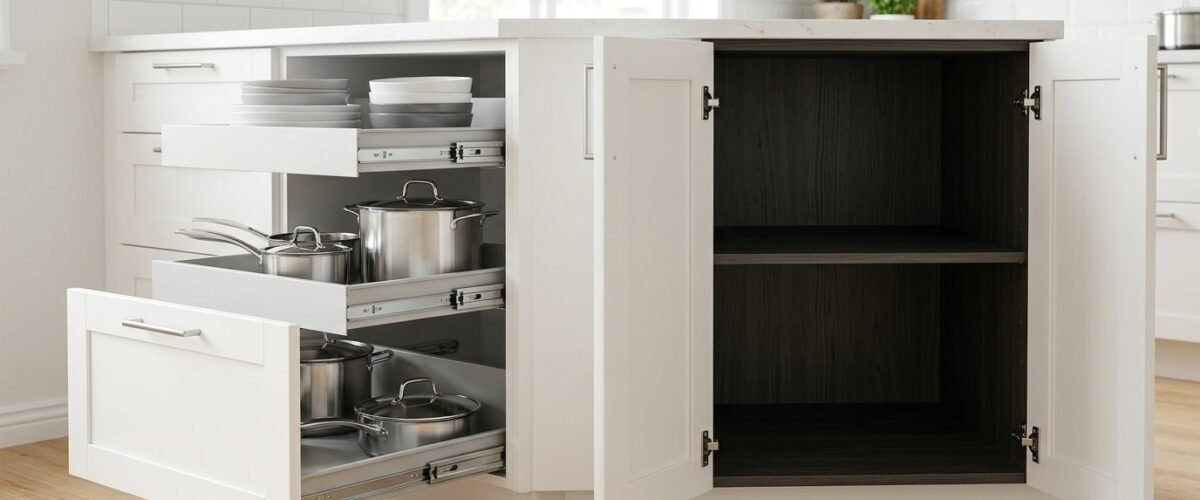
In contrast, a multi-drawer base cabinet brings 100% of its contents forward into full room lighting. When you pull open a deep bottom drawer, every stockpot and skillet rests immediately beneath your eyes. Consequently, you never need to crouch on your kitchen floor with a flashlight to retrieve a forgotten baking dish.
Cost Difference Breakdown: What You Actually Pay For
The $120 to $250 price premium for a drawer base cabinet stems directly from specialized materials and mechanical hardware. A standard door cabinet contains a hollow plywood box, one adjustable shelf, and two basic hinges. As a result, its manufacturing footprint remains minimal and inexpensive.
In comparison, a three-drawer base cabinet requires extensive precision craftsmanship:
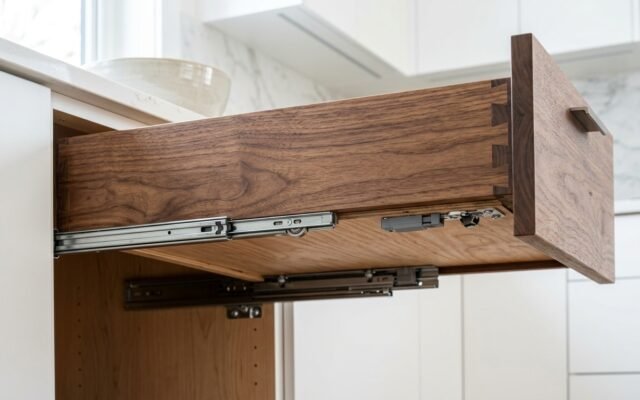
First, the manufacturer must build three separate four-sided drawer boxes featuring 5/8-inch solid birch with dovetailed joints. Second, each drawer requires a dedicated pair of heavy-duty undermount slides, such as the Blum Tandem Plus 563H, which cost $45 to $60 per pair. Finally, the shop must finish three separate drawer fronts with precise 1/8-inch reveal gaps. While the component cost is substantially higher, the durability and daily convenience easily justify the expense.
Roll-Out Trays vs. Deep Drawers: The Middle Ground Trap
Roll-out interior trays inside door cabinets appear to bridge the gap, yet they represent an annoying compromise in daily use. Many cabinet dealers recommend adding two internal wire or wood roll-out shelves to a standard door cabinet to save money. However, this configuration introduces three major functional headaches.
First, retrieving an item requires three separate physical steps: opening two cabinet doors wider than 90 degrees, pulling out the sliding tray, and returning the tray before closing the doors. If you pull the tray before opening the doors completely, the metal slide brackets gouge your expensive cabinet door finish. In addition, internal roll-out hardware sacrifices two to three inches of interior width to accommodate side clearances. True drawer base cabinets require only a single effortless motion.
Load Capacity and Hardware Longevity
Commercial-grade drawer slides handle immense kitchen loads without sagging or binding under pressure. Premium undermount slides undergo rigorous ANSI/KCMA A161.1 testing, which verifies smooth operation through 25,000 continuous open-and-close cycles carrying 15 pounds per square foot. Furthermore, slides like Blum Movento support up to 125 pounds of static weight, allowing you to store heavy cast-iron Dutch ovens effortlessly.
Conversely, budget side-mount roller slides use exposed steel tracks and nylon wheels that warp under 30 pounds of localized weight. Over time, heavy cookware strips small mounting screws right out of composite side panels. When buying drawer base units, always verify that your supplier specifies full-extension undermount slides with hydraulic soft-close dampening.
Showroom Inspection Test: The Drawer Rack Check
Before ordering any drawer base cabinet, perform the physical drawer rack test in the showroom to verify joint rigidity. Pull the bottom drawer fully open until the slide mechanism locks into its forward position. Next, grip the top front corner of the drawer box and press down and sideways with approximately 20 pounds of lateral force.
A properly built drawer with 5/8-inch solid wood dovetailed corners and Blum undermount slides will remain rigid with zero frame twist. However, a cheaply built box held by staples and cam locks will rack noticeably, binding the slides against the cabinet face frame. If the drawer binds or wobbles under hand pressure in a pristine showroom, it will fail completely under kitchen pots at home.
Which One Should You Choose for Your Kitchen Zones?
A well-planned kitchen layout uses an intentional mix of drawer bases and standard door cabinets to optimize your remodel budget. Because installing drawers everywhere can add $1,200 to $2,500 to a cabinet package, apply drawer bases specifically where their mechanical advantages pay off most.
| Kitchen Zone | Recommended Cabinet Type | Rationale |
|---|---|---|
| Cooktop & Range Zone | 2-Drawer or 3-Drawer Base | Stores heavy pots, lids, and cast iron within immediate arm reach |
| Food Prep & Island Zone | 3-Drawer or 4-Drawer Base | Organizes prep knives, cutting boards, spices, and utensil trays |
| Under-Sink Zone | Standard Door Sink Base | Accommodates bulky plumbing traps, garbage disposals, and filtration tanks |
| Baking & Tray Zone | Door Base with Vertical Dividers | Vertical cookie sheet slots maximize height better than horizontal drawers |
| Pantry & Food Storage | Deep 3-Drawer Base | Pull-out drawers prevent canned goods from expiring in dark rear corners |
If your budget allows, allocate 60% to 70% of your perimeter base runs to drawer cabinets. Learn more about allocating your installation funds efficiently in our guide on what does cabinet installation labor actually cost.
Frequently Asked Questions
How much more does a drawer base cabinet cost than a door cabinet? A drawer base cabinet costs $120 to $250 more per cabinet than a comparable door unit. A quality 30-inch door base cabinet costs $180 to $320, while an equivalent three-drawer base cabinet costs $300 to $570 depending on slide hardware and wood species.
Can drawer base cabinets hold heavy cast-iron cookware? Yes, provided the cabinet uses premium undermount slides rated for 75 to 100 pounds dynamic capacity, such as Blum Tandem Plus 563H. Dovetailed solid birch drawer boxes with 3/8-inch or 1/2-inch plywood bottoms easily support heavy cast-iron collections without bowing.
Are roll-out trays cheaper than drawer base cabinets? Roll-out trays cost slightly less than drawer bases upfront, saving about $40 to $80 per cabinet. However, roll-out trays require opening cabinet doors first, which risks scratching interior door panels, while sacrificing two to three inches of usable horizontal width.
How many drawers are best in a base cabinet? A three-drawer base cabinet provides the most versatile kitchen storage. It includes one shallow 4-inch top drawer for cutlery and utensils, paired with two deep 8-inch to 10-inch bottom drawers for pots, pans, and mixing bowls.
Are drawer base cabinets hard to install? Drawer base cabinets install exactly like standard door cabinets, requiring the same leveling and wall stud anchoring. However, installers must remove the drawer boxes during installation to access interior mounting rails, reinstalling and adjusting the front reveals once the boxes are secured.