A full-height pantry cabinet stores three times more dry goods than a base cabinet per linear foot of floor space, but costs $600 to $1,200 more per unit and sacrifices countertop workspace entirely. When homeowners plan a kitchen remodel or additional storage expansion, the choice between a tall pantry column and a standard base cabinet run determines whether their kitchen gains a food stockpile center or a usable work surface. In fact, both cabinet types solve fundamentally different storage problems, and understanding that distinction prevents an expensive layout mistake.
Evaluating your cooking frequency, pantry shopping habits, and countertop workspace needs helps you allocate linear feet correctly between both cabinet types. Before finalizing your cabinetry plan, review our kitchen cabinet budget planner to compare pantry column and base cabinet cost-per-cubic-foot figures.
Quick Comparison
| Feature & Specification | Full-Height Pantry Cabinet (TP84 or TP96) | Standard Base Cabinet (B30 with upper) |
|---|---|---|
| Typical Height | 84 or 96 inches (floor to ceiling) | 34.5-inch base + 30-inch upper = 64.5 inches combined |
| Standard Width Range | 15 to 36 inches wide | 12 to 36 inches wide |
| Usable Interior Volume (30″ wide) | 30 to 42 cubic feet | 14 to 18 cubic feet |
| Countertop Generated | None (full vertical column) | Yes (36-inch work surface) |
| Interior Shelf Flexibility | 4 to 8 adjustable shelves (full 24″ depth) | Adjustable upper + fixed lower shelf in base |
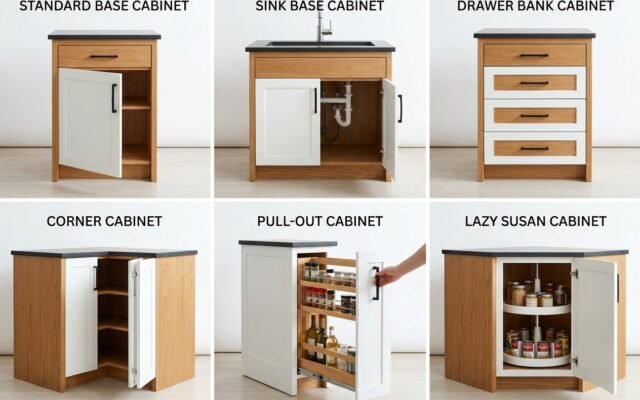
| Pull-Out Accessory Options | Full-height pull-out pantry racks | Roll-out base shelves, drawer inserts |
| Cost Per Unit (30-inch wide, installed) | $900–$1,600 | $300–$600 (base + upper combined) |
Volume Advantage: Why Pantry Cabinets Win for Dry Goods
Full-height pantry cabinets dramatically outperform base-and-upper combinations for deep dry goods storage because they eliminate the 10-inch dead zone above the base countertop level. A standard kitchen base cabinet with matching wall cabinet provides two discrete storage areas with a gap at counter height. When you stack canned goods, cereal boxes, and dry pasta inside an upper wall cabinet, the maximum continuous stack height is approximately 30 inches.
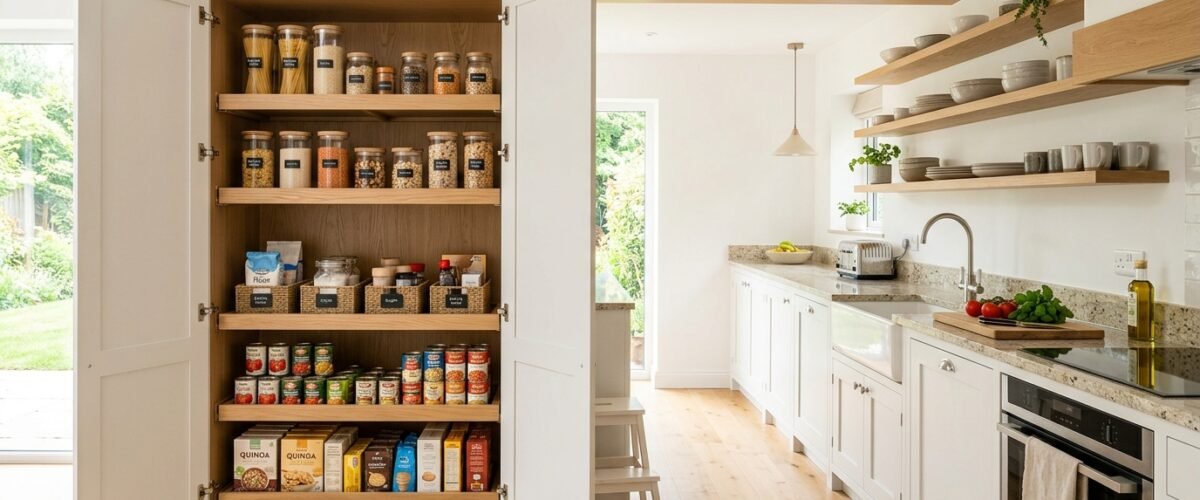
In contrast, a 96-inch pantry cabinet provides a continuous 90 inches of interior stacking height on shelves that measure the full 24-inch cabinet depth. Consequently, you can store entire bulk warehouse shopping trips — 24-can cases of tomatoes, multiple gallons of olive oil, and 10-pound flour sacks — inside a single pantry column. Furthermore, pantry shelves spanning the full 24-inch depth prevent the common problem of canned goods falling off shallow 12-inch upper wall shelves.
Countertop Trade-Off: The Workspace You Give Up
Replacing a 30-inch base cabinet section with a 30-inch pantry column eliminates 30 linear inches of countertop workspace permanently. In a compact kitchen measuring under 150 square feet, losing that countertop for a pantry column reduces your prep surface significantly. Because residential kitchen designers recommend a minimum of 24 continuous inches of prep counter beside every cooking zone, eliminating base cabinets in favor of pantry columns requires careful placement to avoid disrupting the functional work triangle.
Therefore, pantry columns work best when positioned at the outer perimeter ends of cabinet runs, beside refrigerators, or at kitchen-dining transitions where counter access matters less. In contrast, a 30-inch base cabinet delivers 30 inches of highly valuable work counter for daily food preparation, coffee making, and small appliance stations. If your kitchen already provides 72 or more linear inches of countertop, you can afford to sacrifice a 30-inch section for a pantry column without functional hardship.
Pull-Out Pantry Racks: Getting to Buried Items
Full-height pantry cabinets gain a massive functional upgrade when equipped with full-extension pull-out rack systems. A static pantry with deep fixed shelves suffers from the same problem as a standard door base cabinet — items pushed toward the back vanish from daily use. After three months, forgotten condiments and expired canned goods accumulate behind visible front rows.
In contrast, installing a full-height pull-out pantry frame, such as the Rev-A-Shelf 5WB1 wire basket pull-out or Häfele Matrix Box Pro rail system, converts the entire cabinet interior into a gliding pantry rack. Because these tall pull-outs extend fully into the room on heavy-duty 150-pound slides, every shelf level becomes immediately visible and reachable. In addition, pantry pull-outs allow you to organize shelves into dedicated zones: breakfast items at eye level, heavy canned goods at waist height, and bulk paper goods at floor level.
When Base Cabinets Beat Pantry Cabinets
Standard base cabinets outperform pantry columns in three specific kitchen scenarios where daily ergonomics and workflow matter most.
First, beside a range or cooktop, base cabinets with drawer banks provide heavy pot and pan storage at arm’s reach below the cooking surface. No pantry column at counter height places cast-iron skillets in a worse ergonomic position than a deep pantry shelf at eye level.
Second, under a kitchen island, only base cabinets can generate the seating overhang and integrated plumbing access that island layouts require. A pantry column cannot substitute for an island base run because it lacks the counter surface and knee clearance geometry.
Third, when your total kitchen floor plan provides fewer than 60 linear feet of base cabinetry, every linear foot of base cabinet generates more total countertop value than a pantry column’s vertical storage gain. Learn how to maximize every dollar across both cabinet types in our guide to how to save money on kitchen cabinets.
Frequently Asked Questions
How much does a pantry cabinet cost compared to a base cabinet?
A 30-inch wide pantry cabinet costs between $900 and $1,600 installed, compared to $300 to $600 for a combined base cabinet and matching upper wall cabinet. The pantry costs roughly twice as much per unit because it requires a taller manufactured box with heavier structural frame components.
Does a pantry cabinet replace a base cabinet and upper cabinet together?
Yes, a full-height pantry cabinet replaces the storage function of both a base cabinet and an upper wall cabinet simultaneously while providing significantly more total cubic volume. However, it eliminates the countertop surface that the base cabinet would have generated.
What width pantry cabinet is most versatile?
A 24-inch to 30-inch wide pantry cabinet offers the best combination of storage volume and kitchen footprint efficiency. Narrower 15-inch and 18-inch pantry columns integrate well as transition fillers beside refrigerators, while wider 36-inch pantries work best as dedicated food storage towers in large open-plan kitchens.
Can you put a pantry cabinet in a small kitchen?
Yes, but only at end positions along the perimeter run. In a compact kitchen under 120 square feet, reserve pantry columns for dead-end wall positions beside refrigerators or beside exterior doorways where countertop loss impacts workflow the least.
What is the best interior shelf configuration for a pantry cabinet?
The best pantry configuration uses 4 adjustable shelves spaced between 10 and 16 inches apart, with the lowest shelf at 12 inches above the floor for large bulk items and the top shelf at 80 to 84 inches for infrequently used stock. Pair this layout with a full-extension pull-out rack frame for maximum daily accessibility.