Open shelf base cabinets replace traditional cabinet doors with exposed shelving, creating an airy kitchen focal point while lowering cabinet box manufacturing costs by $80 to $180 per unit. While upper open shelving became a viral design trend over the past decade, lower open shelving brings that casual, furniture-style aesthetic down to work-counter height. However, placing exposed shelves near floor level introduces practical cleaning challenges that look nothing like staged design photographs.
Evaluating both the visual charm and daily maintenance demands of open shelving ensures you place them in the right kitchen zones. Before planning your cabinetry runs, review our guide on kitchen island base cabinets to see how open end-caps enhance island proportions.
Open Shelf Base Configurations Compared
| Open Base Configuration | Primary Storage Application | Standard Width Range | Cleaning & Dust Maintenance | Visual Impact Rating |
|---|---|---|---|---|
| Island End-Cap Open Shelf | Cookbooks, serving platters, decor bowls | 12 to 24 inches | Low (elevated off main work floor) | High (primary room focal point) |
| Perimeter Base Run Open Shelf | Everyday ceramic plates, heavy Dutch ovens | 24 to 36 inches | High (exposed to floor sweepings & prep crumbs) | High (breaks up long cabinet runs) |
| Wicker Basket / Crate Base | Potatoes, onions, root vegetables, linens | 15 to 21 inches | Moderate (baskets contain loose debris) | Moderate (cozy farmhouse aesthetic) |
| Integrated Wine Cubby Base | Horizontal wine bottle & glassware storage | 12 to 18 inches | Low to Moderate (tight bottle pockets) | High (custom architectural detail) |
| Narrow Towel & Tray Niche | Hanging dishcloths, vertical cookie sheets | 6 to 9 inches | Low (fast air drying, functional utility) | Moderate (discrete utility station) |
1. Island End-Cap Open Shelving
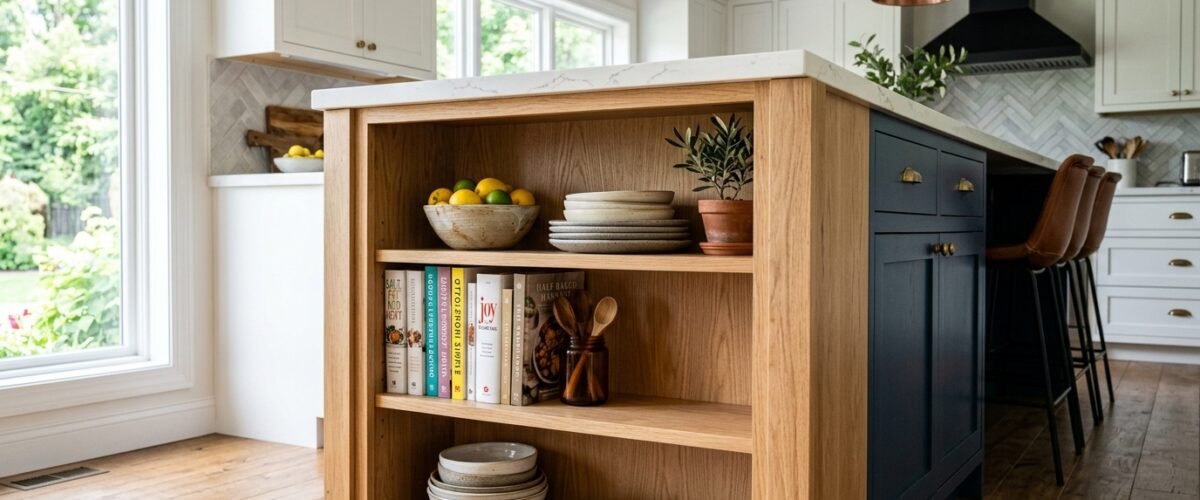
Island end-cap open shelves transform the outward-facing end of a kitchen island into an elegant furniture-style bookcase. Because this end faces your living or dining room rather than the grease-heavy cooktop zone, displayed items stay remarkably clean. In fact, a 12-inch or 15-inch deep open end unit creates a natural home for heavy culinary cookbooks, ceramic dough bowls, and heirloom serving platters.
Furthermore, building an open end-cap eliminates the expense of purchasing decorative wainscot panels for that side of the island. By framing the shelves with matching face-frame trim or thick 3/4-inch furniture plywood, you give the entire island a grounded, custom architectural presence.
2. Perimeter Base Run Open Shelves
Perimeter open base units break up monotonous walls of solid cabinetry by introducing open visual breathing room between closed drawer banks. Homeowners frequently position a 30-inch open shelf base between two standard drawer units to store stacks of everyday stoneware and mixing bowls. Because family members use these dishes multiple times daily, items get washed frequently before dust has time to accumulate.
However, perimeter open shelves sit directly beneath prep countertops where flour, liquid splashes, and cutting board debris fall. Therefore, never place open perimeter base shelving directly adjacent to a food prep station or cutting area. Instead, position open base runs closer to breakfast stations or dining transitions where meal prep splatter remains minimal.
3. Slatted Farmhouse Crates and Wicker Basket Bases
Farmhouse crate bases use sliding wicker baskets or slatted wooden pull-out bins in place of traditional wooden drawers. These breathable units provide ideal storage for dry root vegetables like potatoes, onions, and garlic, which spoil prematurely inside sealed, airtight cabinets.
For example, heavy woven rattan baskets slide smoothly on wooden guide rails and conceal loose vegetable skins inside the basket weave. When dinner prep begins, you simply slide out the entire vegetable basket and bring it to your prep sink. In addition, rustic crate bases add warm textural contrast to otherwise sleek painted cabinetry.
4. Integrated Wine and Stemware Cubby Bases
A dedicated wine base cabinet features an open grid of interlocking wooden dividers designed to cradle wine bottles horizontally. Standard 12-inch or 15-inch wine bases hold 12 to 20 bottles of wine in a compact, organized footprint. Because keeping wine bottles on their sides keeps corks moist and sealed, horizontal cubbies preserve bottle quality far better than upright pantry shelves.
Moreover, wine cubbies cost substantially less than electric under-counter wine coolers, saving $600 to $1,500 in appliance and electrical installation costs. To learn more about managing accessory pricing, check our analysis of the hidden costs of kitchen cabinets.
5. Narrow Towel and Baking Sheet Open Niches
Narrow 9-inch open slot bases provide dedicated, well-ventilated niches for hanging damp dish towels and storing vertical baking sheets. In traditional kitchens, damp dish towels often hang unhygienically over oven handles or get crumpled into dark, musty sink cabinets. An open vertical niche with a stainless steel hanging rod allows wet hand towels to air dry quickly.
Next to the towel bar, vertical plywood dividers create slotted storage for oversized cookie sheets and muffin tins. Because these open slots eliminate doors and hinges, you can grab a roasting pan with one hand while holding a hot dish with the other. Compare this open configuration to enclosed alternatives in our guide to filler cabinet pull-outs.
The Practical Drawbacks Nobody Warns You About
Lower open shelving suffers from three severe environmental realities that upper shelves escape: floor dust, cooking aerosols, and pet hair. Because robot vacuums and foot traffic kick up dust along your floorboards, lower shelves collect particulate matter within days. If you own shedding pets, dog and cat hair naturally drifts into low open cabinet corners.
In addition, stove heat aerosolizes cooking oils, which drift downward and settle onto lower open surfaces. Over several months, this sticky airborne grease bonds with floor dust to form a grime layer that requires vigorous degreasing. Furthermore, open shelves demand immaculate, coordinated styling; storing mismatched plastic containers or half-opened cereal boxes makes the entire kitchen look chaotic.
How to Style and Protect Open Base Shelving
Apply a high-grade polyurethane or hardwax oil finish to open base shelves to create a slick, wipeable barrier against moisture and scuffs. Factory cabinet interiors often use basic vinyl thermofoil paper, which stains easily when exposed to heavy cookware dragging across the surface. Sealing open shelves with two coats of conversion varnish allows you to wipe away dust and kitchen spills with a damp microfiber cloth.
In addition, install felt or silicone adhesive pads beneath the bases of all heavy ceramic and cast-iron display pieces. These soft bumpers prevent stoneware from scratching painted wood finishes when you slide dishes in and out. For everyday utility, store only frequently washed dinnerware or sealed woven baskets on lower open shelves to keep daily maintenance simple.
Frequently Asked Questions
Are open shelf base cabinets cheaper than regular cabinets? Yes, open shelf base cabinets cost 20% to 35% less than standard door or drawer base cabinets because they eliminate expensive door panels, hinges, and drawer slide hardware. A standard 30-inch open base costs $140 to $220 compared to $300 to $500 for a drawer base.
How do you keep open kitchen base shelves clean? To keep open base shelves clean, wipe them down weekly using a warm water and mild dish soap solution to dissolve airborne cooking grease. Store frequently used items on the shelves so dishes get washed regularly before floor dust settles.
Can pet hair be a problem with open base cabinets? Yes, households with shedding pets struggle with open base shelving because pet hair naturally settles near the floor. If you have cats or dogs, avoid open base shelves in main walkways or use removable baskets to protect interior items.
What is the best depth for open base shelving? The ideal depth for open base shelving depends on its location. Island end-cap open shelves work best at 12 to 15 inches deep for cookbooks and platters, while perimeter open bases measure the standard 24 inches deep to align with surrounding counters.
Can you turn an existing base cabinet into open shelving? Yes, you can convert an existing cabinet by unscrewing the doors, patching the hinge screw holes with wood filler, and painting or staining the interior cabinet box. Adding decorative edge banding to the front face frame gives the converted opening a finished, intentional appearance.