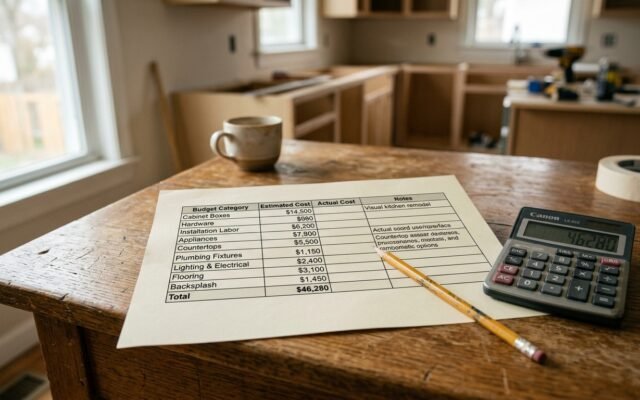
The hidden costs of kitchen cabinets typically add $1,800 to $4,500 to your initial cabinet estimate. While homeowners budget carefully for basic boxes and door styles, accessory line items, delivery surcharges, and mechanical adjustments routinely expand the final invoice by 15% to 30%. In fact, discovering these expenses mid-install forces homeowners to compromise on finishes or exceed their remodel savings.
Understanding these secondary expenses early keeps your budget completely under control. Before you finalize any cabinet order, review our detailed guide on the kitchen cabinet budget planner to establish realistic baseline figures.
Hidden Costs at a Glance
| Expense Item | Typical Price Range | Why It Gets Overlooked |
|---|---|---|
| Finished end panels | $65–$160 per panel | Showroom CADs display finished ends without showing separate line pricing |
| Specialty hardware upgrades | $350–$800 per kitchen | Base quotes include unbranded roller slides rather than soft-close undermounts |
| Scribe molding & extra fillers | $200–$550 total | Irregular drywall and out-of-square walls require custom site trimming |
| Residential freight with liftgate | $280–$650 per delivery | Base shipping quotes assume commercial loading dock delivery |
| Wall framing & stud repairs | $250–$800 total | Hidden water damage and missing backing appear only after old cabinet demo |
| Mechanical trade adjustments | $400–$1,200 total | Shifting a cabinet run even two inches forces plumbing and outlet relocations |
| Dumpster and debris disposal | $300–$600 per load | Demolition quotes frequently exclude municipal waste transfer station fees |
1. Finished End Panels and Skin Panels
Finished end panels add $65 to $160 for every exposed cabinet exterior in your layout. Standard cabinet carcasses ship with unfinished raw plywood or woodgrain laminate sides because manufacturers expect adjacent units to conceal them. Consequently, every exposed cabinet end facing a doorway, refrigerator, or walkway requires a decorative matching skin panel.
For example, a standard kitchen layout with four exposed ends requires $260 to $640 in additional panel materials alone. Furthermore, your finish carpenter must spend extra time trimming and pinning each skin panel flush with the face frame. If your kitchen features an island, all four exterior sides demand decorative wainscot or matching plywood skins, which quickly adds another $300 to $700 to your order total.
2. Specialty Hardware and Slide Upgrades
Upgrading from builder-grade slides to premium undermount hardware costs between $350 and $800 across an average kitchen. Showroom displays routinely feature whisper-quiet soft-close doors and silky gliding drawers. However, budget cabinet estimates quietly substitute generic side-mounted roller slides to make base quotes look attractive.
In contrast, durable hardware like the Blum Tandem Plus 563H slide costs $42 to $58 per drawer pair at wholesale rates. Because an average 10×10 kitchen contains eight to ten drawer units, specifying heavy-duty slides adds hundreds of dollars immediately. Still, paying for quality drawer hardware represents the best long-term investment you can make, as cheap stamped-metal slides bend easily under heavy cast-iron cookware.
3. Scribe Molding and Extra Filler Strips
Custom scribe molding and supplemental filler strips add $200 to $550 in trim stock and specialized carpentry labor. Because residential drywall is rarely plumb or flat, cabinets cannot press directly against adjacent sheetrock without showing unsightly gaps. As a result, carpenters must scribe narrow hardwood strips against wavy walls to create clean, airtight transitions.
While your initial bill of materials might list two basic filler strips, actual field conditions frequently require four to six pieces. Moreover, scribing hardwood trim on-site demands slow, precise work with a belt sander or block plane. Finish carpenters bill this custom fitting at $65 to $125 per hour, turning a minor trim detail into a noticeable installation charge.
4. Residential Freight with Liftgate Service
Residential freight delivery adds $280 to $650 to online or factory-direct cabinet orders. While many direct-to-consumer websites advertise free shipping promotions, their fine print strictly specifies commercial delivery to an industrial loading dock. Because semi-trucks cannot maneuver down narrow residential cul-de-sacs without special equipment, carriers impose substantial extra fees.
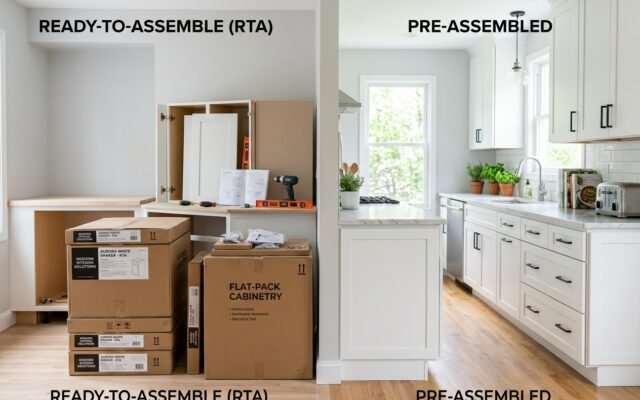
Specifically, freight companies bill a residential delivery surcharge of $80 to $150 alongside a mandatory hydraulic liftgate fee of $75 to $125. In addition, if you order pre-assembled boxes instead of flat-pack units, the shipment takes up massive crate volume, which doubles the carrier charge. To avoid paying surprise logistics charges at your driveway, always compare quotes carefully using our guide on how to compare cabinet quotes.
5. Wall Framing and Drywall Repairs
Repairing hidden framing defects behind old cabinets costs between $250 and $800 in drywall and carpentry repairs. When contractors tear out decades-old cabinetry, they routinely uncover cracked drywall, missing wall studs, and localized moisture damage behind kitchen sinks. Because heavy upper cabinets filled with ceramic dinnerware require solid anchor points into 2×4 studs, installers cannot mount them onto damaged backing.
Consequently, your crew must cut open the drywall, sister warped studs, and screw structural 2×6 horizontal wood blocking between wall studs. While this structural prep ensures safe cabinet hanging, it triggers additional labor before new boxes can even touch the wall. Homeowners who skip this step risk cabinet sagging or wall anchor tear-outs over time.
6. Plumbing and Electrical Rough-in Adjustments
Mechanical rough-in relocations add $400 to $1,200 for licensed trade labor during kitchen preparation. Even when you plan an identical cabinet footprint, new cabinet sink bases rarely feature identical plumbing cutouts to the original units. If an interior drawer slide or internal partition hits your existing PVC drain pipe, a plumber must reroute the line inside the wall cavity.
Similarly, building codes mandate kitchen receptacle spacing every 48 inches along countertop backsplashes. If your new tall pantry cabinet covers an existing wall outlet, an electrician must relocate the box to maintain local compliance. Because licensed trades charge $90 to $160 per hour, minor layout shifts produce immediate supplementary billing.
7. Dumpster Rental and Debris Disposal Fees
Disposing of old kitchen cabinetry costs $300 to $600 for roll-off dumpster rental or professional hauling fees. Demolition estimates often focus solely on the labor required to unscrew old cabinets from wall framing. However, twelve bulky cabinet boxes, laminate countertops, and broken soffits generate substantial volume that exceeds municipal trash limits.
Therefore, you must either rent a 10-yard roll-off container for $350 to $500 or hire a private junk removal service to clear your driveway. While homeowners can cut disposal fees by hauling debris to municipal landfills themselves, municipal tipping fees still run $60 to $120 per truckload. Factoring waste removal into your initial planning protects your remodel fund from sudden drains.
How to Build a Bulletproof Cabinet Contingency Fund
A realistic cabinet remodel requires a mandatory 15% to 20% contingency fund set aside before signing contracts. For instance, if your baseline cabinet material estimate totals $8,000, keep $1,200 to $1,600 untouched in reserve for trim, freight, and mechanical corrections. If field conditions prove ideal and you encounter zero surprises, that surplus cash simply funds countertop upgrades or higher-end appliances.
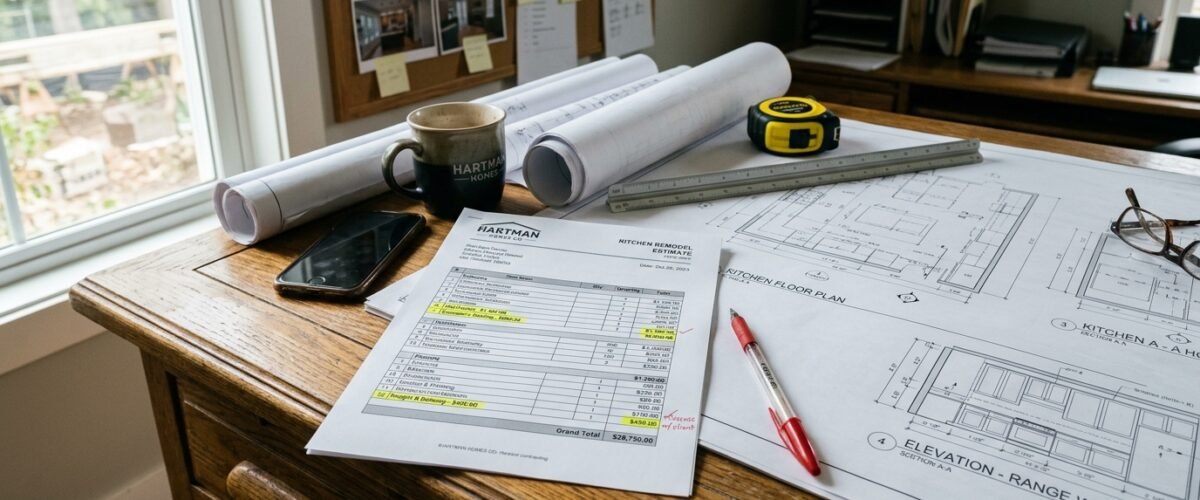
In addition, demand an itemized bill of materials from your cabinet supplier that explicitly lists end skins, toe kicks, crown molding, and delivery specifics. You can uncover further savings by learning how to save money on kitchen cabinets without sacrificing structural box integrity.
Frequently Asked Questions
What is the most expensive hidden cost in a cabinet project? Mechanical adjustments and wall framing repairs represent the most expensive unexpected costs. Rerouting hidden plumbing pipes, moving electrical outlets, and adding structural backing between wall studs can easily add $600 to $1,500 in licensed subcontractor bills before installation begins.
Do cabinet quotes include toe kicks and crown molding? Most preliminary cabinet quotes exclude decorative trim, crown molding, and continuous toe kick skins. Dealers often quote only the bare boxes and doors to present an enticing headline number, leaving buyers to purchase necessary trim pieces separately later.
Why does residential cabinet freight cost so much? Residential freight requires specialized liftgate equipment and smaller box trucks to navigate residential streets. Freight carriers add residential surcharges, liftgate fees, and appointment scheduling surcharges that exceed standard commercial freight rates by $150 to $300.
How much does old cabinet disposal usually cost? Renting a 10-yard roll-off dumpster costs between $300 and $500 depending on your location and rental duration. Alternatively, hiring a junk removal service to haul old cabinets away costs $200 to $400 for a standard kitchen load.
Can I install end panels myself to save money? Yes, capable homeowners can measure, cut, and pin decorative end panels using basic finish tools. Sourcing 3/4-inch cabinet-grade plywood from local lumber yards and painting it to match your cabinet doors saves $40 to $80 per panel compared to dealer pricing.