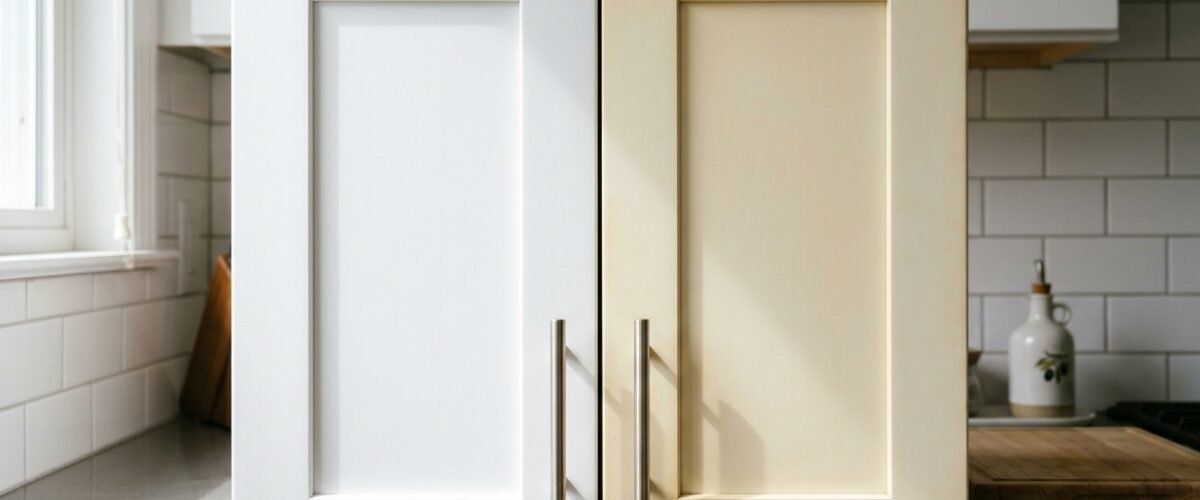
White kitchen cabinets turn yellow from four causes: finish chemistry, heat exposure, cleaning product residue, and UV light. Oil-based alkyd paints yellow the fastest — within 2 to 5 years in a low-light kitchen. Water-based acrylic finishes stay whiter longer but still shift in high-heat zones. Here is exactly what is happening and how to stop it.
The 4 Causes of Yellowing (Ranked by Severity)
1. Alkyd Resin in Oil-Based Paint (Most Common)
The number-one cause of cabinet yellowing is alkyd resin — the binding agent in oil-based paints. Alkyd resins undergo a chemical process called oxidation as they cure and age. Oxygen molecules react with the polymer chains and produce chromophores — compounds that absorb blue light and reflect yellow.
This happens faster in rooms with low natural light. The mechanism is counterintuitive: UV light from the sun actually breaks down the chromophores and keeps alkyd finishes whiter. Rooms with no windows see the most yellowing.
Timeline: oil-based alkyd paint on white cabinets typically shows visible yellowing within 2 to 5 years. Rooms with gas stoves and no windows yellow within 18 months in severe cases.
2. Heat and Cooking Grease Vapor
Cabinet doors within 36 inches of a gas range experience temperatures 15 to 30°F higher than ambient room temperature during cooking. Heat accelerates the oxidation of alkyd resins. It also drives airborne cooking grease — primarily polyunsaturated fatty acids from oils — into the finish surface.
Once embedded, these fats oxidize on their own schedule, producing a sticky yellowish film that bonds to the finish. Wiping does not fully remove oxidized grease. It requires chemical degreasing.
Indicator: if your cabinets are stickiest near the range and oven, and only the doors near the heat are yellowing, cooking grease is your primary cause.
3. Cleaning Product Residue
Ammonia-based cleaners (Windex, most multi-surface sprays) leave an alkaline residue on cabinet surfaces. Over time, this residue reacts with polyurethane and lacquer topcoats and breaks down their UV-stabilizing additives. The result is faster yellowing in the areas you clean most often.
Cabinet doors near the sink typically show this pattern: they get wiped down after dishwashing, accumulate spray residue, and yellow faster than cabinets on the opposite wall. A clear sign: if your cleaning areas yellow faster than uncleaned areas, the cleaning products are contributing.
4. UV Light (Can Help or Hurt Depending on Finish)
UV light from windows can fade colored finishes but it actually slows alkyd yellowing by breaking down the chromophore compounds. The risk with UV: it degrades the topcoat on thermofoil and vinyl-wrapped doors, causing delamination at the edges — a separate problem that looks yellow and bubbly at door corners.
If your yellowing is confined to the edges and corners of doors rather than the face, UV-driven thermofoil delamination is the issue, not finish oxidation.
Which Cabinet Finishes Yellow Fastest
| Finish Type | Yellowing Risk | Timeline | Notes |
|---|---|---|---|
| Oil-based alkyd paint | Very High | 2–5 years | Worst in dark rooms; UV slows the process |
| Pre-catalyzed lacquer | Moderate | 4–8 years | Air-dried, limited UV stabilizers |
| 2-part acid-catalyzed conversion varnish | Low | 8–15 years | Heat and chemical cured; most durable finish |
| Water-based acrylic paint | Low–Moderate | 6–10 years | Stays whiter but can cloud or chalk |
| PVC thermofoil | Low (body), High (edges) | Edge delamination in 3–7 years | UV accelerates edge peeling, not yellowing |
| Melamine | Very Low | 10+ years | Yellowing rare; edge chipping more common |
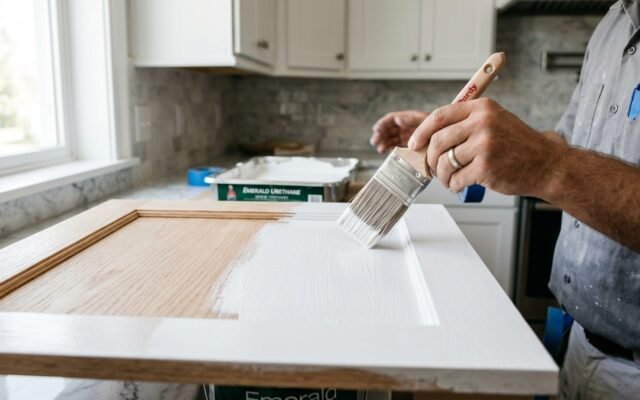
The practical takeaway: if you are repainting yellowed oil-based cabinets, switching to a water-based alkyd hybrid (Benjamin Moore Advance or Sherwin-Williams Emerald Urethane) dramatically extends time to next yellowing event. These are water-cleanup formulas with better UV-stabilizer packages than older oil-based alkyds.
For understanding how finish choice connects to cabinet material selection, the white oak kitchen cabinet guide covers grain-and-finish compatibility in detail.
Cleaning Residue: The Hidden Cause
Most homeowners clean white cabinets more aggressively precisely because they show dirt more. The irony: the cleaning regimen accelerates yellowing.
Products that damage white cabinet finishes over time:
- Ammonia-based sprays (Windex, many glass cleaners)
- Bleach-based sprays at full concentration
- Orange oil cleaners — the d-limonene solvent softens lacquer topcoats
- Magic Eraser / melamine foam — microscopically abrades the topcoat gloss, making it easier for grease and yellowing agents to penetrate
Safe cleaning protocol for white cabinets: mix 1 tablespoon of dish soap (Dawn or similar) into 1 quart of warm water. Wipe with a microfiber cloth. Dry immediately with a second cloth. Never let water sit on the surface. For grease: full-strength white vinegar on a cloth, wipe, then immediately follow with the soap-water mix to neutralize the acid.
How to Prevent Yellowing
Ventilation First
A range hood rated at 300 CFM minimum vented to the exterior removes the majority of cooking vapors before they reach cabinet surfaces. Recirculating hoods (ductless) filter particles but return heat and some vapors to the room — less effective for preventing finish degradation.
The cabinet doors immediately above the range take the most thermal and vapor abuse. If you cannot install a proper vented hood, ceramic tile or stainless steel cabinet inserts behind the range and a high-quality cabinet finish on those doors are the best mitigation.
Finish Selection for New or Repainted Cabinets
Specify a 2-part acid-catalyzed conversion varnish for the highest yellowing resistance. This finish is heat-cured in a shop environment and requires a professional painter. It is not a DIY product. Street cost: $800–$1,800 for a full kitchen cabinet refinishing job depending on door count.
For a DIY repaint: Benjamin Moore Advance in Chantilly Lace (OC-65) is the most-specified white for cabinet repaints. Water-based alkyd hybrid formula. Semi-gloss sheen. Dry time: 24 hours between coats. Full cure: 30 days. Avoid hard use for the first 30 days or the finish will scratch and mark.
UV Exposure
For oil-based cabinet finishes, direct sunlight on the cabinet doors actually reduces yellowing. Keep window treatments open during daylight hours in rooms with white alkyd-painted cabinets. For thermofoil doors, use UV-filtering window film to prevent edge delamination.
Can You Reverse Yellow Cabinets?
Yes, with one important caveat: you are reversing the visible color, not the underlying chemistry. The alkyd resin will continue oxidizing.
For light yellowing (oil-based paint, no grease buildup): expose the cabinets to direct sunlight for several weeks. Open the blinds, let UV hit the doors. The photochemical reaction reverses some of the chromophore compounds. This works on mildly yellowed oil-based paint. It does not work on grease-saturated or thermofoil cabinets.
For moderate yellowing with grease: degrease first with a TSP substitute (Dirtex) diluted per label instructions. Wipe down, let dry 48 hours. Then apply a shellac-based primer (Zinsser BIN) followed by two coats of water-based acrylic paint. The shellac blocks stains from bleeding through and prevents grease residue from contaminating the new finish.
For severe yellowing or delaminating thermofoil: replacement is the correct call. Refinishing over delaminated thermofoil fails within 12 months.
When to Replace Instead of Restore
| Condition | Recommendation | Reason |
|---|---|---|
| Thermofoil edges peeling/bubbling | Replace doors | Cannot be re-adhered permanently; adhesive fails again |
| Particleboard box swelling near sink | Replace box and doors | Structural failure; refinishing cosmetics does not fix structure |
| Finish cracking or crazing | Strip and refinish or replace | Repainting over crazing reproduces the texture |
| Even yellowing, paint intact, no peeling | Refinish | Surface is sound; new finish bonds well after proper prep |
| Grease-saturated finish, sticky to touch | Degrease + refinish | TSP substitute cuts grease; shellac primer locks remainder |
If you are evaluating whether a cabinet box is worth refinishing or replacing, the box material matters. For a breakdown of which box construction holds up and which ones fail near moisture, see the comparison in our corner cabinet storage guide.
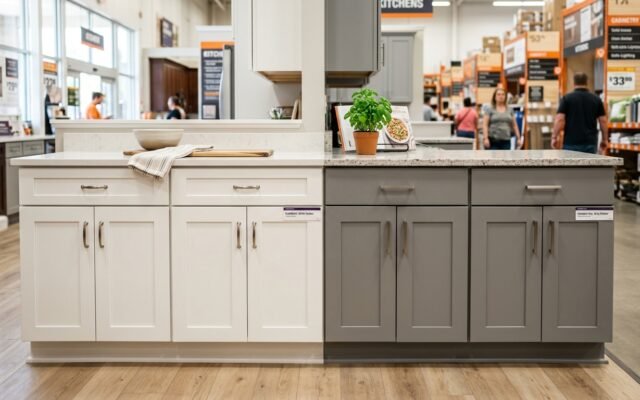
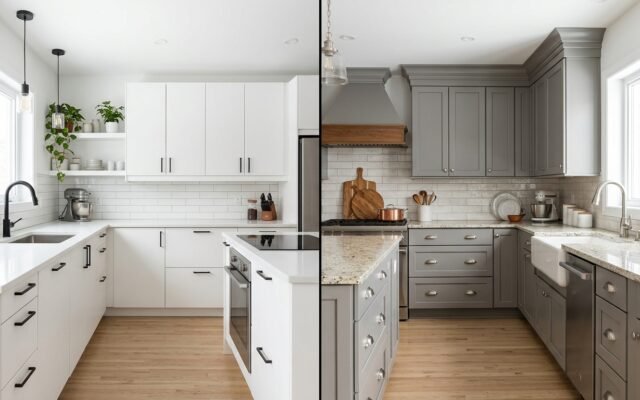
For color decisions after refinishing, the cabinet and countertop color combinations guide covers which whites pair well with specific countertop materials without showing yellowing as prominently.
FAQ
Why are only my cabinets near the stove turning yellow?
Heat from cooking accelerates alkyd resin oxidation and drives airborne cooking grease into the finish. Cabinets within 36 inches of a gas range experience 15–30°F higher temperatures during cooking. Install a 300+ CFM vented range hood to remove vapors before they reach the cabinet surfaces.
Do white painted cabinets always yellow eventually?
Oil-based alkyd painted cabinets: yes, typically within 2–5 years. Water-based acrylic or alkyd-hybrid painted cabinets: some color shift at 6–10 years, but less dramatic. Thermofoil white cabinets resist yellowing on the face but delaminate at edges in 3–7 years in warm kitchens.
Can I paint over yellow cabinets without stripping them?
Yes, if the existing finish is intact (no cracking, no peeling, no sticky grease). Degrease with TSP substitute, scuff sand with 220-grit, prime with Zinsser BIN shellac-based primer (stain-blocking), then apply two coats of water-based alkyd hybrid. Stripping is only required if the finish is failing structurally.
Will bleach clean yellow cabinets?
Diluted bleach (1 tablespoon per quart of water) removes surface mold and some staining. It does not reverse alkyd yellowing — the chemistry is internal to the finish, not a surface stain. Using undiluted bleach on lacquer or conversion varnish finishes will strip the topcoat gloss permanently.
What is the most yellow-resistant white cabinet paint?
Benjamin Moore Advance in Chantilly Lace (OC-65) and Sherwin-Williams Emerald Urethane in Extra White (SW 7006) are the two most specified. Both are water-based alkyd hybrids with better UV-stabilizer packages than standard alkyd paints. For shop-applied finishes, specify a 2-part acid-catalyzed conversion varnish for maximum durability.