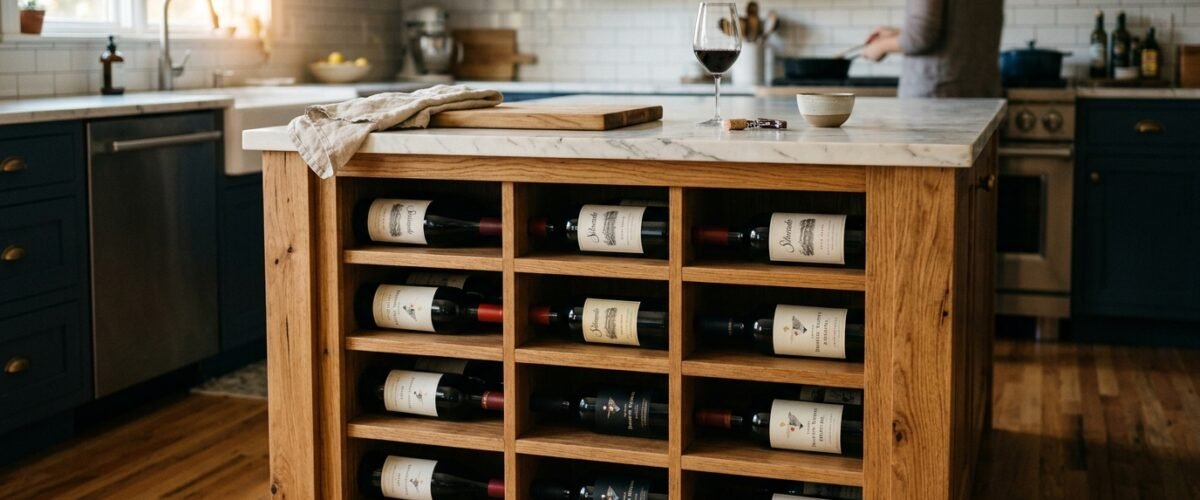
Wine rack base cabinets typically measure 6, 9, 12, 15, or 24 inches wide, holding between 6 and 30 standard 750ml bottles horizontally to keep corks moist. While dedicated wine refrigerators require electrical outlets and generate compressor heat, built-in wooden wine base cabinets provide silent, passive storage that integrates seamlessly into your cabinet runs. In fact, installing a compact wine cabinet into an island end or perimeter run transforms awkward leftover linear inches into an elegant visual focal point.
Integrating wine storage directly into your kitchen layout requires balancing bottle capacity against environmental temperature stability. Before finalizing your order, compare your layout options in our guide on kitchen island base cabinets to find the ideal location away from hot cooking appliances.
Sizing and Capacity Reference Chart
| Cabinet Width | Standard Exterior Dimensions (W × D × H) | Bottle Capacity (750ml) | Internal Rack Configuration | Ideal Kitchen Zone |
|---|---|---|---|---|
| 6-inch Base (B06WR) | 6″ × 24″ × 34.5″ | 6 to 8 bottles | Single vertical column of horizontal slots | Narrow filler position beside refrigerator or pantry |
| 9-inch Base (B09WR) | 9″ × 24″ × 34.5″ | 9 to 12 bottles | Single column with wider champagne pockets | Perimeter transition between prep and dining areas |
| 12-inch Base (B12WR) | 12″ × 24″ × 34.5″ | 15 to 18 bottles | 3 columns × 5 or 6 rows of square cubbies | Island end-cap or dry bar beverage station |
| 15-inch Base (B15WR) | 15″ × 24″ × 34.5″ | 20 to 24 bottles | Diagonal cross-hatch diamond lattice | Wet bar zone or butler’s pantry cabinetry |
| 24-inch Base (B24WR) | 24″ × 24″ × 34.5″ | 25 to 30 bottles + stemware | Dual-column rack with upper hanging glass rails | Dedicated entertainer’s kitchen beverage center |
4 Types of Wine Rack Base Cabinets
Cabinet manufacturers produce four primary internal rack configurations to match different interior design styles and bottle collections.
First, square pigeon-hole grid inserts provide individual square compartments measuring roughly 3.75 × 3.75 inches for each bottle. Because each bottle rests inside its own four-sided wooden chamber, bottles never roll or clink together when family members close adjacent cabinet doors. Furthermore, individual cubbies make it effortless to pull a single vintage without disturbing neighboring wines.
Second, diagonal cross-hatch lattice racks use intersecting 3/4-inch hardwood slats to form elegant diamond-shaped openings. This traditional architectural style provides high storage density by allowing you to nest multiple bottles within each large diamond opening. However, stacking multiple bottles in a single opening requires extra care when retrieving bottom bottles.
Third, horizontal pull-out rack trays feature scalloped solid-wood shelves mounted on full-extension ball-bearing slides. Instead of peering into dark cubbies, you gently pull the drawer forward, exposing the bottle labels directly to room lighting. This sliding shelf configuration is especially popular in modern frameless European kitchens.
Finally, combination stemware and bottle units pair lower horizontal bottle cubbies with upper under-counter brass hanging rails for wine glasses. Storing inverted wine glasses directly above your vintage collection creates a self-contained beverage bar that streamlines dinner entertaining. Compare these open cubbies to other exposed storage options in our guide to open shelf base cabinets.
Critical Placement Rules: Heat, Vibration, and Sunlight
Wine bottles must be stored away from kitchen heat sources, direct UV sunlight, and appliance vibrations to prevent premature oxidation. The average residential kitchen contains numerous microclimates that ruin wine quality within months. Specifically, placing a wine cabinet directly next to a dishwasher, cooking range, or refrigerator compressor exposes wine to temperatures exceeding 80°F, which ruins delicate wine tannins.
Therefore, position your wine base cabinet in a cooler perimeter zone, such as an island end-cap facing away from the oven or an outside dining transition wall. In addition, avoid placing wine racks beneath direct southern-facing windows, as UV rays penetrate clear and green glass to degrade wine aromas. For active cooking kitchens, maintaining a steady temperature between 55°F and 68°F ensures your collection stays fresh.
Where to Buy Wine Rack Base Cabinets
Homeowners can source wine base units through three distinct distribution channels depending on budget and lead time.
First, direct-to-consumer ready-to-assemble (RTA) suppliers like Lily Ann Cabinets, The RTA Store, and Cabinet Joint offer all-plywood wine bases at factory-direct pricing ($180 to $340 per unit). These modular units match standard shaker door finishes and assemble in 20 minutes using basic wood glue and cam-lock fasteners.
Second, big-box retailers like Home Depot and Lowe’s sell pre-assembled semi-custom wine cabinets from brands like KraftMaid, American Woodmark, and Thomasville ($320 to $650). While big-box showroom cabinets cost more, they arrive fully factory-finished with matching decorative base moldings and crown trim.
Third, custom architectural millwork shops build bespoke hardwood wine inserts crafted from solid black walnut, white oak, or cherry ($600 to $1,400). Custom millwork makes sense when your kitchen requires non-standard cabinet widths or integrated LED ribbon lighting channels. To protect your project funds across all tiers, review our breakdown of the hidden costs of kitchen cabinets.
Construction and Weight Capacity Standards
Wine bottles are surprisingly heavy, requiring robust 1/2-inch or 3/4-inch plywood carcass construction rather than cheap particleboard. A full 24-inch wine cabinet holding 30 bottles carries nearly 90 pounds of concentrated glass and liquid. Under ANSI/KCMA A161.1 performance standards, structural cabinet shelves must sustain 500 pounds of distributed weight without sagging more than 1/16 inch per linear foot.
Consequently, cheap furniture-board wine racks assembled with plastic dowels bow under the weight of full wine collections, causing internal dividers to loosen and collapse. When shopping for wine cabinetry, verify that internal lattice slats are crafted from solid hardwood and secured with mortise-and-tenon or dado joints. Sturdy wooden construction ensures your valuable wine collection rests safely for decades.
Frequently Asked Questions
What is the standard depth of a wine rack base cabinet? A standard wine rack base cabinet measures 24 inches deep to align flush with adjacent kitchen base cabinets and countertops. Because a standard wine bottle measures roughly 12 inches long, bottles sit safely recessed inside the cabinet box, preventing accidental bumps.
Can you store champagne bottles in a standard wine rack cabinet? Most standard wine cubbies measure 3.75 inches square and accommodate standard 750ml Bordeaux and Burgundy bottles. However, wider champagne and sparkling wine bottles measure 4 inches in diameter and require specialized 9-inch or 12-inch racks with expanded openings.
Should a wine rack base cabinet be refrigerated? No, wooden wine rack base cabinets provide passive ambient storage for everyday table wine meant to be consumed within one to two years. For long-term aging or white wine chilling, homeowners should invest in a dedicated compressor-driven under-counter wine refrigerator instead.
Can you convert a regular base cabinet into a wine rack? Yes, aftermarket wooden lattice grids and horizontal bottle trays from manufacturers like Rev-A-Shelf install into existing 12-inch, 15-inch, or 18-inch base cabinets. You simply remove the interior shelves and screw the modular wine rack insert into the existing cabinet sidewalls.
How much does a wine rack base cabinet cost? A modular RTA wine rack base cabinet costs between $180 and $350. Pre-assembled semi-custom showroom models from brands like KraftMaid cost $350 to $650, while custom solid-hardwood units with integrated stemware holders range from $600 to $1,200.