Walnut kitchen cabinets cost $400 to $850 per linear foot installed. This hardwood provides rich warm brown tones, fine grain, and lasting strength. A walnut kitchen gives unmatched warmth to modern slab or classic shaker designs. You get a dense wood that resists daily kitchen impacts while aging with graceful charm.
Choosing walnut kitchen cabinets means understanding grain variation and wood grades. Heartwood gives you deep dark tones, while sapwood adds lighter creamy streaks. In this comprehensive guide, we cover wood grades, finish choices, and sturdy box specs, plus showroom check tests.
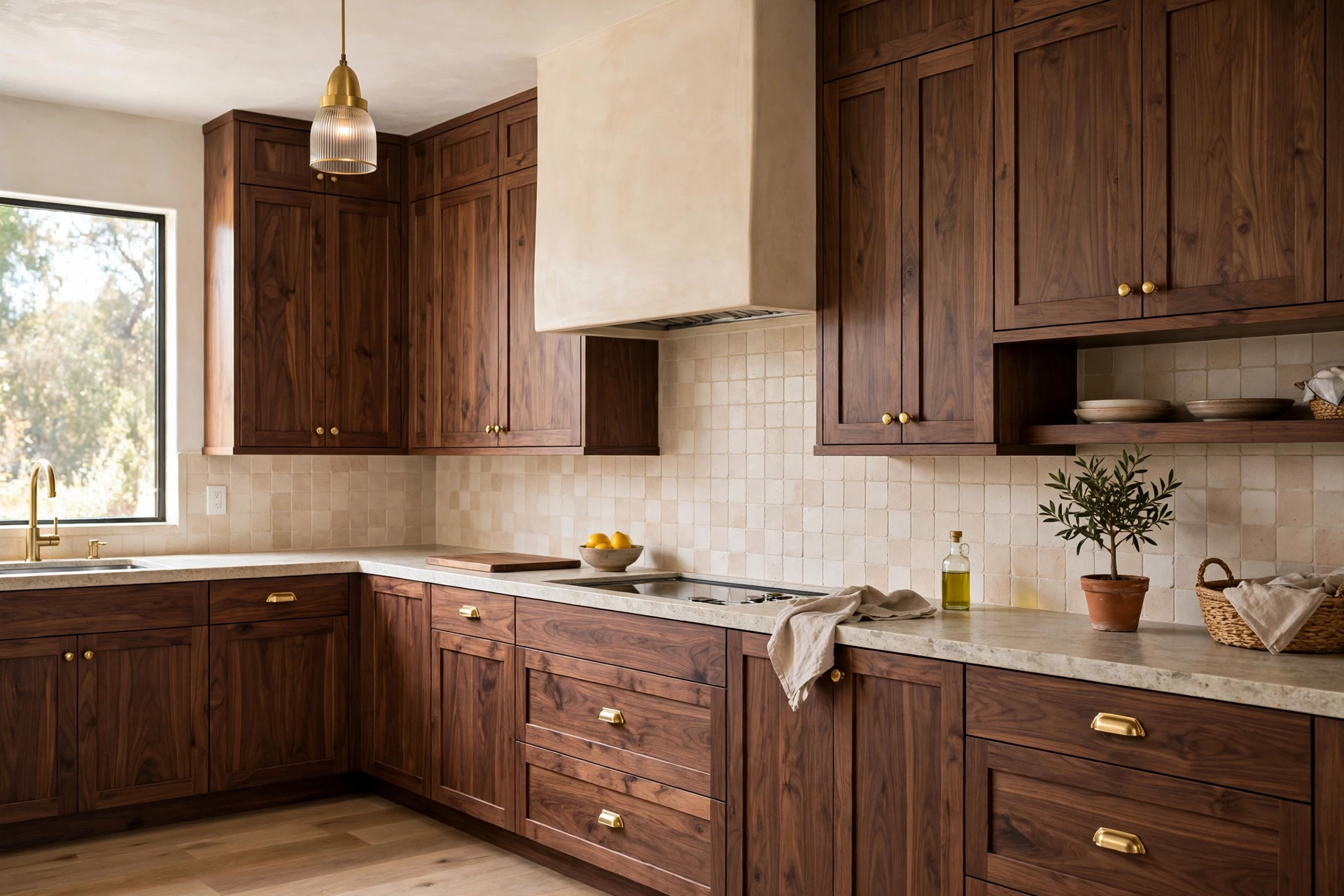
Walnut Kitchen Cabinets Wood Grades and Grain Types
American Black Walnut vs Imported Walnut
American black walnut is the premier species used for high-end cabinets across North America. It grows mainly in the central and eastern United States. This hardwood offers great size stability and moderate hardness, with a Janka hardness rating of 1,010 that provides plenty of strength against daily kitchen dents.
Imported types such as European walnut or African walnut have different densities and grain patterns. European walnut shows lighter grey-brown hues and tighter growth rings. American black walnut remains the gold standard for fine kitchen remodels because of its rich tones and predictable woodworking behavior.
American black walnut machines cleanly and glues tightly. Local lumber mills harvest this timber under strict forestry guidelines. If you want sustainable walnut, local walnut from certified forests is the best path forward.
Heartwood vs Sapwood Color Contrast
You must understand the difference between heartwood and sapwood in walnut lumber. Heartwood forms the center of the tree trunk. It features dark brown shades, deep purple hints, and charcoal grain lines. This heartwood is what most buyers picture when they think of fine walnut.
Sapwood is the outer living layer of the tree. Sapwood is naturally pale blond or light cream in color. In lower wood grades, boards often mix dark heartwood and light sapwood side by side. This stark color contrast creates a rustic, striped look across cabinet door faces.
If you prefer a uniform, moody kitchen style, you must pick all-heartwood lumber. Premium cabinet makers sort boards by hand to keep sapwood off visible outer faces. Expect to pay a 15 to 25 percent premium for all-heartwood face frames and door panels.
Rustic Grade vs Select Grade Lumber
Lumber mills sort walnut into specific trade grades. Select grade lumber allows only minimal sapwood, few pin knots, and uniform dark color. It gives a sleek, clean look across large cabinet runs. Most modern and transitional kitchens use select grade walnut for seamless visual flow.
Rustic grade walnut embraces the charm of the tree. It includes mineral streaks, small sound knots, and visible creamy sapwood ribbons. Rustic grade cabinets celebrate earthy wood textures and work beautifully in modern rustic or Scandinavian style homes.
Rustic grade walnut costs fifteen to thirty percent less than select grade. If your design embraces earthy contrasts, rustic grade provides tremendous value. Just be sure to view sample cabinet doors in person before finalizing your order.
Grain Matching Techniques for Slab Doors
The way cabinet makers arrange wood grain makes a huge visual difference. For modern flat slab doors, sequence grain matching is essential. In sequence matching, veneers cut from the same walnut log are applied across nearby doors and drawers, so the flat or upright grain flows continuously across your entire kitchen run.
Slip matching and book matching are two standard methods for preparing walnut veneer panels. Book matching mirrors adjoining veneer leaves like an open book, creating balanced cathedral patterns. Slip matching lays veneer leaves side by side, creating a repeating, linear grain rhythm.
Flat grain matching makes small kitchens feel wider and more expansive. Upright grain matching remains the classic choice for tall pantry cabinets and upper wall units. Always verify with your cabinet builder whether your quote includes full grain matching across drawer banks.
Build Types and Box Design
Solid Walnut Face Frames with Plywood Carcases
Classic framed cabinets pair solid walnut face frames with sturdy cabinet carcases. A solid 3/4-inch walnut face frame adds immense rigidity to the front of each box. It provides a solid hardwood anchor for pocket screws, face frame hinges, and heavy counter loads.
Building the entire inner cabinet box out of solid walnut is not needed and wasteful. Solid hardwood moves with moisture changes, which can warp large box sides over time. Premium cabinet shops use 3/4-inch birch or maple plywood for the inner box panels.
Pairing solid walnut face frames with kitchen cabinet boxes made of maple veneer plywood gives you a bright, clean interior that is easy to wipe down. Plywood holds screws tightly and resists warping far better than solid lumber.
Frameless European Box Build
Frameless European style cabinets have become the dominant choice for walnut kitchens. In frameless construction, there is no front face frame. Full-overlay slab doors mount right to the inner box sides using concealed European cup hinges. This design maximizes interior storage space and provides sleek, uninterrupted wood surfaces.
Because frameless walnut cabinets show zero face frames, the entire outer look relies on the door and drawer fronts. Cabinet makers construct these slab doors using balanced walnut veneers pressed over stable cores. High-density fiberboard or premium multi-ply cores prevent slab doors from warping or twisting across wide spans.
Frameless construction offers up to fifteen percent more usable drawer volume than framed boxes. If you have a compact kitchen layout, frameless walnut cabinets provide both modern beauty and maximum storage.
Walnut Veneer over High-Density Cores
Many buyers mistakenly believe that solid wood slab doors are superior to veneer doors. Solid wide hardwood slabs are highly vulnerable to moisture swings. A wide solid walnut slab door can cup or bow by up to a quarter inch during wet summer months.
Pro cabinet makers use thick walnut veneers over high-density cores. Premium veneer panels feature a one-sixteenth-inch thick hardwood face veneer rather than paper-thin paper-backed foil. This thick veneer can be sanded and refinished just like solid wood.
Matching walnut edge banding seals all four door edges cleanly. Thick 2-millimeter walnut edge banding protects door corners against chips and dents. This composite construction guarantees flat, cleanly aligned doors for decades.
Drawer Box Joinery and Hardware Standards
The inner drawer construction must match the quality of your walnut exterior. Never settle for nailed or stapled drawer boxes in high-end cabinets. Look for five-eighths-inch solid hardwood drawer sides joined with tight English dovetail joints at all four corners.
Underneath each drawer, pick trade-grade undermount drawer slides with soft-close mechanisms. Models like Blum Tandem Plus 563H provide 100-pound load ratings and 6-way tool-free adjustment. These hidden slides keep drawer action silky smooth while keeping metal hardware fully out of sight.
Pairing dark walnut cabinets with solid maple dovetail drawer boxes creates a stunning contrast whenever you open a drawer. Check that drawer bottoms use solid quarter-inch or three-eighths-inch plywood fully captured in routed dados.
Walnut Kitchen Cabinets Finishes and Protection
Oil and Hardwax Finishes
Deep oils and modern hardwax oils have surged in popularity for walnut cabinets. Brands like Rubio Monocoat and Osmo Polyx-Oil sink into the wood fibers rather than forming a plastic film on top. This approach preserves the tactile texture of the raw walnut wood.
Hardwax oils produce a dead-flat matte sheen that looks earthy and refined. They enhance the deep grain without making the surface look glossy or artificial. Because the oil bonds deeply with the wood grain, it will not peel, chip, or flake over time.
Oil finishes require periodic care in high-traffic kitchens. Wipe up grease splatters and acidic spills quickly to prevent surface stains. Spot repairs are simple: you can buff scuffs with a Scotch-Brite pad and apply fresh oil without stripping the entire cabinet run.
Matte Conversion Varnish for Heavy Kitchens
Two-part acid-catalyzed conversion varnish is the industry standard for ultimate kitchen durability. Professional finishing shops spray conversion varnish in climate-controlled spray booths. The cross-linking reaction creates an impenetrable barrier against water, cooking oils, alcohol, and cleaning products.
Modern conversion topcoats are available in ultra-low sheen levels, including five-percent and ten-percent dead flat sheens. This allows you to achieve the earthy, low-gloss look of oil while enjoying durable professional protection. Conversion varnish meets or exceeds all ANSI/KCMA A161.1 performance standards for household durability.
If you have young children or cook frequently with hot oils and sauces, conversion varnish is the safest choice. It allows easy wipe-and-go cleaning with warm water and mild dish soap.
UV Light Exposure and Color Shift
Walnut has a unique optical property that surprises many buyers: it naturally lightens over time when exposed to sunlight. Most hardwood species, such as cherry or oak, darken or turn amber with age. Walnut mellows over time, shifting from dark charcoal brown to a warm honey amber glow.
UV rays from kitchen windows accelerate this color shift over three to five years. If you leave a fruit bowl or cutting board on a walnut counter for months, you may find a darker shadow underneath when you move it. This color change is natural and part of walnut wood patina.
Ask your finisher for UV-blocking additives. These help slow down sun fading. Installing low-E window glass or subtle solar shades helps filter harsh direct sunlight across your kitchen cabinets.
Daily Care and Cleaning
Keeping walnut kitchen cabinets in pristine condition requires gentle daily care. Never use harsh multi-surface sprays, ammonia cleaners, or citrus-based degreasers on fine wood finishes. These cleaners strip protective topcoats and leave cloudy streaks across dark wood grain.
Clean your cabinets with a soft cloth dampened with warm water and a single drop of mild dish soap. Wipe with the grain to lift dust and cooking grease, then dry with a soft cloth. Follow immediately with a dry microfiber towel to eliminate surface moisture.
Wipe up water drips around the sink base cabinet promptly. Standing water left along bottom door edges can sink into joint lines over time. Simple, gentle cleaning keeps walnut surfaces rich and lustrous for generations.
Walnut Kitchen Cabinets Cost Breakdown
Cost per Linear Foot by Build Tier
Walnut kitchen cabinets command a higher price tag than common woods like oak, maple, or painted MDF. On average, you can expect to pay $400 to $850 per linear foot installed. The exact price depends heavily on the build tier and custom work level you choose.
Stock and semi-custom walnut boxes run $350 to $550 per foot. They come from national supply mills. These cabinets use standard sizing increments of three inches and feature thin rotary-cut veneers. They offer a taste of walnut warmth at a manageable budget point for typical family kitchens.
Fully custom walnut cabinets range from $750 to $1,200 or more per linear foot. Custom shops hand-select sequence-matched lumber logs, build custom internal drawer dividers, and apply hand-rubbed low-sheen finishes. For a standard twenty-linear-foot kitchen, total cabinet costs range from $8,000 to $24,000.
Slab Doors vs Shaker Door Pricing Differences
Door style has a direct impact on walnut fabrication costs. Flat slab doors require premium wide veneers pressed over dead-flat composite cores. While the door construction is simple, sourcing high-grade, knot-free walnut veneers with steady grain flow adds wood cost.
Five-piece shaker doors use solid walnut frames built around a recessed center panel. Building solid walnut shaker frames requires more joinery labor, shaping, and hand-sanding. Shaker frames can utilize narrower boards, which lowers raw lumber scrap rates.
Generally, a five-piece walnut shaker door and a sequence-matched walnut slab door cost roughly the same. Expect to spend $120 to $220 per door front across both styles. Choose slab doors for modern design appeal, or shaker frames for timeless transitional warmth.
Parts and Hardware Add-On Expenses
Specialized cabinet inserts and interior fittings add to your total cost. A standard two-door walnut base cabinet costs around $450 to $650 as a basic unit. Upgrading that same cabinet with heavy-duty drawers, spice pull-outs, or trash bin roll-outs increases the unit price.
A three-drawer walnut base cabinet costs $650 to $950 because of the extra drawer boxes, slides, and precision alignment work. Double trash pull-outs add $250 to $400. Corner storage solutions, such as Rev-A-Shelf blind corner swing-outs or solid maple lazy Susans, add $400 to $800 to your cabinet order.
Accent hardware makes a bold style statement on dark walnut. Solid brass pulls and knobs range from $12 to $35 each. For an average kitchen with thirty to forty handles, budget $400 to $1,200 for premium hardware alone.
Installation and Pro Labor Rates
Professional installation is critical when working with high-end walnut cabinets. Expect to pay $60 to $120 per linear foot for professional installation by skilled finish professionals. Walnut is an unforgiving wood that shows every misaligned reveal or sloppy scribe cut.
Installing custom walnut cabinets requires laser leveling, stud finding, scribing filler strips to crooked drywall, and adjusting soft-close hinges to exact two-millimeter gaps. Skilled builders take two to four days to set an entire kitchen run properly.
Never hire a general handyman to install fine walnut cabinets. A single missed stud can ruin a finished walnut end panel. Slipped drill bits cause costly damage. Protecting your cabinet investment means hiring builders who specialize in fine woodwork.
Walnut Cabinets Comparison and Wood Specs
Walnut vs White Oak vs Hard Maple Performance
Comparing walnut to other popular cabinet hardwoods helps clarify its unique strengths. White oak leads modern kitchen trends with its pale tan hue and prominent ray flecks. Hard maple offers a pale, closed grain that painters love for crisp enamel finishes.
Walnut is softer than white oak and maple. It has a Janka rating of 1,010 versus 1,360 for oak and 1,450 for maple. Walnut is remarkably resilient and absorbs ambient kitchen shocks without splintering. Its dark coloration also hides micro-scratches and minor surface wear far better than pale blonde woods.
The following comparison table outlines the critical wood specs across the three premier cabinet hardwoods:
| Wood Species | Janka Hardness | Average Cost / Linear Foot | Color Tone | Best Design Style |
|---|---|---|---|---|
| American Black Walnut | 1,010 lbf | $400 to $850 | Rich dark & warm amber | Modern slab, Mid-century, transitional |
| White Oak (Rift / Quarter) | 1,360 lbf | $350 to $750 | Pale wheat & warm tan | Earthy modern, Japandi, Craftsman |
| Hard Sugar Maple | 1,450 lbf | $280 to $600 | Creamy blonde & light gold | Painted shaker, Classic |
Check our detailed guide on kitchen cabinet wood types to see how walnut compares against cherry, hickory, and alder. Reviewing wood grain samples in your own home under daylight ensures you choose the right style balance.
Physical Showroom Tests
Never buy walnut cabinets from showroom marketing brochures alone. When shopping for walnut kitchen cabinets, perform these three physical showroom tests:
Run the Door Edge Fingernail Test. Press your thumbnail gently against the edge banding on a slab door. If the banding feels thin or sharp, the maker used cheap paper-backed tape. Quality walnut cabinets use two-millimeter solid hardwood edge banding that is smooth, rounded, and impact-resistant.
Execute the Drawer Rack Test. Pull a large thirty-inch drawer all the way open. Push down and sideways on the front corner with moderate force. High-end Blum undermount slides remain rigid and smooth. Low-grade side slides flex, squeak, and bind under lateral pressure.
Perform the Back Panel Thumb Check. Reach inside a base cabinet and press firmly on the rear center wall. If the panel flexes easily, it is flimsy one-eighth-inch hardboard. A durable cabinet box features a solid half-inch plywood back panel anchored right into wall framing.
Design Pairings and Counter Selections
Best Countertops for Dark Walnut
Pairing the right countertop with dark walnut cabinets creates breathtaking visual contrast. Warm white engineered quartz with subtle grey or gold veining is the most popular pairing. Countertops like white marble Gold quartz or Taj Mahal quartzite brighten the room and highlight the rich dark wood grain.
Matte black soapstone or honed black granite creates a dramatic, moody style. Black counters with soft white veining give an earthy, designer feel that suits modern urban lofts. Soapstone naturally develops an antique patina that harmonizes with walnut aging.
Avoid muddy brown granites or busy multicolored stones. Counters with heavy brown spots compete with walnut grain patterns, so the kitchen feels crowded. Keep your countertop clean, bright, and low-contrast to let the wood remain the star.
Hardware Metal Finishes and Color Contrast
Choosing cabinet hardware finish is like selecting jewelry for your kitchen. Brushed brass and warm satin bronze are the top metal pairings for walnut cabinets. The warm yellow tones in brass glow brilliantly against dark walnut surfaces.
Matte black hardware is another timeless option. Black pulls create a sleek, minimalist style that blends smoothly into modern spaces. Black hardware works especially well when paired with black light fixtures or a matte black gooseneck faucet.
Polished chrome or brushed nickel provides a crisp, cool contrast. The silvery shine of nickel keeps a dark kitchen feeling fresh and tailored. Check our complete breakdown of kitchen cabinet hardware for exact sizing formulas and pull placements.
Backsplash and Wall Color Combinations
Wall colors and backsplash tiles set the mood around your walnut cabinets. Crisp warm whites, such as Sherwin-Williams Alabaster or Benjamin Moore Swiss Coffee, provide the perfect neutral backdrop. White walls reflect light into the space and prevent dark wood from feeling heavy.
For backsplashes, glazed zellige ceramic tiles in soft ivory or warm cream add artisanal texture. The subtle gloss of zellige tiles bounces light across matte walnut door faces. Solid quartz slab backsplashes extending from the counter to the ceiling offer a clean, grout-free look.
If you prefer subtle color, soft sage green, muted eucalyptus, or dusty blue backsplash tiles look magnificent against walnut. Green tones echo forest elements and enhance the earthy appeal of the wood.
Flooring Tones That Complement Walnut
Flooring selection requires careful attention to avoid wood-on-wood clashing. Do not try to match your hardwood floor stain exactly to your walnut cabinets. Wood stains that are almost identical look like an accidental mismatch under kitchen lighting.
Aim for clear contrast. Pale white oak flooring with a clear matte finish creates a clean separation. The light floor anchors the space while letting the darker walnut cabinets float gracefully.
Large-format porcelain floor tiles in light grey or warm limestone tones work very well. Tile floors provide durable moisture resistance and break up heavy wood elements across your home.
Common Mistakes When Buying Walnut Kitchen Cabinets
Buying Unfinished Walnut Without UV Sealers
Buying raw unfinished walnut to save money on finishing costs is a risky gamble. Walnut requires professional multi-step sanding and climate-controlled sealing to prevent blotchiness. Amateurs attempting to wipe oil stain on raw walnut often end up with patchy, rough color.
Failing to apply UV-inhibiting topcoats leaves your cabinets vulnerable to rapid sun bleaching. Direct sunlight turns dark walnut into pale orange wood. This shift happens within 18 months without proper care. Always insist on factory-applied finishes with certified UV blockers.
Professional spray facilities use dust-free rooms to bake conversion varnish onto panels. Factory finishes ensure clean sheen and long-term durability that manual wiping can never replicate.
Overlooking Sapwood Percentages in Cheaper Bids
Beware of cabinet bids that come in thousands of dollars lower than competitors. Discount cabinet shops cut costs by using lower-grade walnut lumber filled with light creamy sapwood. When your cabinets arrive, you may find bright white zebra stripes running across your dark doors.
To avoid this disappointment, specify the allowable sapwood percentage in your written contract. High-end standards require ninety percent or greater heartwood on all exposed faces. Check wood samples and confirm grade specs before signing your purchase agreement.
If you prefer a variegated look, that is a great design choice. But make sure it is an intentional choice rather than an unpleasant surprise from a budget supplier.
Skipping Sequence Grain Matching on Tall Runs
Forgetting to specify sequence grain matching on flat slab cabinets is a frequent mistake. Without sequence matching, builders assemble doors using random veneer cuts. One door may have tight upright grain, while the nearby drawer front features a wild cathedral arch.
This haphazard arrangement disrupts visual harmony across clean modern kitchen walls. Full sequence grain matching keeps veneer patterns flowing smoothly and links drawer stacks and pantry doors. Request a veneer layout rendering from your cabinet maker before factory work begins.
Taking this extra step ensures your modern walnut kitchen looks like a cohesive design installation rather than an assortment of mismatched boxes.
Neglecting Proper Kitchen Moisture Control
Failing to manage home indoor moisture can damage fine walnut cabinets. Solid wood and premium veneers expand when moisture rises above sixty percent and shrink when moisture drops below thirty percent. Extreme swings cause door panels to warp, joints to separate, and veneers to crack.
Maintain your home indoor relative humidity between thirty-five and fifty-five percent year-round. Use a whole-house humidifier during dry winter heating months and run air conditioning or dehumidifiers in wet summers. Protecting ambient moisture keeps walnut joints tight and door gaps cleanly uniform.
Always run your kitchen range hood when boiling pasta or simmering soups. Venting cooking steam outside prevents moisture from collecting on upper cabinet door edges.
Frequently Asked Questions About Walnut Cabinets
Do walnut kitchen cabinets fade or get darker?
Walnut is one of the few hardwoods that naturally lightens over time. Exposure to ambient UV light mellows dark charcoal brown tones into a warm golden amber hue. Applying a clear topcoat with UV inhibitors helps slow down this lightening process.
Are walnut cabinets durable enough for busy kitchens?
Yes, walnut has a Janka hardness rating of 1,010 and offers excellent strength. It resists everyday dents and impacts without splitting. When sealed with two-part conversion varnish, walnut cabinets withstand daily family cooking and moisture.
How do walnut cabinets compare in price to white oak?
Walnut cabinets typically cost ten to twenty-five percent more than white oak cabinets. Walnut lumber yields fewer knot-free boards per log, which increases raw wood costs. Walnut gives rich, dark tones without needing artificial wood stains.
What counter looks best with walnut cabinets?
Warm white engineered quartz with subtle grey or gold veining is the most popular countertop for walnut. It provides crisp contrast and reflects light. Honed black soapstone or matte black granite is another stunning choice for moody, modern spaces.
How do you clean and maintain walnut cabinets?
Clean walnut cabinets using a soft microfiber cloth dampened with warm water and mild dish soap. Wipe in the direction of the wood grain and dry immediately. Never use ammonia, bleach, or abrasive pads on fine wood finishes.
Editorial Note: This article has been researched, written, and fact-checked by our skilled kitchen remodeling team. Every guide is manually reviewed by our lead author to ensure accurate and reliable advice.