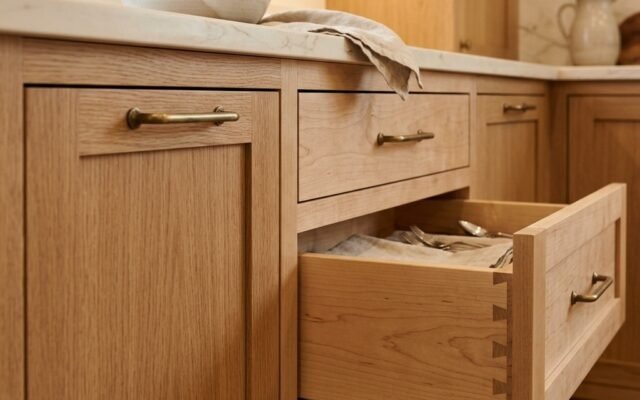
White oak cabinets feature dense, tight grain structures and neutral beige undertones that anchor modern, transitional, and Scandinavian kitchen spaces. Unlike traditional red oak cabinets that carry strong pink or yellow hues, white oak absorbs clear matte topcoats cleanly without turning amber over time. In addition, its closed cellular structure provides superior natural moisture resistance against kitchen humidity and spills.
Understanding White Oak Lumber Cuts and Grain Patterns
Rift Sawn White Oak
First, rift sawn white oak represents the premier lumber cut for contemporary millwork. Sawmills mill logs at an exact 45-degree angle to the natural growth rings. Consequently, this precise orientation produces ultra-linear, straight vertical grain patterns across the board faces. Homeowners love this cut because it delivers clean aesthetic consistency across large cabinetry surfaces.
In addition, rift sawing eliminates the prominent medullary rays and busy cathedral arches found in standard lumber cuts. Because the grain runs in parallel vertical lines, rift sawn doors create a sleek visual flow in modern minimalist kitchens. Furthermore, this cut minimizes natural wood movement across seasonal humidity swings, which ensures cabinet doors stay perfectly flat year after year.
Quarter Sawn White Oak
Second, quarter sawn white oak cuts the log at a 90-degree angle to the growth rings. As a result, this sawing method exposes the internal vascular medullary rays of the tree. These rays create dramatic ribbon flecks and silvery reflective patterns across the wood face. Many homeowners recognize this distinct patterning from historic Craftsman furniture and Mission style cabinetry.
Besides its striking appearance, quarter sawn lumber offers the highest dimensional stability of any hardwood cut. Wood cells expand and contract primarily along the growth rings. Therefore, quarter sawn boards cup and twist far less than standard boards when exposed to steam or water leaks. For this reason, builders frequently choose quarter sawn frames for durable humid climate installations.
Plain Sawn White Oak
Third, plain sawn lumber remains the most common and economical sawing method available today. The sawyer cuts the log in tangential slices straight through the trunk. As a result, this traditional method yields broad cathedral grain arches, varied flame patterns, and rich visual texture. It produces the highest lumber volume with minimal mill waste.
However, plain sawn boards display significantly more grain variation between adjoining door fronts. Some panels display wide cathedral peaks, while adjacent stiles display tighter linear grain. If you desire an organic, rustic, or casual transitional kitchen, plain sawn lumber offers authentic character at an accessible price point. You can easily browse oak options at Home Depot to inspect raw lumber samples firsthand.
Complete Grain Cuts Comparison Table
Choosing the right cut depends on your budget, door profile, and architectural design goals. Each cutting angle delivers distinct grain characteristics, board stability ratings, and cost figures. Review the comparison table below to determine which white oak cut best suits your kitchen remodel.
| Lumber Cut | Cutting Angle | Grain Appearance | Dimensional Stability | Price per Linear Foot | Best Kitchen Style |
|---|---|---|---|---|---|
| Rift Sawn | 45 degrees to rings | Ultra-linear vertical grain without rays | Exceptional stability | $350 to $650 | Modern flat slab and skinny shaker |
| Quarter Sawn | 90 degrees to rings | Linear grain with distinct ray flecks | Maximum stability | $300 to $550 | Craftsman, transitional, and shaker |
| Plain Sawn | Tangential flat slices | Prominent cathedral arches and loops | Moderate stability | $200 to $400 | Rustic, farmhouse, and classic |
Box Construction and Veneer vs Solid Hardwood
Solid Hardwood Face Frames and Door Rails
Quality cabinetry relies on a thoughtful combination of solid hardwood components and engineered structural panels. Solid white oak excels in areas that face continuous physical abuse. Specifically, professional cabinet shops build face frames, exterior door stiles, and horizontal rails out of 3/4-inch solid hardwood. These structural parts must withstand bumped pots, grocery bags, and rolling trash bins.
Because solid white oak boasts a Janka hardness rating of 1,360, it naturally resists everyday corner dents and surface scratches. In addition, solid timber allows master carpenters to cut deep mortise-and-tenon or dowel joints that never loosen under heavy use. To explore how white oak ranks against hard maple and walnut, study our detailed guide on kitchen cabinet wood types.
Architectural Plywood Veneer Center Panels
While solid timber works wonders for narrow door stiles, wide center panels require a different engineering approach. Solid hardwood panels expand and contract across their width when relative humidity changes between seasons. If you install a 36-inch wide solid oak slab door, it can easily expand by 1/4 inch during humid summer months.
Consequently, wide solid wood doors frequently warp, cup, or split at the joints. High-end manufacturers resolve this structural risk by using architectural grade A-1 rift white oak veneer bonded over premium multi-ply cores. The alternating cross-grain veneers inside the core neutralize tension. As a result, your cabinet doors stay dead flat while displaying continuous, beautiful wood grain.
Carcass Box Quality: Plywood vs Particleboard Cores
Behind stunning white oak doors sits the cabinet carcass, which supports heavy stone countertops and everyday kitchenware. Budget manufacturers often construct interior carcasses from low-density particleboard covered with printed paper foils. However, particleboard absorbs moisture rapidly during minor plumbing leaks, causing swollen base panels and loose hinge screws.
Therefore, knowledgeable homeowners insist on cabinet boxes made from 3/4-inch furniture-grade plywood. Multi-layer plywood holds mechanical fasteners securely and supports heavy quartz slabs without center shelf sagging. To understand core differences before signing a cabinet quote, read our complete analysis of MDF vs plywood cabinets.
Protective Finishes and Sheen Levels for White Oak
Ultra-Matte 2-Part Conversion Varnish
The protective coating you select defines how your cabinetry will look and perform over the next two decades. Standard oil-based urethanes contain amber resins that turn pale oak into a dated yellow hue. In contrast, premium factory finishing lines apply high-performance two-part post-catalyzed conversion varnish formulated with non-yellowing resins.
Indeed, conversion varnish cures through chemical cross-linking to create a durable glass-like shield over the wood fibers. This hard finish resists grease splatter, vinegar drips, and harsh dish detergents. Furthermore, cabinet makers specify an ultra-matte sheen level between 5 and 10 percent. This low sheen eliminates light glare and preserves the raw organic texture of unfinished timber.
Waterborne Acrylic Polyurethane Topcoats
If you hire a local custom cabinet shop, waterborne acrylic polyurethane offers another exceptional finishing path. Because these formulas carry zero volatile organic compounds, they cure without releasing noxious fumes into your home. More importantly, waterborne acrylics dry crystal clear rather than amber, which preserves the cool beige undertones of white oak.
Additionally, modern industrial waterborne polyurethanes contain ceramic micro-additives that prevent surface scuffing around door pulls. These coatings also include ultraviolet light blockers that protect wood cells from sunlight oxidation. While sunlight can darken unprotected lumber over time, UV-inhibiting clear coats keep your kitchen cabinets light and balanced.
Hardwax Oils and Cerused Wire-Brushed Finishes
Homeowners seeking a tactile, touchable surface often choose natural hardwax oil finishes. Formulated from carnauba and beeswax, these breathable oils soak directly into wood pores rather than forming a thick plastic film. You can easily maintain these surfaces at home, and you can check current prices on Amazon for recommended nourishing wood care oils.
Similarly, cerused and wire-brushed treatments create dramatic visual depth on open-grained white oak. Craftsmen run wire brushes across the wood surface to remove softer springwood fibers, leaving subtle ridges. Next, they rub a contrasting white, cream, or charcoal glaze into the recessed grain valleys before applying a matte topcoat. This technique highlights intricate grain lines with sophisticated architectural contrast.
Modern Kitchen Pairings and Design Aesthetics
Two-Tone Layouts: White Oak Base Cabinets with Painted Uppers
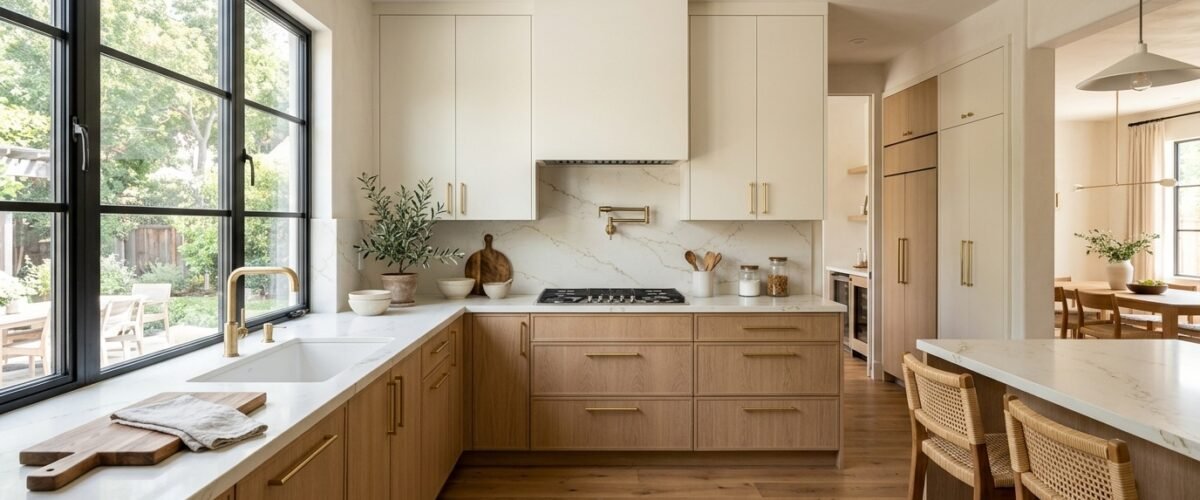
White oak pairs effortlessly with a wide spectrum of painted finishes and modern architectural materials. One of the most popular contemporary design schemes combines warm oak lower cabinets with painted wall cabinets. For example, pairing natural rift oak base units with soft linen or off-white upper cabinets prevents small kitchens from feeling visually heavy.
Moreover, the natural wood on lower cabinets masks scuffs, shoe marks, and pet bumps far better than painted surfaces. Meanwhile, light upper cabinets reflect natural window light across the room to create an open, airy feeling. If you want to design a balanced kitchen layout, explore our inspirational guide on two tone kitchen cabinets.
Countertop and Backsplash Pairings
Selecting complementary countertop materials brings the entire kitchen design together. Warm veined Calacatta gold quartz coordinates naturally with the golden-beige undertones of white oak. If you prefer high-contrast drama, honed black soapstone or charcoal granite creates a grounding, organic foundation against light wood.
Furthermore, backsplash choices can amplify the organic texture of your cabinetry. Handcrafted zellige ceramic tiles with irregular glossy surfaces bounce light and soften the linear grain of rift oak. Alternatively, continuing your countertop quartz up the wall as a full-height solid backsplash creates a clean, luxurious backdrop without busy grout lines.
Hardware Finishes: Matte Black, Brushed Brass, and Aged Bronze
Cabinet hardware serves as the jewelry of your kitchen, and white oak accommodates several metallic finishes. First, matte black hardware provides a crisp graphic punch that highlights the clean lines of flat slab doors. Second, brushed brass or warm champagne bronze pulls enhance the sunny undertones of oak for an inviting, upscale appearance.
Finally, aged bronze hardware offers a timeless, living patina that suits transitional and European-inspired kitchens. Long edge pulls or delicate knurled bar handles create a refined silhouette across drawer banks. To compare styles and finishes for your space, you can shop cabinet hardware on Wayfair.
Cost Breakdown and Pricing by Cabinet Tier
Semi-Custom White Oak Cabinet Lines
When budgeting for a white oak kitchen renovation, cabinet pricing varies significantly by construction quality and customization level. Semi-custom cabinet manufacturers offer factory-finished white oak door fronts assembled onto standard box sizes. Typically, prices for semi-custom white oak run between $250 and $500 per linear foot installed.
For an average kitchen requiring 30 linear feet of cabinetry, expect to spend between $7,500 and $15,000 for the cabinetry package. Most semi-custom brands provide plain sawn oak as their standard wood species, while charging a 15 to 25 percent upgrade fee for rift cut grain. These lines deliver reliable factory conversion finishes and standard soft-close drawer hardware.
Custom Architectural White Oak Cabinetry
Homeowners who desire seamless, tailored millwork typically hire local architectural cabinet shops. Fully custom white oak cabinetry ranges from $600 to $1,200 or more per linear foot installed. For a complete kitchen, custom millwork quotes frequently range from $18,000 to over $40,000 depending on kitchen scale.
However, custom cabinetry delivers precision craftsmanship that semi-custom lines cannot match. Custom shops execute sequential grain matching, where a single sheet of rift veneer flows continuously across three consecutive drawer fronts. Furthermore, custom builds include integrated panel-ready appliance fronts, built-in pantries, and custom interior drawer dividers fitted to your exact specifications.
How to Budget and Save on White Oak Renovations
Fortunately, you can achieve a high-end white oak aesthetic without draining your entire renovation budget. First, consider specifying rift sawn white oak exclusively for your central kitchen island, where visitors gather and look closely. Meanwhile, use more affordable painted cabinetry or plain sawn oak for perimeter wall runs.
Second, choose sleek flat slab doors instead of intricate five-piece shaker profiles. Slab veneer doors require less manual labor to manufacture, which reduces overall fabrication costs. Finally, order standard plywood carcass boxes from a regional manufacturer, and hire a local craftsman to build custom white oak doors. This hybrid approach saves thousands of dollars while delivering genuine luxury appeal.
Frequently Asked Questions About White Oak Cabinets
Are white oak cabinets more expensive than red oak cabinets?
Yes, white oak lumber costs roughly 20 to 40 percent more than standard red oak. High commercial demand from luxury home builders, wine barrel coopers, and flooring manufacturers drives raw timber prices up. In addition, producing linear rift sawn cuts yields more lumber waste during milling, which raises overall cabinetry expenses.
Do white oak cabinets turn yellow or orange over time?
Naturally, white oak maintains neutral mushroom and beige undertones when finished properly. Traditional oil-based topcoats will turn amber, causing an orange appearance. Therefore, homeowners should insist on non-yellowing waterborne acrylic polyurethane or two-part conversion varnishes with integrated UV blockers to preserve the authentic raw wood tone.
How do you clean and maintain white oak cabinets?
Daily maintenance requires only a soft microfiber cloth dampened with warm water and mild dish soap. Never use abrasive scouring pads, ammonia, or silicone sprays, because these products deteriorate the protective clear topcoat. In addition, wipe dry any water droplets around sinks and dishwashers promptly to protect the wood joints.
Can you stain white oak cabinets darker?
Certainly, white oak accepts wood stains and tinted glazes exceptionally well due to its open surface pores. You can stain white oak in light white-washed tones, warm honey hues, or rich charcoal browns. However, test stain samples on scrap boards first, because oak tannins can occasionally create uneven color absorption.
Which door profile looks best with white oak cabinets?
Flat slab doors and skinny shaker profiles look best because they highlight the linear beauty of the wood grain. Thin 1/2-inch shaker rails deliver clean architectural shadow lines without appearing bulky. In contrast, heavy traditional raised panels often distract from the refined elegance of rift white oak.