Stock cabinets start at $70 per linear foot with fixed 3-inch increments and particleboard cores. Custom shops charge up to $1,200 per linear foot to build 3/4-inch Baltic birch boxes to 1/16-inch tolerances.
The real decision is not about luxury branding; it is about dimensional flexibility, box joinery, and whether your room’s walls are square enough to accept modular mass-produced boxes without $1,500 in custom filler work.
1. Technical Comparison: Stock vs Semi-Custom vs Custom
| Engineering Factor | Stock / Ready-to-Assemble | Semi-Custom Factory | Custom Cabinet Shop |
|---|---|---|---|
| Material Cost / Linear Foot | $70 – $200 | $220 – $550 | $550 – $1,250+ |
| Standard 10×10 Kitchen (Materials) | $2,200 – $4,800 | $5,200 – $12,500 | $13,000 – $32,000+ |
| Benchmarked 30″ Base Unit (B30) | $140 – $260 | $480 – $680 | $850 – $1,350+ |
| Dimensional Increments | Fixed 3″ steps (9″, 12″, 15″… 42″) | 1″ width modifications standard | Exact 1/16″ custom tolerances |
| Box Core Material | 1/2″ Particleboard or 1/2″ Plywood | 1/2″ or 3/4″ Structural Plywood | 3/4″ 7-Ply Baltic Birch Plywood |
| Back Structural Panel | 1/8″ Hardboard + exterior hanger rail | 1/2″ Structural Plywood Back | 3/4″ Plywood Back Panel |
| Drawer Box & Joinery | 1/2″ vinyl-wrapped MDF or Birch dovetail | 5/8″ Solid Hardwood 4-sided dovetail | 5/8″ Solid Hard Maple dovetail |
| Drawer Slide Hardware | Side-mount ball-bearing or RTA undermount | Blum Tandem Plus 563H (100-lb rating) | Blum Movento (125-lb rating) |
| Door Construction Options | 15–30 styles; full/half overlay only | 60–200+ styles; full overlay & inset | Unlimited custom profiles & inset |
| Finish Chemistry | Air-cured lacquer or melamine wrap | Factory baked-on conversion varnish | Hand-applied multi-step conversion varnish |
| Production Lead Time | In-stock or 5–12 business days | 4–8 weeks (built to order) | 8–16 weeks (shop queue dependent) |
2. Stock Cabinets: Technical Specs & Failure Limits
Stock cabinets are mass-produced in high-volume automated factories and warehoused in standard modular sizes.
Structural Specifications
- Box Sides: Typically 1/2-inch industrial particleboard (density 45–48 lbs/cu ft) coated in thermal-fused melamine, though premium RTA lines upgrade to 1/2-inch 7-ply birch plywood.
- Joinery: Blind mortise-and-tenon or plastic cam-lock fasteners. Under 400 lbs of dead stone countertop weight, boxes rely heavily on adjacent cabinets for collective load distribution.
- Shelves: 5/8-inch particleboard. Maximum unsupported span before visible deflection is 30 inches. Loading cast iron pots across a 36-inch particleboard shelf will cause a 1/4-inch bow within 12 to 18 months.
When Stock Makes Technical Sense
- Your kitchen perimeter forms clean 90-degree corners (check with a framing square: corner walls must not deviate by more than 1/4 inch over a 6-foot run).
- Wall lengths match 3-inch increments without requiring more than 2 filler strips per run.
- Your total material budget is under $5,000.
The Hidden Cost of Stock Cabinets
Because stock cabinets cannot be resized, bridging irregular wall dimensions requires extensive field modifications. Factoring in 4 filler strips ($160), 2 matching finished end skin panels ($170), extra scribe molding ($80), and 6 additional hours of contractor scribing labor ($450) can narrow the real price gap between stock and semi-custom by up to $860.
3. Semi-Custom Cabinets: The Contractor Sweet Spot
Semi-custom lines (such as KraftMaid, Medallion, and Waypoint) are built to order within a flexible factory manufacturing system.
Structural Specifications
- Dimensional Flexibility: Factories modify widths in 1-inch increments (e.g. ordering a 28-inch base cabinet instead of forcing a 27-inch stock unit plus a 1-inch filler strip).
- Box Core: 1/2-inch or optional 3/4-inch multi-ply furniture-grade hardwood plywood. Back panels are 1/2-inch solid plywood, allowing installers to drive cabinet screws directly through the back into wall studs anywhere along the run.
- Drawer Construction: 5/8-inch solid birch or hard maple with machine-cut dovetail interlocking joints on all four corners. Bottom panels are 3/8-inch plywood fully grooved (dadoed) into the side walls, rated to hold 75 pounds of cookware without popping loose.
- Hardware Standard: Soft-close undermount glides from industry leaders like Blum (Tandem 563 series) or Grass (Dynapro). These feature 6-way adjustment cams allowing installers to dial in 1/32-inch door gaps after stone countertops settle.
Finish Durability
Semi-custom finishes use 2-part acid-catalyzed conversion varnish, cured under ultraviolet ovens. This creates a cross-linked chemical barrier impervious to steam from dishwashers, cooking oils, and household cleaning chemicals (meeting ANSI/KCMA A161.1 standards).
4. Custom Cabinets: When True Custom Is Mandatory
Custom cabinetry is fabricated from raw sheet goods and rough-cut hardwoods by a specialized architectural millwork shop.
Structural Specifications
- Box Construction: 3/4-inch Baltic birch or maple veneer-core plywood throughout, including sides, tops, bottoms, and full-depth structural stretchers.
- Tolerances: Sized to 1/16-inch measurements taken on site after drywall installation. A single unbroken face frame can span 12 feet across three cabinet sections, eliminating visible vertical seam joints between adjacent boxes.
- Flush Inset Capability: Doors and drawers sit completely flush inside the 3/4-inch face frame opening. This look requires an exact 3/32-inch perimeter reveal around every door. Stock and entry semi-custom lines cannot achieve this because humidity changes and frame flex cause inset doors to bind against the box.
When Custom Is Structurally Required
- Non-Standard Architectural Elements: Brick chimney flues, ceiling duct soffits, or historical home walls out of plumb by 1.5+ inches that would require awkward 4-inch filler boards in modular lines.
- True Flush Inset Styling: Homeowners seeking period-accurate 1920s craftsman or classic English shaker cabinetry with exposed mortise hinges.
- Specific Hardwood Species: Projects specifying quarter-sawn white oak, black walnut, or figured cherry with continuous book-matched grain across sequential drawer fronts.
5. Component Cost Breakdown: 30-Inch Double-Door Base (B30)
To understand where your money goes, compare the actual manufacturing bill of materials on a single 30-inch double-door, single-drawer base cabinet:
| Component | Stock (Particleboard) | Mid-Tier RTA (Plywood) | Semi-Custom (KraftMaid) | Local Custom Shop |
|---|---|---|---|---|
| Side Panels (2) | 1/2″ Industrial Particleboard ($22) | 1/2″ 7-Ply Birch Plywood ($42) | 1/2″ Multi-Ply Plywood ($65) | 3/4″ Baltic Birch Plywood ($95) |
| Back Structural Panel | 1/8″ Hardboard + Pine Rail ($6) | 1/2″ Plywood Full Back ($18) | 1/2″ Plywood Full Back ($32) | 3/4″ Plywood Full Back ($55) |
| Face Frame | 3/4″ Poplar / Wrapped MDF ($18) | 3/4″ Solid Birch Hardwood ($34) | 3/4″ Solid Hard Maple ($55) | 3/4″ Select White Oak ($85) |
| Drawer Box | 1/2″ Stapled Particleboard ($14) | 5/8″ Solid Birch Dovetail ($32) | 5/8″ Solid Maple Dovetail ($58) | 5/8″ Hard Maple Dovetail ($95) |
| Drawer Glides | Side-mount ball-bearing ($12) | Undermount soft-close ($28) | Blum Tandem 563H ($48) | Blum Movento 760H ($72) |
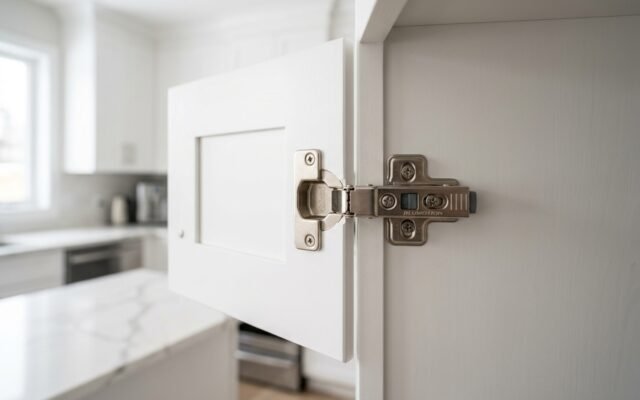
| Door Hinges (Pair) | Standard clip hinge ($6) | 6-Way soft-close hinge ($14) | Blum CLIP top BLUMOTION ($24) | Blum CLIP top + restrictor ($32) |
| Finish Application | Air-dried melamine/foil ($18) | Multi-coat poly/varnish ($38) | 2-Part conversion varnish ($95) | Hand-sprayed conversion varnish ($180) |
| Assembly & Overhead | Mass automated assembly ($44) | Flat-pack / RTA customer labor ($0) | Factory robotic assembly ($143) | Bench-carpenter manual labor ($336) |
| TOTAL UNIT COST | $140 – $190 | $240 – $320 | $480 – $650 | $850 – $1,250 |
6. How to Choose Between Tiers (Contractor Decision Framework)
Evaluate your specific remodeling parameters against these 5 technical criteria:
- If your kitchen walls are plumb within 3/8″ and the layout is rectangular: Buy All-Plywood RTA or Stock. Spending an extra $5,000 on semi-custom provides zero functional gain in standard spaces.
- If your wall dimensions fall on odd inches (e.g. 137 inches between wall and door trim): Buy Semi-Custom. Modifying cabinet widths by 1 inch eliminates unsightly 4-inch filler boards and recaptures usable storage.
- If you are installing heavy 3cm granite or quartz with an unbraced 15″ island overhang: Buy Semi-Custom or Custom. The 1/2-inch or 3/4-inch plywood box sides and solid hardwood top stretchers provide the structural shear strength required to anchor countertop steel support brackets.
- If your timeline is under 4 weeks: Buy Stock or Quick-Ship RTA. Semi-custom factory lead times (4–8 weeks) and custom shop schedules (8–16 weeks) will halt your renovation.
- If you demand full flush inset doors with continuous wood grain: Buy Custom. No mass-market stock line can maintain the 3/32-inch tolerances required for flush inset joinery under varying seasonal humidity levels.
Frequently Asked Questions
Are all-plywood stock RTA cabinets better than semi-custom particleboard?
Yes. A 1/2-inch 7-ply birch plywood RTA box with solid wood dovetail drawers and Blum undermount glides is structurally superior to a brand-name semi-custom cabinet built with 1/2-inch particleboard sides and stapled drawer bottoms, despite costing 40% less.
What is the maximum shelf weight capacity for semi-custom vs stock?
Semi-custom 3/4-inch plywood shelves meeting ANSI/KCMA A161.1 standards support 15 lbs per square foot (roughly 75 lbs on a 36-inch shelf) with under 1/16-inch deflection. Stock 5/8-inch particleboard shelves deflect significantly under 40 lbs across spans over 30 inches.
Can I mix stock and semi-custom cabinets in the same kitchen?
Yes. Contractors frequently install stock cabinet boxes on long, straight perimeter runs and use semi-custom boxes for specialized units, such as a microwave drawer base, an angled corner pantry, or a non-standard 28-inch sink base. Order from the same manufacturer to ensure paint formulas and door profile cutters match exactly.
How much does custom cabinet installation cost compared to stock?
Stock cabinet installation averages $35 to $65 per linear foot. Custom cabinet installation costs $80 to $140 per linear foot because carpenters must scribe full-height end panels, cope detailed molding to uneven ceilings, and field-adjust flush inset door reveals.
Do semi-custom cabinets increase home appraisal value more than stock?
Appraisers evaluate cabinet condition, material quality (plywood vs particleboard), and countertop integration rather than brand names. High-quality semi-custom cabinets in a cohesive layout typically yield an 80% to 85% return on investment at resale, whereas poorly fitted stock cabinets with wide filler strips detract from perceived craftsmanship.