Installing quality kitchen cabinet door bumpers prevents harsh wood-on-wood impact, absorbs closing sound, and preserves your cabinet face frame finish for years. In addition, these small pads maintain proper door alignment and stop premature hinge wear. Most kitchens require clear silicone bumpers measuring 10 millimeters wide and 2 millimeters thick. As a result, you get silent cabinet doors without expensive hardware upgrades.
Why Kitchen Cabinet Door Bumpers Are Essential
Kitchen cabinet doors endure thousands of closing cycles each year. Without protective dampers, hardwood corners strike painted or stained face frames repeatedly. Over time, this impact chips clear coats, cracks wood grain, and causes annoying rattling throughout your home.
Preventing Face Frame Finish Wear and Denting
Modern kitchen cabinets often feature smooth conversion varnish or painted enamel finishes. However, repeated door impact gradually wears through these topcoats down to raw wood. Once moisture enters raw substrate, swollen stiles and permanent peeling quickly follow. Therefore, installing small cushion bumpers creates a vital physical barrier that preserves your investment.
In fact, repairing chipped face frame finishes requires tedious sanding, color matching, and careful touch-up spraying. In contrast, replacement bumpers cost only pennies apiece. Because bumpers absorb kinetic energy, wood frames remain dent-free across decades of daily kitchen use.
Eliminating Loud Cabinet Door Slams
Loud cabinet door bangs reverberate across open floor plans and disturb family members. Hardwood doors act like acoustic soundboards when striking hollow cabinet carcasses. Fortunately, high-density elastomer bumpers diffuse acoustic shock waves instantaneously upon contact.
Furthermore, early morning routines become peaceful when doors close with an unobtrusive click instead of a sharp crack. If your kitchen experiences heavy traffic, adding resilient pads provides an instant acoustic upgrade. Consequently, family members can close cabinets quickly without creating jarring noise.
4 Types of Kitchen Cabinet Door Bumpers
Cabinetmakers use four distinct bumper styles based on door weight, cabinet construction, and desired acoustic dampening. Selecting the correct bumper material ensures quiet operation without interfering with door reveal gaps.
Clear Silicone Self-Adhesive Bumpers
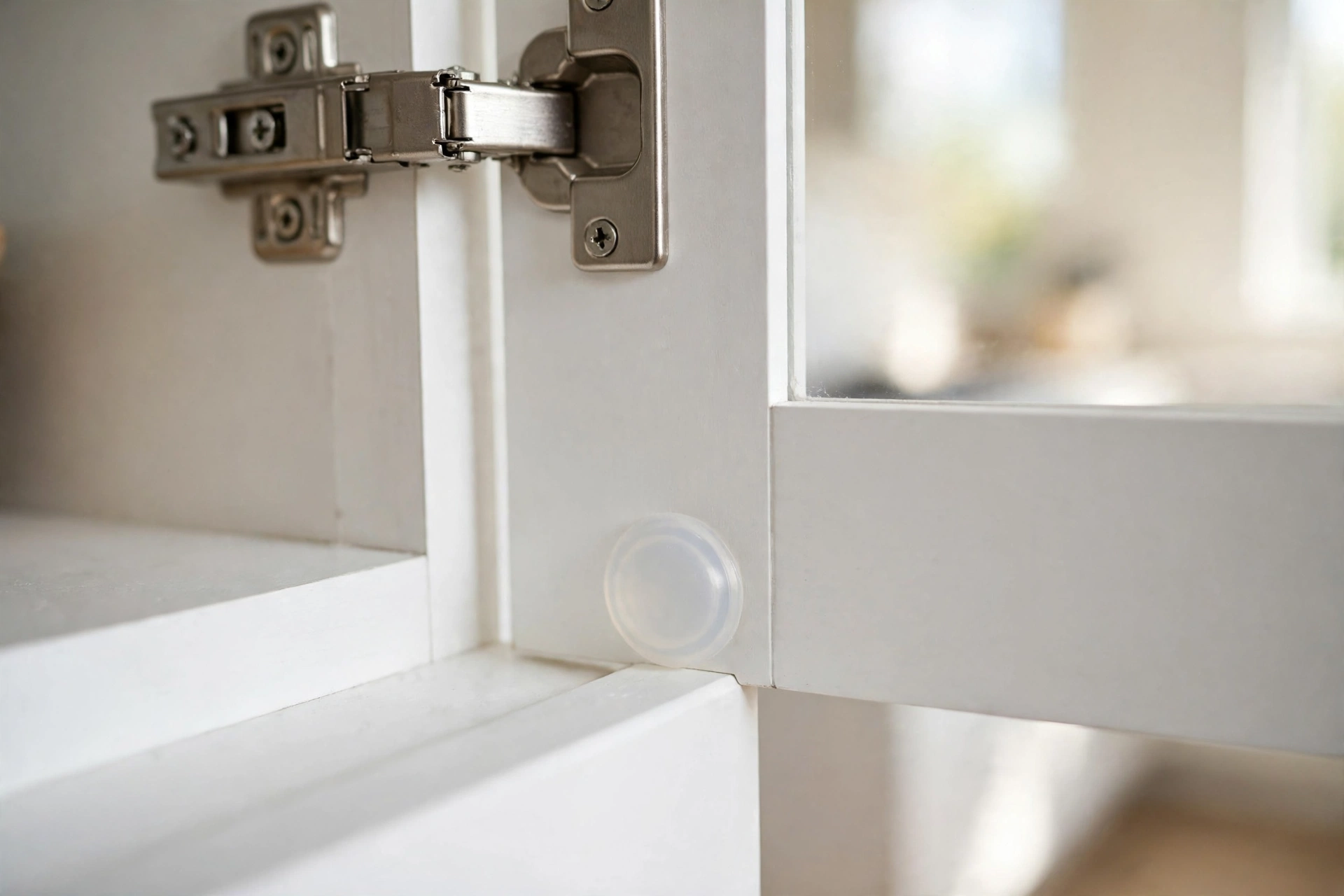
Clear silicone bumpers remain the most popular choice for modern kitchens. Manufacturers produce them from molded polyurethane or synthetic silicone with pressure-sensitive acrylic backing. Because they are transparent, they blend seamlessly into white, stained, or dark painted cabinet finishes.
In addition, cylindrical flat-top profiles distribute closing loads across wider surface areas than rounded domes. Clear silicone maintains flexibility across temperature fluctuations and resists cooking grease. Therefore, flat silicone dots provide superior acoustic dampening on heavy solid wood doors.
Soft Rubber Stick-On Pads
Soft synthetic rubber pads offer higher friction and firm impact dampening for budget installations. These bumpers typically come in black, brown, or off-white colors to match traditional wood species. While rubber provides reliable cushioning, it exhibits slightly less elasticity than modern polyurethane compounds.
Nevertheless, soft neoprene or synthetic rubber pads perform exceptionally well on utility cabinets. You can browse options at Home Depot to find rubber multi-packs for general utility needs.
Felt Cushion Dampers
Pressed wool and synthetic felt pads deliver the softest, most whisper-quiet closing experience available. Because felt fibers compress gradually upon contact, they produce practically zero slap or bounce. However, felt lacks the resilient rebound elasticity found in synthetic elastomers.
Consequently, felt bumpers can compress permanently under the tension of strong self-closing spring hinges. For dry pantries or china display cabinets, nevertheless, felt provides unmatched silent operation.
Drill-In Recessed Stem Bumpers
Custom cabinetmakers frequently install drill-in stem bumpers on high-end residential millwork. Installers drill small 5 millimeter pilot holes directly into cabinet face frames or door corners. Next, they press barbed plastic or rubber stems firmly into the predrilled openings.
Because stem bumpers use mechanical retention instead of sticky glue, they never slide out of position or fall off. Furthermore, they maintain exact depth alignment even after decades of continuous use.
| Bumper Type | Material | Sound Reduction | Durability | Best Application | Average Cost |
|---|---|---|---|---|---|
| Clear Silicone Dots | Molded Polyurethane | Excellent | 5 to 8 Years | Framed and Frameless Kitchens | $0.05 to $0.15 each |
| Soft Rubber Pads | Synthetic Neoprene | Good | 3 to 5 Years | Utility Cabinets and Pantries | $0.04 to $0.10 each |
| Felt Dampers | Compressed Wool / Fiber | Whisper Quiet | 2 to 4 Years | Display Cabinets and China Hutches | $0.06 to $0.12 each |
| Drill-In Stem Bumpers | Soft Polyvinyl Chloride | Excellent | 10+ Years | Custom Built-Ins and High-End Millwork | $0.15 to $0.35 each |
Standard Bumper Sizes and Thicknesses
Choosing correct bumper dimensions is essential for preserving proper door alignment and aesthetic reveals. Installing an oversized bumper pushes cabinet doors forward, creating unsightly uneven gaps along your cabinet run.
Diameter Choices (7mm to 12mm)
Most adhesive bumpers range from 7 millimeters to 12 millimeters in total diameter. Specifically, 10 millimeter bumpers represent the universal contractor standard for standard kitchen wall and base units. They offer ample surface area for adhesive grip without protruding past typical cabinet door stiles.
Smaller 7 millimeter bumpers work best on narrow glass door mullions and compact pullouts. Conversely, large 12 millimeter bumpers provide necessary load distribution on tall pantry doors and heavy appliance garages. Selecting the proper diameter ensures firm adhesive contact without visible overhang along door edges.
Height Profile (1.5mm to 4mm) and Impact on Door Alignment
Bumper thickness usually measures between 1.5 millimeters and 4 millimeters. A standard 2 millimeter profile matches the built-in clearance of most modern European concealed cup hinges. If you install bumpers thicker than 3 millimeters, the strike side of the door will kick out past adjacent drawer faces.
Therefore, check your door flushness carefully after attaching new bumpers. When doors sit proud of adjacent panels, you must perform minor cabinet hinge adjustments to re-establish a seamless plane. Maintaining consistent thickness across all cabinet doors ensures crisp shadow lines throughout your entire kitchen.
Exact Placement Rules for Kitchen Cabinet Door Bumpers
Correct bumper placement guarantees balanced impact resistance and stops door warping over time. Placing pads in wrong spots can cause twisted doors, latch failures, or unsightly visibility from outside the cabinet.
Standard Top and Bottom Corner Spacing (1/4 inch from edge)
Contractors always install bumpers on the leading strike edge of the door, opposite the hinges. Specifically, place one bumper at the top outer corner and one bumper at the bottom outer corner. Position each bumper exactly 1/4 inch inward from both the top and side door edges.
This 1/4 inch offset prevents the pad from peeking out when the cabinet door rests shut. In addition, spacing dampers at opposite extremities distributes closing shock evenly across hinges. Never place a single bumper in the center, because uneven lever forces will warp wood doors over time.
Placement on Inset vs Full Overlay vs Partial Overlay Doors
Door construction style dictates whether bumpers stick to the door back or the face frame. On standard partial overlay and full overlay cabinets, always adhere bumpers to the backside corners of the door itself. As a result, the bumper strikes the flat face frame or frameless box edge cleanly.
However, inset doors sit flush inside the face frame opening rather than overlapping it. For inset doors, install bumpers directly onto the internal stop block or the interior face frame lip. This arrangement ensures the door stops flush with the outer frame without binding inside the pocket.
Drawer Front Bumper Locations
Kitchen drawer fronts require protective bumpers just as much as swinging cabinet doors. On five-piece drawer heads, place two bumpers along the upper corners of the drawer sub-front. Alternatively, place them on the back corners of the decorative false front where it contacts the cabinet carcass.
For deep pot drawers, add two extra bumpers on the bottom corners as well. Because heavily loaded drawers generate high momentum during rapid closure, four bumpers absorb massive impact force without bouncing. You can check current prices on Amazon to stock up on bulk packs for all your drawers.
How to Replace Old or Sticky Cabinet Bumpers
Over several years, factory adhesive pads deteriorate into gummy, yellowed residue that leaves doors sticking shut. Fortunately, replacing old dampers is a fast DIY project that takes less than thirty minutes for an entire kitchen.
Removing Degraded Adhesive Safely (Isopropyl alcohol cleaning)
First, pry off the old hardened bumper using your fingernail or a flexible plastic putty knife. Never use metal razor blades, because sharp steel gouges underlying wood grain and strips factory clear coats. If sticky adhesive remains behind, soften the residue with a few drops of 70 percent isopropyl alcohol on a microfiber cloth.
Alcohol safely dissolves degraded acrylic glue without softening cured polyurethane cabinet finishes. Rub the sticky residue gently in circular motions until the wood surface feels completely clean and slick. Avoid harsh acetone or lacquer thinner, because chemical solvents instantly destroy factory cabinet paints.
Surface Preparation for Long-Lasting Adhesion
Fresh bumpers fail prematurely when stuck directly onto microscopic layers of kitchen cooking grease. Therefore, thorough surface preparation is the secret to ten-year bumper adhesion. After removing old residue, wipe the target corner with a clean alcohol wipe to strip residual oils.
Next, allow the wood surface to air dry completely for sixty seconds. Peel the replacement bumper from its wax backing sheet without touching the sticky adhesive side with your bare fingers. Finally, press the bumper firmly onto the cabinet corner for ten seconds using steady thumb pressure.
Cabinet Door Bumpers vs Soft-Close Hinges
Many homeowners wonder whether modern soft-close hinges eliminate the need for traditional stick-on bumpers. In reality, these two hardware components perform different mechanical tasks and work best in tandem.
Why You Still Need Bumpers With Soft-Close Hinges
Modern soft-close cabinet hinges feature internal hydraulic or spring dampers that decelerate the door during the final inches of travel. However, the hinge mechanism still pulls the door completely shut against the face frame. Without a protective pad, that final resting contact remains rigid wood striking rigid wood.
Furthermore, temperature changes and hydraulic fluid wear can reduce soft-close resistance over time. If a family member shoves the door with extra force, the hydraulic piston can bottom out abruptly. Therefore, small silicone bumpers provide the essential final cushion that guarantees total silence and finish protection.
Combining Dampers for Maximum Sound Control
Pairing hydraulic hinges with premium polyurethane bumpers creates the ultimate luxury kitchen feel. The hinge smoothly controls closing speed, while the bumper absorbs the subtle terminal click. As a result, your cabinets operate with the refined silence of high-end custom European millwork.
In addition, thin 1.5 millimeter bumpers prevent soft-close doors from bouncing back open upon contact. The elastic bumper deadens kinetic shock without overpowering the gentle closing pull of the hinge spring. Homeowners seeking complete hardware upgrades can find cabinet dampers at Wayfair to refresh both hinges and bumpers together.
Common Mistakes When Installing Cabinet Bumpers
While sticking small rubber dots onto cabinet doors appears simple, small mistakes often lead to peeling pads and crooked doors. Avoiding these common installation errors ensures flawless appearance and lasting durability.
Installing on Greasy Unprepped Finish
The most frequent reason bumpers fall off within weeks is contaminated wood surfaces. Kitchen air carries atomized cooking oils that settle imperceptibly onto cabinet doors and face frames. When you stick pressure-sensitive adhesive over microscopic oil films, the glue never creates a structural bond.
Consequently, always wipe every corner thoroughly with isopropyl alcohol before applying new bumpers. This simple prep step takes only five extra seconds per door. However, it extends adhesive lifespan from three months to more than seven years.
Using Too Thick Bumpers That Push Doors Out of Plane
Another widespread mistake is purchasing thick 4 millimeter or 5 millimeter bumpers for standard overlay doors. While thick bumpers seem like they would absorb more sound, they force the strike side of the door forward. As a result, the door sits visibly skewed against adjacent cabinet faces.
Instead, choose thin 1.5 millimeter or 2 millimeter cylindrical pads for standard overlay cabinetry. These compact profiles provide ample acoustic dampening while preserving crisp flush alignment across your entire cabinet run. If doors still sound loud, consider upgrading hinges rather than piling on thicker bumpers.
Placing Bumpers Too Far Inward
Some DIYers place bumpers two or three inches inward from outer corners to hide them. However, moving the bumper away from the strike edge creates an unsupported cantilevered corner. When the door slams shut, the flexible wood corner whips past the bumper and strikes the frame loudly anyway.
Furthermore, inward placement concentrates closing torque on the center of the door stile, which promotes long-term wood warpage. Always position bumpers within 1/4 inch to 1/2 inch of the extreme outer corner. This placement maximizes sound dampening efficiency and stabilizes the entire door frame.
Frequently Asked Questions About Kitchen Cabinet Door Bumpers
What are the best kitchen cabinet door bumpers to buy?
Clear cylindrical polyurethane bumpers offer the best combination of noise dampening, durability, and discreet appearance. In fact, flat-top silicone designs measuring 10 millimeters wide absorb heavy closing impact while staying invisible on all wood finishes.
Where should bumpers be placed on kitchen cabinet doors?
Place two bumpers on the strike side of each door, opposite the hinges. Specifically, position one pad at the top outer corner and one at the bottom outer corner, exactly 1/4 inch from edges.
Why do my cabinet door bumpers keep falling off?
Bumpers fall off when attached to surfaces contaminated with cooking grease, dust, or old adhesive residue. To fix this, clean the wood surface thoroughly with isopropyl alcohol before pressing the replacement bumper down firmly.
How thick should cabinet door bumpers be?
Standard kitchen cabinet bumpers should measure between 1.5 millimeters and 2 millimeters thick. Using thicker pads will push your doors out of plane and create uneven gaps against adjacent cabinet faces.
Can you use felt pads instead of silicone bumpers on cabinets?
Yes, felt pads provide whisper-quiet dampening on lightweight doors and display cabinets. However, felt compresses permanently under heavy self-closing hinges and absorbs kitchen grease faster than synthetic polyurethane or silicone bumpers.